
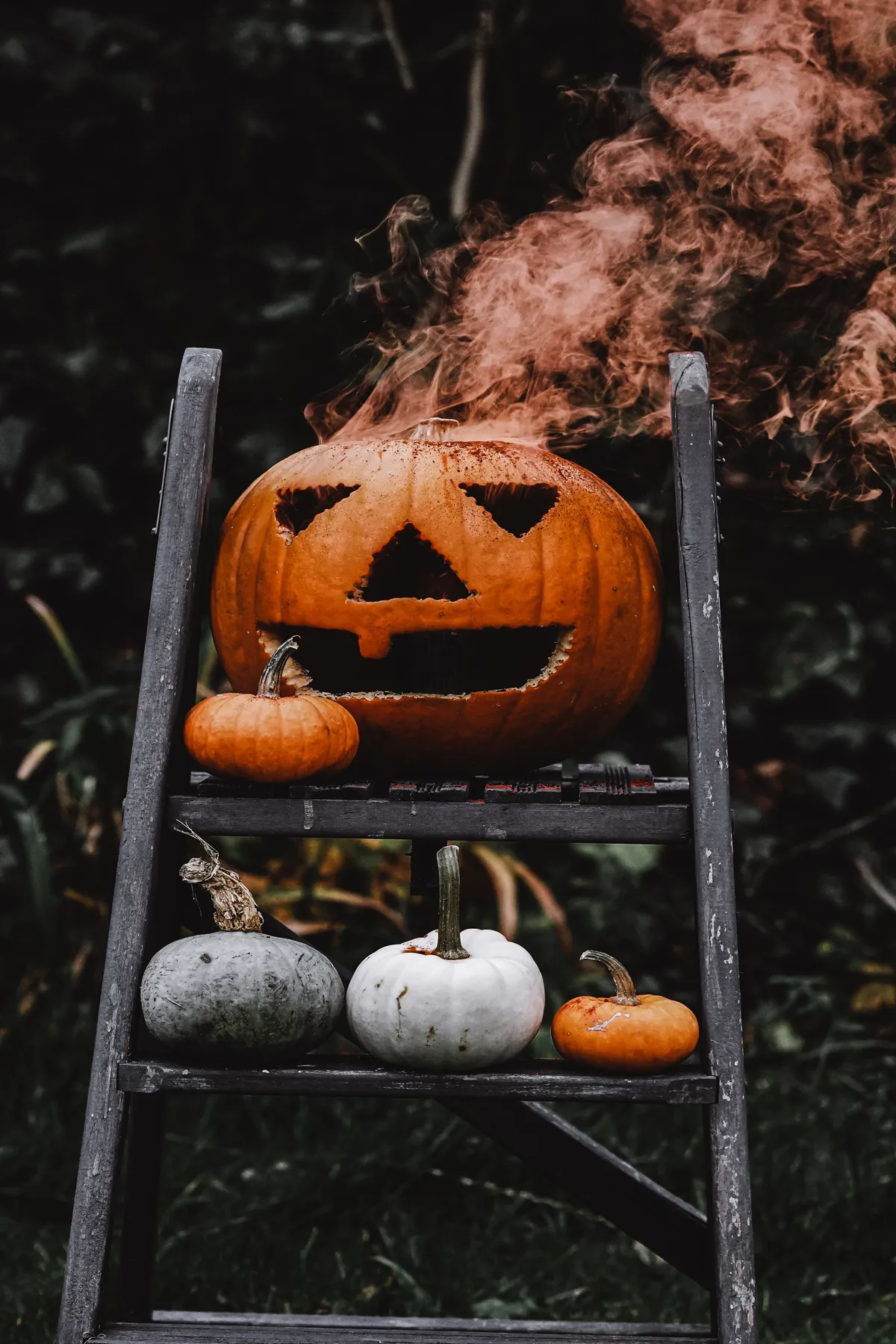
Samhain: The Sabbat of Endings
(From a Goblin Who Takes “The Veil Is Thin” Very Personally)
Bramble here. Samhain falls on the 31st of October, and if you only know one sabbat by name, it’s probably this one — largely because most of the modern world celebrates a heavily commercialised cousin of it every year without realising quite how old the original actually is. This is the final harvest, the death of the old year, and the one night where the line between “here” and “somewhere else” gets genuinely thin. I try not to think about that last part too hard.
“This is the one night where the line between ‘here’ and ‘somewhere else’ gets genuinely thin. I try not to think about that too hard.” — Bramble
What Even Is Samhain?
Samhain (pronounced roughly “SOW-in,” not “sam-hane,” a correction Bramble makes with real enthusiasm) is an ancient Gaelic festival marking the end of the harvest season and the beginning of winter. It’s the third and final harvest sabbat, following Lammas and Mabon, and traditionally the most significant of the three — the point at which the last of the herds were brought in from summer pasture and the final stores were secured before the dark half of the year truly began.
What sets Samhain apart from the other harvest sabbats isn’t the harvest itself, though — it’s the belief that this is the point in the Wheel where the boundary between the physical world and the spirit world grows thin. Ancestors and spirits were believed to be able to cross more easily on this night, which is the root of both the reverent ancestor-honouring traditions and the more theatrical “spooky season” imagery that’s since taken over mainstream Halloween.
Samhain also traditionally marks the Pagan New Year for many traditions — meaning this isn’t just an ending, it’s simultaneously a beginning. The old year dies here, and the new one starts in the same breath, which gives the sabbat a genuinely dual character that a lot of the costume-and-candy version of Halloween misses entirely.
What It Represents
- Endings and death — of the harvest year, of old cycles, of things that need to be released
- Honouring ancestors — the thinning veil makes this the traditional time to remember those who’ve passed
- The Pagan New Year — an ending that is simultaneously a beginning
- Divination — the thin veil was also traditionally considered an ideal time for scrying, tarot, and other forms of looking beyond the ordinary
“The old year dies here, and the new one starts in the same breath. Very dramatic. I respect it.” — Bramble
How People Mark It
Samhain rituals tend to carry more emotional weight than the earlier harvest sabbats — this is the one where reflection and remembrance genuinely take centre stage:
- Setting a place at the table for departed loved ones — the “silent supper” or “dumb supper” tradition, eaten without speaking, in their honour
- Building an ancestor altar with photos, mementos, or items connected to those who’ve passed
- Divination work — tarot, scrying, pendulum work — leaning into the thin veil
- Releasing rituals — writing down what you want to let go of from the past year and burning it
- Jack-o’-lanterns — originally carved from turnips, not pumpkins, to ward off wandering spirits
Building a Samhain Altar
This is the most visually rich sabbat to build for, and the one where darker, more atmospheric styling genuinely fits the occasion rather than feeling like decoration for its own sake.
- Photos or mementos of ancestors — the emotional centrepiece of a proper Samhain altar
- Black or deep purple candles for the thinning veil and the turn toward the dark half of the year
- Skulls, bones, or memento mori imagery — genuinely traditional here, not just aesthetic
- A divination tool — tarot deck, pendulum, or scrying mirror, since this is the night to actually use them
- Apples and pomegranates — traditional Samhain foods tied to both the harvest and the underworld symbolically
“Skulls on the altar aren’t decoration at Samhain. They’re the whole point. Finally, my aesthetic is seasonally appropriate.” — Bramble
Colours & Correspondences
- Colours: black, deep purple, dark orange, silver
- Crystals: obsidian, smoky quartz, labradorite — protective, veil-work stones
- Herbs: mugwort, sage, rosemary (for remembrance), wormwood
- Symbols: jack-o’-lanterns, skulls, black cats, cauldrons, the crossroads
Common Mistakes People Make With Samhain
- Treating it as purely “spooky” without the reverence. The mainstream Halloween aesthetic is genuinely rooted in real tradition, but skipping the ancestor-honouring and reflective side means missing most of what the sabbat is actually for.
- Mispronouncing it and never being corrected. It’s “SOW-in,” not “sam-hane.” Small thing, matters more than you’d think in some circles.
- Confusing it with Mabon. Mabon is gratitude and balance. Samhain is endings, ancestors, and the veil thinning — much heavier energy entirely.
- Rushing straight to the “fun” divination work without any grounding. If you’re doing genuine veil-work or divination, take it seriously — protect your space, and don’t treat it as a party trick.
Frequently Asked Questions
Is Samhain the same as Halloween?
They share the same date and some overlapping imagery, but Samhain is the older Gaelic Pagan festival, while Halloween (from “All Hallows’ Eve”) evolved separately through Christian and later commercial influence. Many modern Pagans celebrate Samhain as a distinct, more spiritually weighted occasion.
Why is Samhain considered the Pagan New Year?
Because it marks the end of the harvest cycle and the beginning of the dark half of the year — the point where the old year’s work is complete and a new cycle symbolically begins, even as the literal calendar year continues toward Yule and beyond.
Do I need to do ancestor work to celebrate Samhain properly?
No, but it’s the most traditional core of the sabbat. Even a simple candle lit in someone’s memory, or a quiet moment of reflection, covers the essential spirit of it.
Bramble’s Final Verdict
Samhain doesn’t ask you to be cheerful. It asks you to sit with endings, honour what’s passed, and trust that the wheel keeps turning regardless. It’s heavier than Lammas, heavier than Mabon, and genuinely one of the most meaningful nights on the whole calendar if you actually engage with it rather than just carving a pumpkin and calling it done.
“Samhain doesn’t ask you to be cheerful. It asks you to sit with endings and trust the wheel keeps turning anyway.” — Bramble
— Bramble