
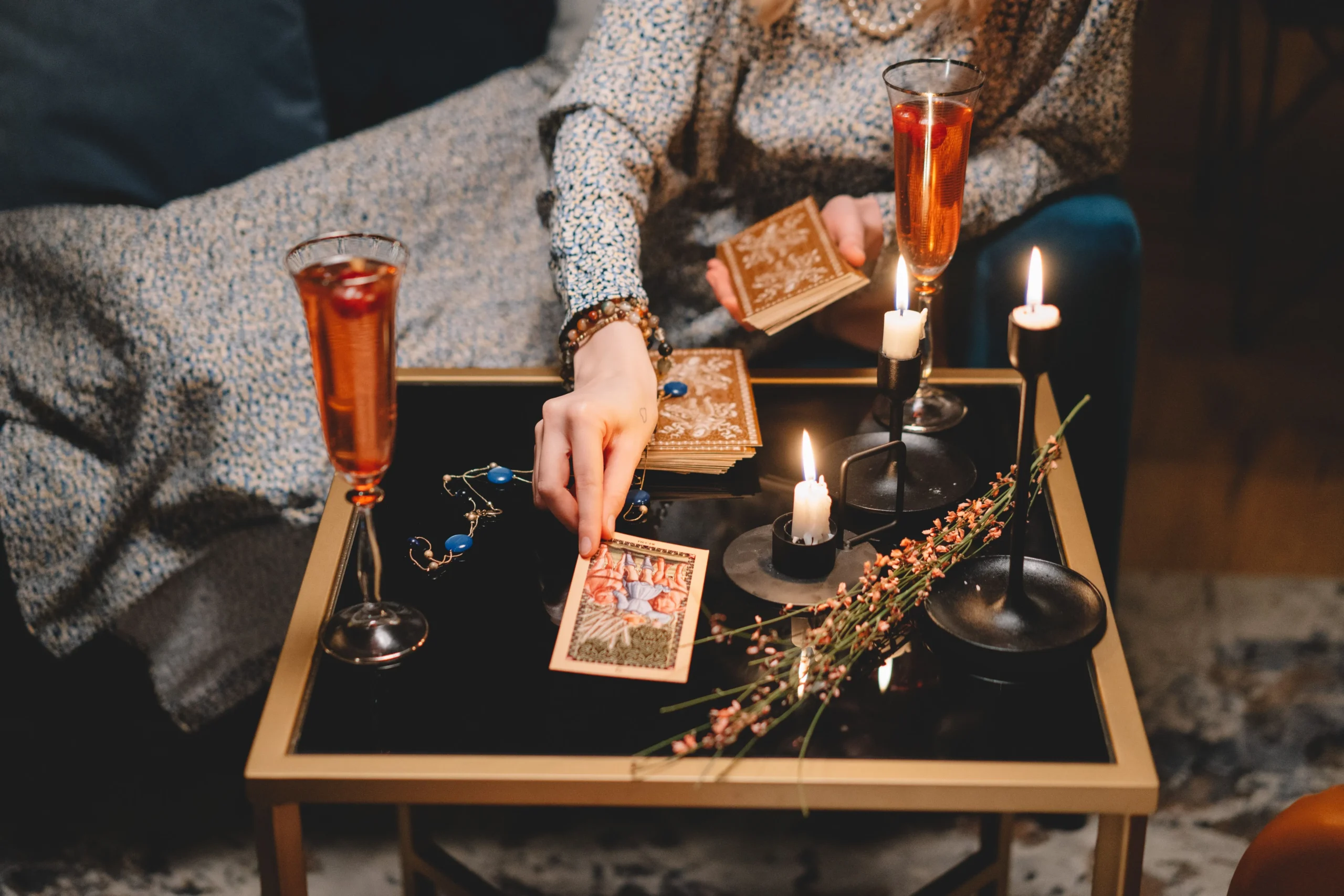
A Beginner’s Guide to Tarot Cards
(As Told By a Goblin Who Has Opinions)
Bramble here. I’ve spent years hoarding tarot decks in this shop, watching humans pick one up, put it down, pick it up again, and eventually buy the one with the prettiest dragon on the box. No judgement — I did the same thing with my bottle cap collection. But enough of you keep messaging asking what tarot actually is and which deck to start with, so fine. Fine! Here’s the guide. Try not to lose it down the back of the sofa like everything else I lend you.
“Nobody has all 78 meanings memorised on day one. Anyone who tells you otherwise is showing off.” — Bramble
What a Tarot Deck Actually Is
A standard tarot deck is made up of 78 cards, split into two distinct groups. The Major Arcana covers 22 cards, dealing with the big, dramatic life stuff — beginnings, endings, upheaval, revelations. These are the cards people quote in films to sound mysterious.
The Minor Arcana makes up the remaining 56 cards, split into four suits, and covers the everyday stuff instead: emotions, ideas, work, money. Think of it as the difference between “your life is about to change forever” and “you’ll have an annoying email today.”
Most decks come with a guidebook explaining what each card means, which is genuinely essential — nobody starts out with all 78 meanings committed to memory, and reaching for the booklet is not cheating.
What Tarot Is Actually For
- Structured reflection — a set of prompts that push you to actually think something through, rather than just turning it over vaguely in your head
- Pattern recognition — laying cards out and connecting them to a real situation, rather than pure prediction
- A pause button — a fixed few minutes where you sit with a question properly instead of scrolling past it
- Whatever else you want it to be — spiritual practice, creative prompt, or simply a nicely illustrated way to organise your thoughts
“Half of tarot is just giving yourself permission to think about something properly for five uninterrupted minutes, which — let’s be honest — you don’t do nearly often enough.” — Bramble
Picking Your First Deck
Here’s my genuinely un-goblin-like advice: buy the deck whose artwork you can’t stop looking at. Tarot only works if you actually want to pick it up — a technically traditional deck you find visually boring will sit in a drawer, while a deck that pulls you in will actually get used.
- Want something classic, gently reworked? Look for decks that keep the traditional 78-card structure but soften or modernise the imagery
- Want nature and symbolism woven through every card? Decks built around plants, animals, and community themes tend to reward slow, thoughtful reading
- Want something with teeth? Gothic-illustrated decks exist specifically because someone decided tarot didn’t have to be all soft pastels and doves
Whatever you land on, check it includes a guidebook. You want the training wheels before you’re doing freehand readings at a dinner party.
Your First Reading: The Three-Card Spread
Don’t start with the big eleven-card layouts. You’ll just confuse yourself and blame the cards, and the cards did nothing wrong.
- Card one — Past. What’s led to where you are now
- Card two — Present. What’s going on right now
- Card three — Future. Where things seem to be heading
Shuffle, pull three, lay them out left to right, and read each one using your guidebook. Don’t rush it. Let yourself actually sit with what the imagery is doing before you flip to the meaning page.
Looking After Your Deck
- Keep it somewhere it won’t get bent, damp, or chewed by whatever pet you have that isn’t me
- A dedicated box, pouch, or cloth for storage between uses is common — partly practical, partly ritual
- Handle the cards. Shuffle them badly. Drop a few. A deck that’s a bit worn in is a deck that’s actually being used, not one gathering dust as a shelf ornament
“A deck that’s a bit worn in is a deck that’s actually being used, not a shelf ornament. Much like me, if I’m honest.” — Bramble
Frequently Asked Questions
Do I need to believe in tarot for it to “work”?
Not really. At minimum, it’s a genuinely useful tool for structured reflection — a set of prompts that make you actually think about what’s going on in your head. Whether it’s more than that is entirely up to you.
How many cards should a full deck have?
78 — 22 Major Arcana and 56 Minor Arcana across four suits. If a deck is missing cards or short of that count, it’s not a standard tarot deck.
Do I need to memorise all the card meanings before I start?
No. Reach for the guidebook every time if you need to — that’s exactly what it’s there for, and no experienced reader started out without one.
Bramble’s Final Verdict
Tarot doesn’t require you to believe in anything in particular. At minimum, it’s a genuinely good tool for structured reflection. At most, it’s whatever else you want it to be. Either way works — and either way, you’ll need an actual deck rather than just a guide about picking one.
— Bramble