
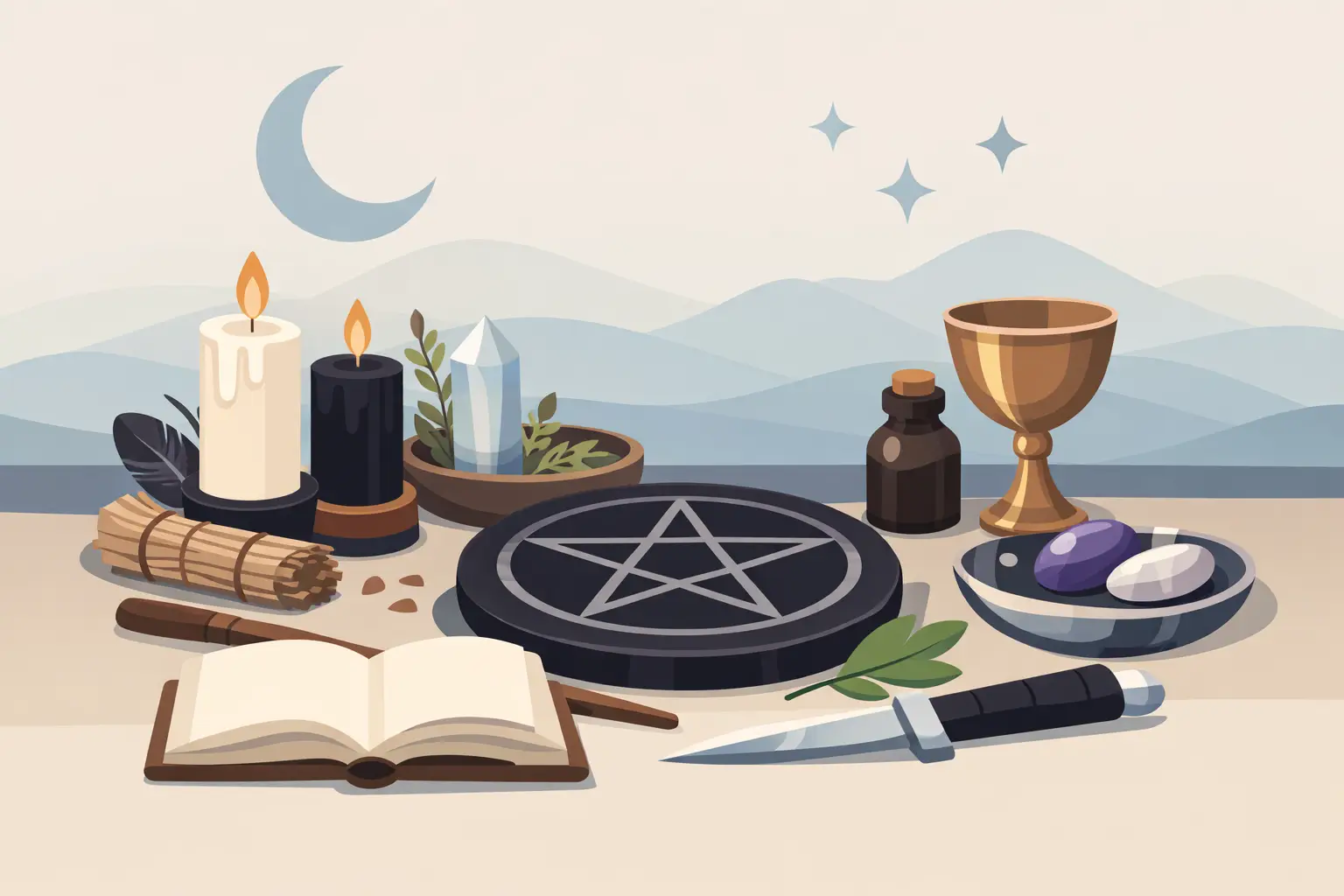
A first altar does not need to look like a moonlit antiques shop exploded across your dresser. The most useful beginner Wiccan altar essentials are the things that help you focus, mark a ritual moment and build a relationship with your own practice. That could be a beautiful carved box full of tools. It could also be a tea light, a bowl of water and a corner of a bookshelf that is temporarily clear of dice.
Wicca is not a flat-pack religion with one compulsory layout. Traditions differ, solitary practitioners differ, and your available space matters. Start with intention rather than a shopping panic. Bramble approves of a modest first altar. Bramble also believes clutter is where lost jewellery goes to form a coven.
An altar is a working space, not a display test
An altar is a place set aside for spiritual practice. You might use it to meditate, honour deities, observe the Wheel of the Year, make offerings, cast a circle or simply pause with purpose. It can be permanent, seasonal, portable or packed away after every use.
That flexibility matters, particularly if you share a flat, live with family, have curious pets or prefer privacy. A wooden tray, lidded box or small cloth can turn an ordinary table into sacred space, then disappear when needed. There is no prize for owning the biggest altar, and no spiritual penalty for keeping yours discreet.
Before choosing objects, ask what you want this space to do. If you are drawn to seasonal rituals, leave room for natural items such as leaves, flowers or a small harvest offering. If meditation is the priority, keep it calm and uncluttered. If you want to practise spellwork, choose a surface that is easy to clean and safely away from curtains, chaos goblins and open windows.
Beginner Wiccan altar essentials to start with
You can begin with just a few objects. The traditional associations below are common in many Wiccan-inspired practices, but they are invitations rather than universal rules. Learn from the tradition you follow, then let your altar become honest rather than copied from someone else’s shelf.
A surface or altar cloth
Your altar needs a boundary. A table, shelf, tray or sturdy box does the job. An altar cloth makes a temporary space feel intentional and protects furniture from wax, ash or scratched tools. Choose a colour because it means something to you, whether that is black for protection and mystery, green for growth, white for simplicity or a gloriously impractical celestial print because it brings you joy.
A candle or safe light source
A candle can represent fire, spirit, illumination or the beginning of ritual. One plain candle is enough. You do not need a candle in every colour known to humanity before you have even worked out where you keep the matches.
If flames are not safe or allowed where you live, an LED candle is a sensible substitute. Spiritual practice should fit real life. Never leave a candle unattended, place it near fabric or use it on an unstable surface. A heatproof holder is non-negotiable, not optional gothic decor.
A bowl or cup of water
Water is often placed on an altar to represent the element of water, emotion and intuition. A small chalice, cup or simple bowl is perfectly suitable. Keep it clean, change the water regularly and avoid using a vessel you would be upset to stain with herbs, wax or wine.
A dish of salt, soil or a stone
Earth can be represented by salt, soil, a pebble, a crystal or a small dish of herbs. Salt is widely used in modern ritual, but it is not harmless around pets and should not be scattered outdoors. A stone collected respectfully from a place that matters to you can be a quieter and more personal choice.
Incense, herbs or another symbol of air
Incense is often used for air and for cleansing a space, though the smoke is not suitable for everyone. Asthma, smoke alarms, pets and shared living arrangements are all very boring but very real magical considerations. A feather, bell, fan, fresh air from an open window or a scented-free moment of intentional breathing can fill the same symbolic role.
A meaningful focal point
This may be a pentacle, a representation of deity, a seasonal symbol, an oracle deck, a statue or an object with personal spiritual significance. A pentacle is common in Wicca and often represents the elements and spirit, but it is not compulsory. Neither are deity statues. Some practitioners work with named deities, some hold a broader sense of the Divine, and some are still learning what language feels right. Leave room for that uncertainty.
Tools are useful when you know why you want them
Wands, athames, chalices, cauldrons, bells and crystals can all be wonderful additions. They are not a beginner admission fee. A tool earns its place when it supports a ritual action or helps you enter the right frame of mind.
An athame, traditionally a ritual blade, is commonly used to direct energy rather than cut physical things. It may be unsuitable if you are underage, uncomfortable with blades or living in a household where it would cause concern. A wand, finger, stone or simply a spoken gesture can serve a similar ritual purpose.
A chalice may hold water or wine in a rite. A bell can mark the beginning and end of practice. A cauldron is useful for small, contained fire work only if it is heat-safe and used responsibly. Crystals can be visually pleasing and personally meaningful, but they are not batteries with fixed settings. Their value is in your relationship with them, not a breathless claim printed on a packet.
Buy slowly. A single well-loved object is more useful than a heap of tools bought because a social post said your altar was incomplete without them. Planet Goblin is very much in favour of acquiring unusual treasures, naturally, but even a goblin-run shop would tell you to begin with purpose.
Arrange your altar in a way you can actually use
Some Wiccans place elemental symbols according to the four cardinal directions: air in the east, fire in the south, water in the west and earth in the north. This is a familiar structure, but exact correspondences can vary by tradition and geography. Follow your path’s teachings where applicable, or use an arrangement that helps you remember what each item represents.
Try placing your focal point at the back or centre, with your candle and elemental symbols around it. Keep a clear area at the front for cards, written intentions or offerings. If you are right-handed, putting frequently used items on your right may feel natural. If you are left-handed, defy the furniture arrangement with confidence.
Avoid overcrowding. A packed altar may look dramatic, but it can make ritual feel like searching through a handbag at the bus stop. Leave physical and visual space to work.
Cleansing and dedicating your first altar
Cleansing does not have to mean smoke, expensive sprays or a complicated spoken formula. Begin by physically wiping down the surface. Then take a few quiet moments to set your intention. You might say aloud that this is a place for reflection, respect and your developing practice.
If it suits you, cleanse each object with sound from a bell, a sprinkle of water, a waft of incense or a moment in moonlight. If it does not suit you, simply place each item deliberately and acknowledge its purpose. Ritual is often strongest when you understand what you are doing, rather than when you are performing a dozen actions you found in a frantic online checklist.
What you do not need on day one
You do not need rare crystals, an enormous statue, a ceremonial sword, a permanent room, colour-coded everything or permission from an internet stranger. You also do not need to imitate someone whose practice has had years to grow.
Be mindful of what you bring home. Do not buy wildlife remains, take natural materials from protected places or burn unidentified herbs. Check whether materials are ethically sourced, and remember that some popular items can be culturally specific or closed to outsiders. Respect is much more magical than treating every tradition as a spooky pick-and-mix.
Your altar will change as you learn. Let it. Add a Yule decoration in winter, spring flowers at Ostara, a favourite tarot card during a difficult week, or nothing at all when simple feels right. Begin with a small space, choose objects you genuinely connect with, and give yourself permission to make it yours one ritual at a time.