
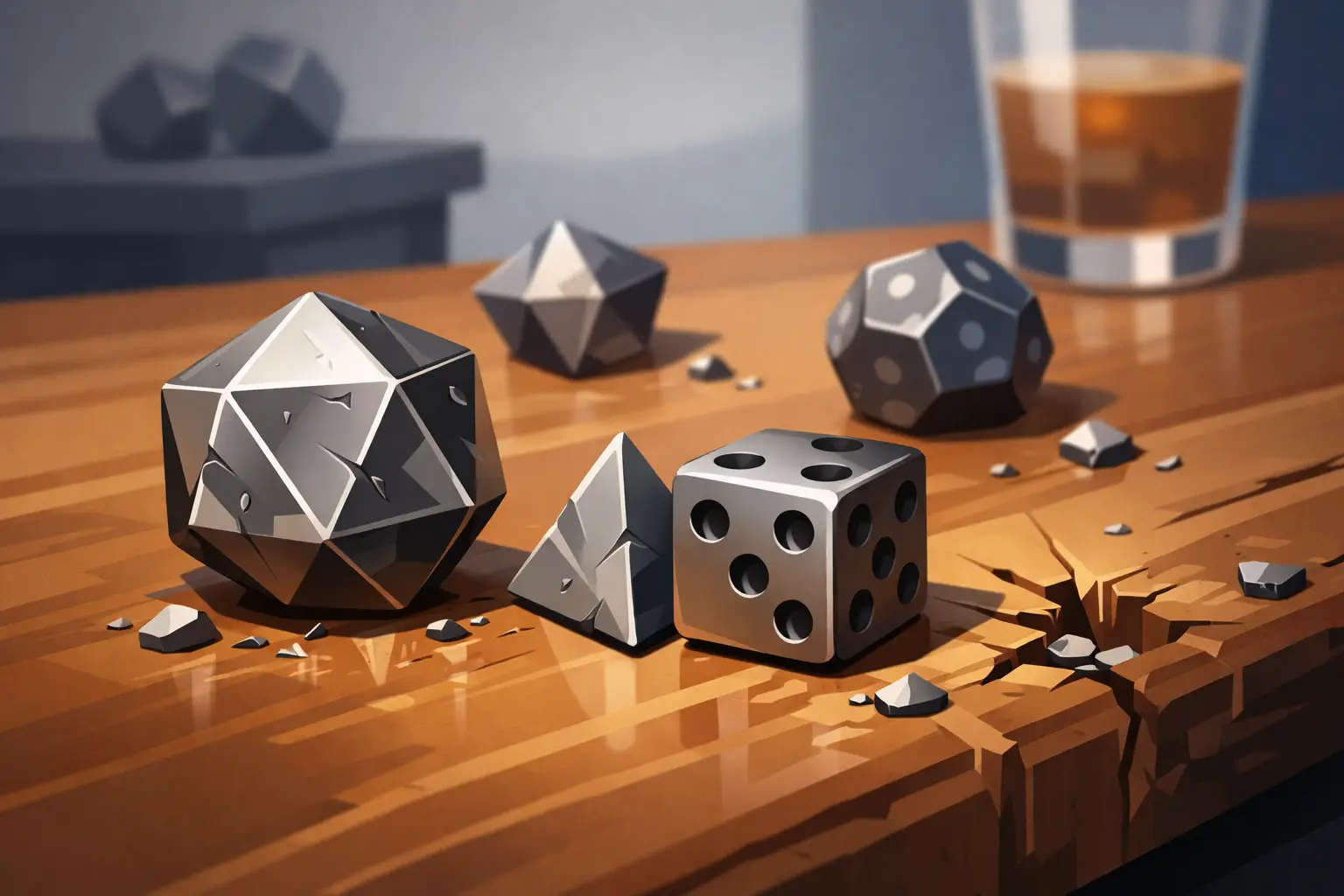
The first time a metal d20 lands with a satisfying clack, ordinary plastic dice can feel like they have betrayed you personally. This metal dice review is for players tempted by that delicious weight, but sensibly wondering whether a heavier set is actually good at the table – or simply an elegant little wrecking ball for your furniture.
The short answer: metal dice are brilliant when you want a tactile, dramatic upgrade and are willing to roll responsibly. They make a fantastic gift for a committed adventurer, a lovely character prop, and a genuinely enjoyable thing to use. They are not automatically better for every player, campaign or surface. Bramble has opinions. Bramble also has a chipped desk. Cause and effect, allegedly.
Metal Dice Review: The Quick Verdict
Metal dice earn their place because they feel special. The extra heft turns a routine ability check into a tiny event. Picking up a cool, weighty d20 before asking a dragon for mercy is theatre, and tabletop games deserve a bit of theatre. They are especially suited to players whose dice collection has evolved from “one necessary set” into “a carefully guarded hoard”.
Their main downside is equally obvious: metal hits hard. A sharp-edged zinc alloy die can dent a soft wooden table, mark painted gaming terrain, damage a glass surface and create a startling amount of noise in a quiet flat. If you play at a precious dining table or beside a sleeping baby, choose a dice tray. This is not optional goblin fussiness. It is self-preservation.
For most people, a metal set is best as a favourite rather than the only set they own. Keep resin or acrylic dice for casual rolling, travel and crowded tables. Bring out metal for the big moments, the boss fights, and the character whose entire personality is impeccable armour and unresolved trauma.
What Makes Metal Dice Feel Different?
Weight is the obvious answer, but it is not the whole story. Metal dice have momentum. They roll with a lower, firmer sound and tend to settle decisively, rather than skittering off towards somebody’s crisps. That gives them a deliberate quality which many players find deeply satisfying.
The finish matters too. A well-made set can look like antique gold, moonlit silver, blackened armour, aged bronze or treasure removed from a suspiciously cursed tomb. Engraved numbers often catch the light beautifully, especially when they are inked in a contrasting colour. For gothic, witchy and fantasy-themed characters, that visual drama is half the point.
There is also a simple collector appeal. A metal dice set feels gift-worthy straight away. It has presence without needing a complicated explanation, which is useful when you are shopping for the Dungeons & Dragons player who already owns three rulebooks, six miniatures and a mysterious number of bags.
The material changes the experience
Most metal dice are made from zinc alloy, which offers solid weight without becoming absurdly expensive or difficult to use. Stainless steel, brass and other premium metals can feel even denser and may cost more accordingly. There are also hollow metal designs, often with elaborate cut-outs, which are lighter than solid dice but can be just as striking.
Solid dice generally feel more substantial and have a clean, confident roll. Hollow dice can be extraordinarily ornate, with dragon shapes, filigree or skull-like details, but intricate edges may make them less practical for players who want instant number readability. Neither is inherently superior. It depends whether your priority is clean gameplay, display-worthy style, or both.
Do Metal Dice Roll Fairly?
A fair question, particularly when your natural 20 arrives just as the party is about to be eaten by a mimic pretending to be a wardrobe.
Reputable metal dice are made to be balanced within normal manufacturing tolerances, just like standard polyhedral dice. Their weight does not make them more likely to roll high or low. What affects fairness is build quality: consistent shaping, clean faces, sensible engraving and properly finished edges matter more than whether a die is metal, resin or something glittery enough to be seen from space.
Very elaborate dice deserve a little extra consideration. Deeply sculpted faces, unusual shapes and dramatic raised details may influence how smoothly a die rolls, particularly if the design is more ornament than traditional geometry. That does not mean they are unsuitable for play. It means they may be better saved for relaxed games, themed sessions, or the occasional important roll rather than a rules-tight competitive table.
If you want the most straightforward gaming experience, choose a traditional seven-piece set with clear numerals and moderate engraving. If you want a statement piece for a necromancer, warlock or villainously stylish dungeon master, let your dark little heart pick the ornate set and use a tray.
The Non-Negotiable: Use a Dice Tray
Metal dice and unprotected tables are natural enemies. A dice tray cushions the impact, keeps your rolls contained and stops your d4 from making an ambitious escape under the sofa. It also protects the dice themselves from scratches and prevents them from thundering across a café table like a tiny suit of armour falling down stairs.
A tray with a padded rolling surface is ideal. Felt, faux leather and soft-lined trays reduce noise while still letting dice tumble properly. A dice tower can work too, provided its internal ramps and landing area are designed for heavier dice. Avoid rolling metal dice directly into fragile plastic accessories, over hand-painted miniatures, or on a surface where a bad bounce could cause a friendship test.
If you game remotely, a tray helps the microphone situation as well. Your fellow players want to hear your heroic speech, not a metallic avalanche obliterating the audio.
Readability Matters More Than You Think
A gorgeous dice set is less charming when every initiative roll requires a committee meeting. Before choosing metal dice, look at the contrast between the numbers and the body of the die. Dark numbers on pale metal, or pale numbers on blackened metal, are usually easier to read across the table than a subtle tone-on-tone finish.
This is particularly relevant for players who wear glasses, play in atmospheric low light, or simply do not want to squint at a d8 while everyone waits. Sharp edges can create a striking premium look, but rounded edges are often friendlier for fast reading and gentler on rolling surfaces.
For a gift, classic colours and high-contrast numbering are a safer choice than an ultra-specific finish. You can still make it feel personal by matching the recipient’s character: antique bronze for a druid, dark silver for a rogue, gold for a paladin who absolutely expects a fanfare on entrance.
Who Should Buy Metal Dice?
Metal dice are an excellent pick for the regular tabletop player who loves a physical ritual around gaming. They suit collectors, dungeon masters wanting a memorable set for major villains, and anyone looking for a present that feels far more exciting than another novelty mug. They also make a fine first “special” set for a newer player who has fallen headfirst into the hobby. We have all seen it happen. One session becomes a character sheet, then a dice bag, then suddenly they are asking which moon phase is best for character creation.
They may not be ideal for younger players, very delicate furniture, public gaming spaces with strict noise rules, or anyone who wants the lightest possible travel kit. They can also be a poor match for people with hand pain, as the extra weight is noticeable during long sessions and repeated rolls.
Planet Goblin’s sort of adventurer will probably appreciate the aesthetic as much as the mechanics, and that is entirely valid. A dice set can be a tool, a keepsake and a small declaration that your wizard owns at least one cursed artefact on purpose.
Caring for Your Metal Dice
Metal dice need very little maintenance, but they benefit from basic kindness. Store them in a pouch, case or padded tray rather than loose in a pocket with keys and loose change. Wipe them with a soft dry cloth if fingerprints or dust dull the finish. Avoid harsh cleaning products, especially on painted numerals or plated surfaces.
Do not leave them soaking in water, and do not assume every metallic finish enjoys being treated like a medieval goblet. If a number’s paint begins to wear after lots of use, that is usually cosmetic and can often be touched up carefully, though many players enjoy the battle-worn look. Your dice have been through things. Mostly critical failures, but things.
Pick the set that makes you want to sit down, gather your party and see what foolishness the night produces. Just give it a padded place to land. Your table, your ears and possibly your landlord will be grateful.