
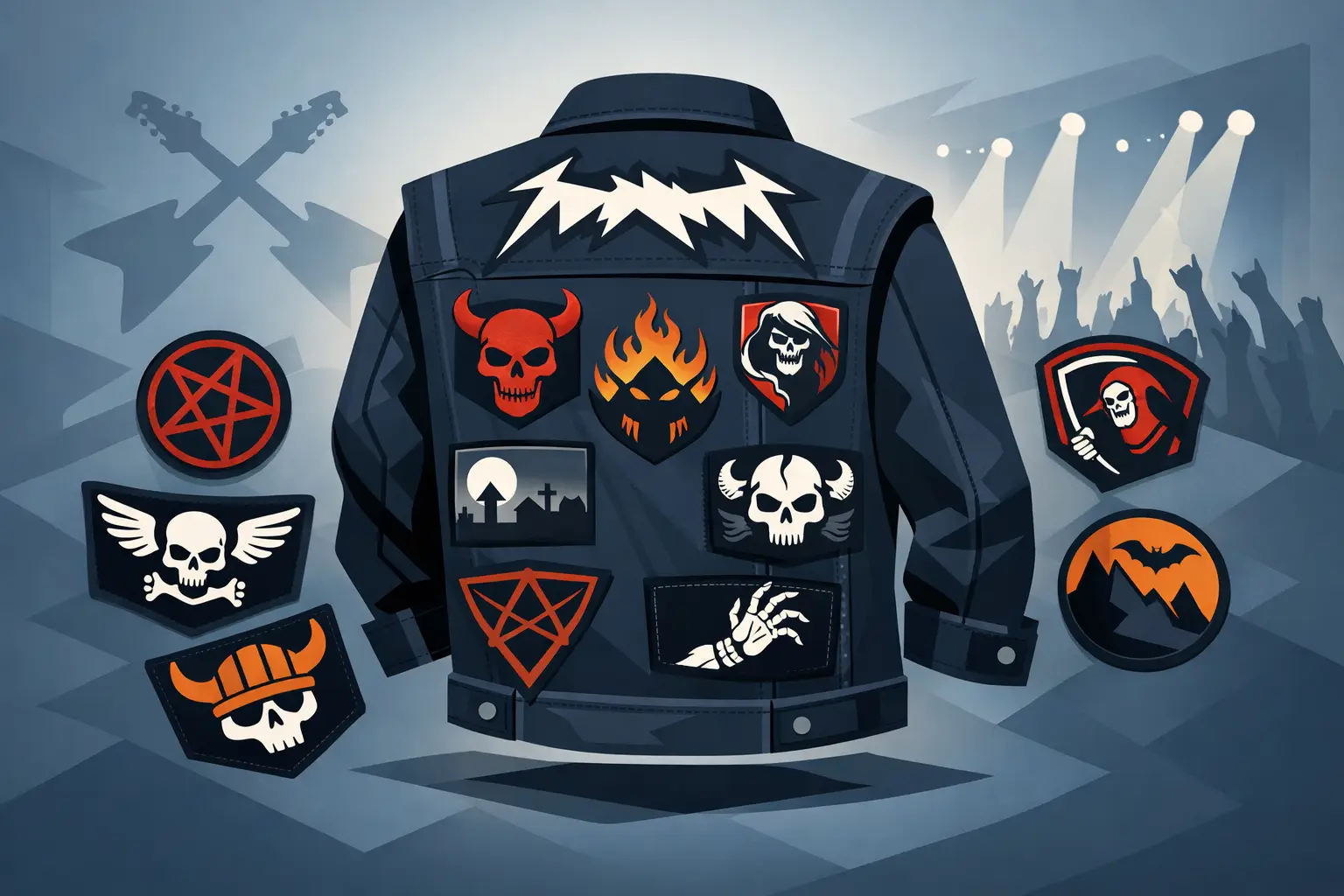
A battle jacket is not a neutral garment. It is a travelling record of gigs survived, albums worshipped and opinions held with enough conviction to start an argument at the bar. The best metal band patches do more than fill empty denim: they tell people whether you kneel at the altar of old-school thrash, disappear happily into doom, or have a suspiciously extensive knowledge of Finnish melodic death metal.
Buying patches should be fun, but a pile of random rectangles can become less battle jacket and more merch stall exploded in a wardrobe. The trick is choosing designs that feel like you, fit the garment, and have a decent chance of surviving rain, mosh pits and the occasional overenthusiastic washing machine.
What makes the best metal band patches?
The best patch is not automatically the rarest, largest or most aggressively skull-covered. It is the one that represents a band you genuinely rate and suits the job you have planned for it. A tiny woven logo might be ideal on a black backpack, while a huge back patch needs enough contrast and detail to carry the entire jacket.
Officially licensed patches are usually the sensible place to start. The artwork tends to be cleaner, the logo more accurate and the band gets paid for its work. That matters, particularly for smaller acts who rely on merchandise sales between tours. Unofficial patches can sometimes be interesting relics of a particular era, but quality varies wildly. If the print is blurry, the edge is fraying before it has met your jacket, or the logo looks like it was reconstructed from a blurry pub photo, leave it in the goblin cave.
Material is worth checking too. Embroidered patches have raised threadwork and a traditional, textured finish. Woven patches are flatter and brilliant for intricate logos, fine line art and lettering that would turn into thread soup when embroidered. Printed patches can handle detailed album artwork and colour-heavy designs, although they may not have the same tactile, built-for-war charm as embroidery.
Choose your patch type before you start hoarding
There is no law saying every jacket has to look like a 1987 thrash vest. Frankly, rules are for people who label their storage boxes. Still, knowing what each patch type does well makes the finished piece look deliberate rather than accidental.
- Back patches are the centrepiece. They normally feature a band logo, album cover or large-scale artwork and belong on the back panel of a jacket or vest.
- Embroidered logo patches suit sleeves, chest panels and bags. They are bold, durable and especially good for recognisable band names.
- Woven patches work well for detailed art, occult symbols and finely rendered designs where legibility matters.
- Printed patches are your best bet for album art, portraits and complicated imagery with plenty of colour.
- Iron-on patches are convenient, but they are not magic. Heat adhesive is useful for positioning, yet stitching is still the better long-term move.
A back patch does not need to feature your number-one band of all time. It can be the artwork that best captures the mood of the jacket. Maybe that is a classic black-metal landscape, a glorious fantasy illustration or a logo so sharp it could be used to cut sandwiches. Choose with your eyes as well as your playlist.
Build a jacket with a point of view
A strong battle jacket has a theme, even if that theme is simply “I contain multitudes and poor judgement”. You might build around a subgenre, a colour palette, a favourite era or a collection of bands you have seen live. A black denim jacket with white logos and silver studs has a very different feel from a faded blue vest covered in vibrant 1980s thrash designs.
Start with the back patch. It establishes the largest visual field and helps you decide whether surrounding patches should be monochrome, colourful, rectangular, shield-shaped or a mischievous mix. Then place your biggest pieces before committing to anything with needle and thread. Lay the jacket flat, shuffle things about, take a photo and walk away for an evening. If it still looks right the next day, proceed.
The chest is prime territory for favourite bands, small logos and patches that prompt a knowing nod from the right person. Sleeves are excellent for narrow designs, tour-style patches and symbols. Avoid trying to make every gap perfectly even. Slightly irregular placement looks lived-in, while a rigid grid can make a jacket feel oddly corporate. No one wants business-casual Slayer energy.
There is also a practical trade-off. Cramming every inch with patches looks magnificent, but makes the garment heavier, stiffer and harder to repair. Leaving some denim visible lets individual designs breathe and gives you space for future obsessions. Because there will be future obsessions. Bramble has seen your queue.
Metal patch placement etiquette, such as it is
Battle jacket etiquette is more culture than rulebook. Wear what you love, do not pretend you love bands you cannot stand, and do not use someone else’s jacket as a reason to be a tedious snob. Metal has enough gatekeeping without somebody conducting a forensic investigation into whether you own a first pressing.
That said, context matters. If you are making a tribute jacket for a particular band, era or scene, research the artwork and symbols before sewing. Some imagery carries political or hateful associations that have no place on your clothing unless your goal is to announce that you are a nightmare at parties. A striking design is not worth making other people feel unsafe.
For gig wear, think about the venue as well as the aesthetic. Long spikes can be banned, snag on coats and are deeply unpopular in dense crowds. Heavy studs may damage a chair, your car seat or the person attempting to squeeze past you. Patches deliver plenty of menace without turning your torso into a workplace hazard.
How to attach patches so they stay attached
Iron-on backing is helpful for holding a patch in place while you work, but heat alone rarely survives repeated wear and washing. Stitching around the edge is the dependable option. Use a strong needle, polyester thread close to the patch border, and small stitches that pass through the jacket rather than only catching the adhesive layer.
For a standard rectangular patch, begin at one corner and work steadily around the edge. A whip stitch is easy, visible and suitably handmade; a running stitch is subtler. Curved or irregular designs need a little patience, especially around points and corners. Pin the patch first, or use fabric clips if pins are fighting the thickness of your denim.
If you cannot sew, fabric glue can work for a bag or a low-wear display piece, but it is not the first choice for a jacket that will actually leave the house. Glue can harden, seep through fabric and give up when faced with damp weather. A local alterations shop may sew patches on for you, which is a perfectly respectable use of civilisation.
Wash patched clothing inside out on a cool, gentle cycle and avoid the tumble dryer where possible. Hand washing is kinder to old denim, printed artwork and anything with studs. If an edge begins lifting, repair it early. One loose corner has a remarkable talent for becoming a missing patch halfway through a festival weekend.
Patches are not only for battle jackets
Not everyone wants to commit to a full vest, and that is fine. Metal band patches work brilliantly on backpacks, messenger bags, pencil cases, beanies and denim shirts. A single well-chosen patch on a plain tote can say more than a dozen badly placed ones. They also make excellent gifts for the metalhead who is impossible to buy for, which is most metalheads after they have acquired their third identical black T-shirt.
For a gift, choose a patch from a band they mention unprompted, an album they always put on, or a design that matches their particular flavour of darkness. If you are unsure, a classic logo patch is safer than obscure artwork from a record they may have skipped. Mystery is exciting in a dungeon. It is less exciting when you have accidentally gifted a patch for the one album they hate.
At Planet Goblin, we firmly approve of wearable evidence that your music taste has teeth. Pick the patch that makes you grin, sew it on properly, and let your jacket collect stories rather than dust. The best one will look even better after a few gigs, a little rain and a great deal of unapologetic wear.