
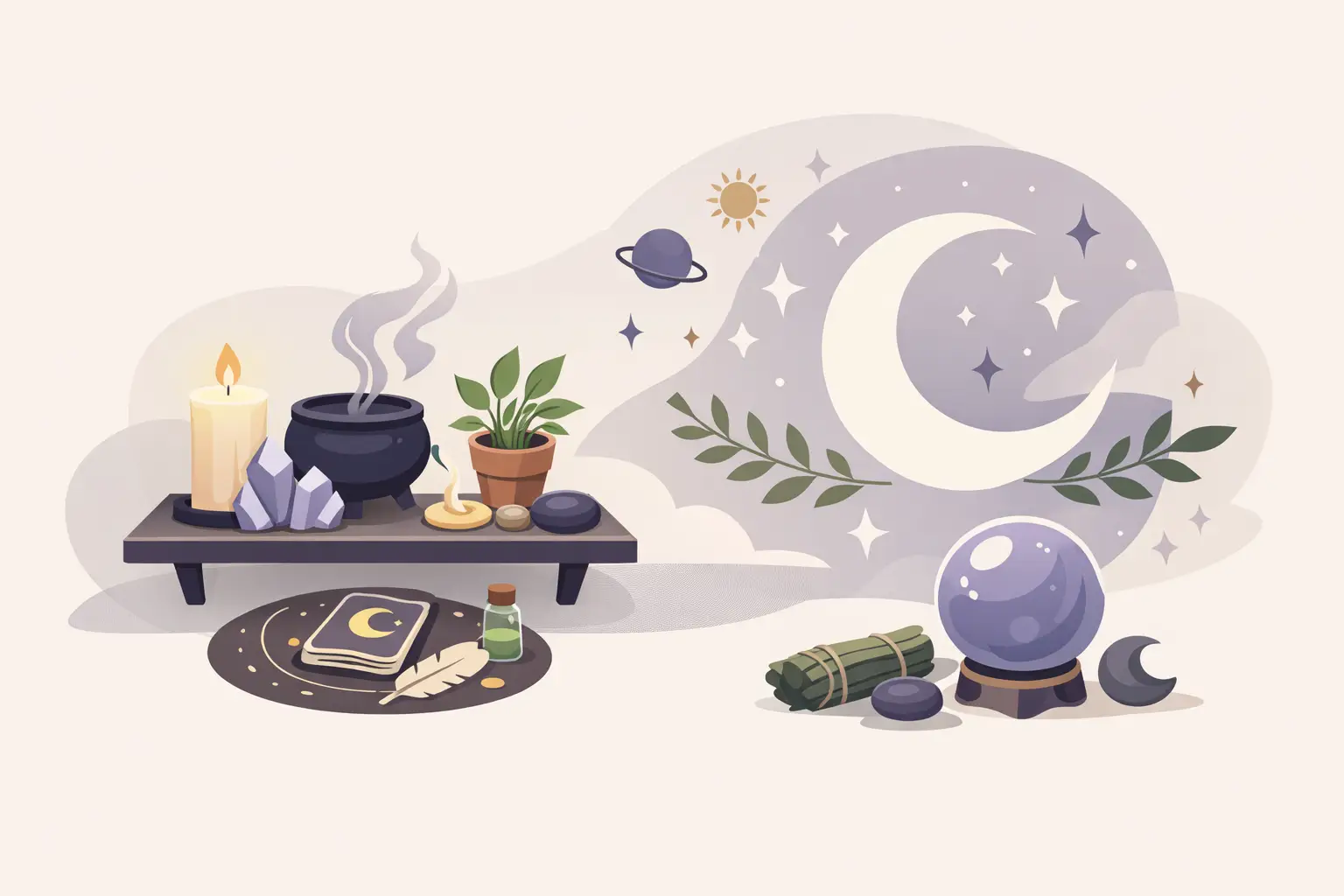
A small altar setup does not need a grand oak table, seventeen candles and a raven that pays rent. It needs a purpose, a place, and enough room for you to actually use it. Whether you are practising in a box room, a shared flat, a student hall, or one corner of an already gloriously overstuffed bookshelf, a tiny altar can still feel deeply personal.
The secret is not cramming every witchy object you own into a decorative traffic jam. It is choosing a few pieces that support your practice, your beliefs, and the mood you want to return to. Bramble’s official position is that an altar may be small, but it should never be boring.
Start your small altar setup with a purpose
Before choosing a cloth, statue or candleholder, decide what your altar is for. This can change over time, but a clear starting point keeps a small space from becoming cluttered with objects that look lovely yet mean very little to you.
A daily devotional altar might hold a candle, a meaningful image or symbol, and a small bowl for offerings. A tarot or oracle space may need clear room for cards and a pouch to keep them safe. If you practise spellwork, you may want a heatproof dish, a holder for incense, and a compact place to store herbs or written intentions. An ancestor altar may be centred around photographs, mementos and seasonal offerings.
You do not have to follow a fixed template. Wiccan, pagan, folk magic and spiritual practices vary hugely, while some people simply want a quiet corner for reflection and ritual. Your altar is not being graded by a coven of judgemental woodland creatures. Build it around what helps you focus.
Choose a spot that works in real life
The best location is usually the one you can access without performing a furniture-based side quest. A bedside table, windowsill, shelf, desk corner or the top of a chest of drawers can all work beautifully. If privacy matters, choose a place you can cover, pack away, or keep inside a drawer.
Think about the practical realities before you commit. A sunny windowsill is wonderful for a moon-charged crystal display, but it may fade fabrics, damage delicate cards, or turn a glass ornament into a tiny magnifying menace. A shelf above a radiator is not ideal for wax, dried flowers, or anything that dislikes heat. If you have curious cats, dogs, children, or a housemate with the spatial awareness of a rogue barbarian, put fragile objects safely out of reach.
For a truly temporary altar, use a tray, shallow box, or decorative board. You can bring it out for a ritual, then slide it under the bed or into a cupboard afterwards. This is not a less authentic option. It is clever, discreet, and significantly less likely to get tea spilled over your oracle deck.
The advantage of a portable altar
Portable altars are especially useful for renters, students and anyone sharing a home. A lidded box can hold a small cloth, tealight holder, cards, crystals, incense and a notebook in one tidy kit. A tray gives your objects a clear boundary and makes cleaning around the space much easier.
If you travel, keep it even simpler: one card deck, a small token, a battery-operated candle and a few lines in a journal can create a ritual pause almost anywhere. Spiritual practice does not stop being valid because it fits in a tote bag.
Pick a focal point, then resist the urge to hoard
Every good small altar setup needs one visual anchor. This could be a deity figure, pentacle, seasonal decoration, a favourite tarot card, a framed piece of art, a skull ornament, a dragon figurine, or a simple candle. Choose something that makes you feel connected the moment you see it.
Then build around that focal point with restraint. In a small area, three intentional objects often have more presence than fifteen competing trinkets. Consider one item for atmosphere, one for ritual and one for meaning. For example, a black candleholder, a small dish for offerings, and a piece of moonstone might be plenty.
This does not mean you must abandon maximalism forever. Some of us were born to decorate like a Victorian séance parlour collided with a goblin treasure stash. It simply means rotating your pieces. Keep the core altar calm, then swap in seasonal items, a card of the week, flowers, charms or a new crystal when the mood shifts.
Use vertical space, not just surface space
When the altar itself is tiny, look upwards. A small wall shelf, narrow display ledge, or tiered stand can create height without swallowing your desk. Place taller pieces at the back and shorter ritual items at the front, so nothing gets hidden behind a dramatic candleholder.
A book nook or small display shelf can be particularly effective if your altar sits among fantasy novels, tarot guides or tabletop treasures. It lets the space feel like part of your home rather than a hastily assembled shrine squeezed between charging cables. Planet Goblin’s sort of crowd understands that a gothic shelf and a respectable dice collection can absolutely coexist.
Just avoid overloading shelves with heavy objects, especially if they are fixed to plasterboard. Your altar should inspire reverence, not an unexpected 2am crash followed by several minutes of horrified swearing.
Keep your tools useful and safely stored
Small spaces reward multi-purpose items. A pretty dish can hold salt, jewellery, herbs, small offerings or burnt matches. A compact box can store tea lights, incense, spare notes and card decks. A cloth can define the altar surface, wrap your cards, or cover the whole arrangement when you need privacy.
If you use incense or candles, safety gets a vote. Use a sturdy holder on a heatproof surface, keep flames away from curtains and shelves, and never leave them unattended. Battery candles are excellent for bedrooms, student accommodation, pet-filled homes and anyone who wants atmospheric lighting without setting off the smoke alarm. They may lack a little theatrical drama, but so does explaining a fire brigade visit to your landlord.
For herbs, oils and powders, use labelled jars or tins. This is not just about looking organised. It prevents you from mistaking cinnamon for something far less snack-friendly, and helps you use ingredients thoughtfully rather than buying a cupboard full of mystery dust.
Let the seasons change the mood
A small altar does not need a complete makeover for every sabbat, moon phase or festival. One or two changes are enough to mark the turning of the year. In autumn, add a tiny pumpkin, dried leaves or a dark red cloth. For winter, try evergreen, silver details or a star-shaped charm. Spring may call for a bud vase, fresh green ribbon or floral imagery, while summer suits sun symbols, gold tones and bright blooms.
Use what is available and ethical. Fallen leaves from a clean outdoor space, a pebble from a meaningful walk, or a handwritten intention can carry more personal power than a pile of expensive decorations. Avoid taking living plants, feathers or natural materials from protected places. The land is not a free craft aisle, no matter how much the local magpie encourages your collecting habits.
Make it private if it needs to be
Not everyone can leave spiritual items on display. You may live with family who do not understand, share a room, or simply prefer your practice to remain yours. Discretion is not shame. It can be a practical boundary.
Choose objects that look decorative to anyone else: a candle, a small dish, a framed artwork, a plant, a jewellery box. Keep more specific tools in a drawer or pouch. You can also create a digital altar using a private mobile phone wallpaper, playlist, journal note or image folder when physical space is not possible.
The meaning is in the relationship you build with the practice, not in how obvious it looks to visitors.
Give it a small moment of care
An altar works best when it is not treated as permanent décor that slowly gathers dust and abandoned receipts. Every so often, clear the surface, wipe it down, remove old offerings respectfully, and notice whether the space still reflects what you need. You may find that a once-essential item no longer belongs there, or that your practice wants more room for journalling than candle magic.
Light a candle if it is safe to do so, pull a card, sit quietly, write a line of gratitude, or simply rearrange one object with intention. Your small altar is allowed to evolve with you. Keep it useful, keep it yours, and leave enough room for the next peculiar little treasure that insists it has found its forever home.