
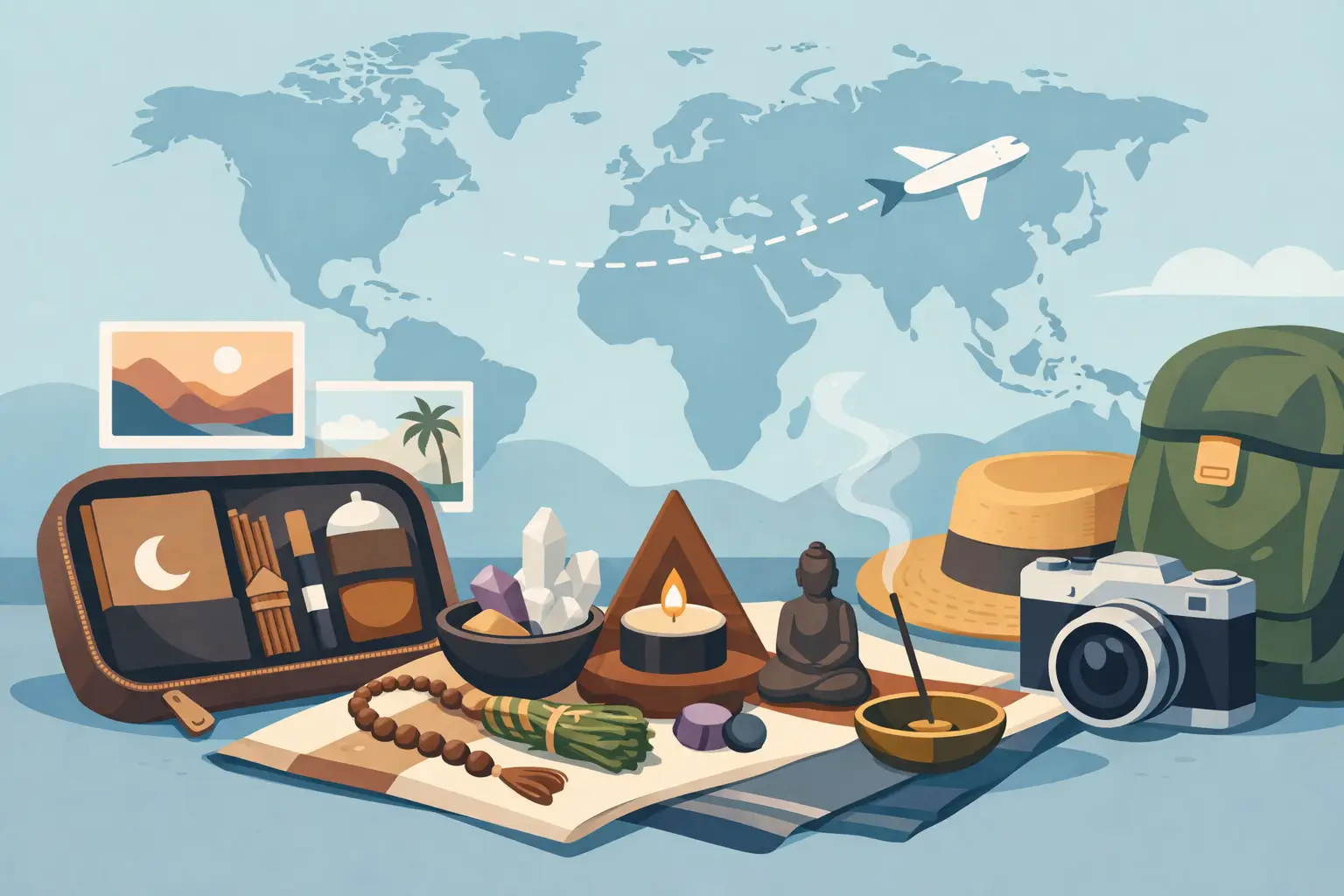
A travel altar is what happens when your spiritual practice refuses to stay at home sulking beside the houseplants. To build a travel altar is not to recreate every candle, crystal and ceremonial bell from your shelf in miniature. It is to choose a few meaningful things that let you feel grounded wherever you land – a mate’s spare room, a campsite, a festival tent or a hotel with aggressively beige décor.
The best one is small, personal and practical. It should support your practice without turning airport security, your rucksack or your fellow travellers into unwilling participants in a game of ‘what is that pointy object?’
Start with purpose, not a shopping list
Before choosing a tin, pouch or box, decide what you want your altar to do. Are you travelling during a sabbat and want a quiet way to mark it? Do you use daily tarot pulls or devotional prayer to keep yourself centred? Perhaps you simply want a protective, comforting pocket of familiar energy while away from home.
There is no universal kit. A traveller who honours deities may pack a tiny image, symbol or written prayer. A nature-focused practitioner might bring a leaf, feather or small stone collected with care. Someone whose practice centres on divination may need only a favourite deck and a cloth. If you are new to witchcraft, a travel altar can be a lovely low-pressure way to work out which tools actually matter to you.
Pick one main purpose and build around it. A ritual kit for grounding needs different things from one for readings, spellwork or seasonal observance. Trying to cover every possible magical emergency is how you end up hauling a suitcase full of minerals through Edinburgh Waverley. Noble effort. Poor packing.
Choose a container that earns its place
Your container is both protection and presentation. It does not need pentagrams carved into the lid, although nobody is stopping you. A small wooden box feels traditional and makes a pleasing temporary altar surface. A sturdy tin is discreet, light and excellent for loose bits. A zip pouch is ideal for a soft, flexible kit, especially if you are travelling with limited luggage.
Think about where and how you are going. For a city break with a cabin bag, keep it slim and avoid anything fragile. For camping, choose something waterproof or at least use a sealed pouch inside your pack. If you are visiting family members who might not understand your practice, a plain tin or cosmetics bag can keep your altar private without making it feel less sacred.
A small tray, altar cloth or scarf can do more than make things look properly witchy. It creates a defined space on a bedside table or picnic blanket, protects surfaces from wax and gives you a clean boundary for ritual. Choose washable fabric if it is likely to meet mud, tea or the mysterious crumbs at the bottom of every overnight bag.
What to put in a travel altar
Keep the contents edited. Every item should either serve a clear practical function or carry genuine personal meaning. The following makes a versatile starting point without becoming an occult branch of WHSmith:
- A small altar cloth, scarf or square of fabric
- One meaningful charm, token, deity symbol or natural object
- A small candle substitute, such as an LED tealight
- A compact deck of tarot, oracle or affirmation cards
- A tiny jar or packet for salt, herbs or loose incense, if appropriate
- A pen and folded paper for intentions, prayers and notes
- A tea light holder or heatproof dish if you will use real flame safely
You do not need all of it. In fact, most people will be better served by three to five items. A card deck, a protective charm, an LED candle and a cloth can create a complete ritual space in under a minute.
If crystals are part of your practice, choose one or two tough little companions rather than your entire hoard. Tumbled stones travel more kindly than delicate points, and a cloth pouch stops them clattering about like tiny geological gremlins. A small piece of clear quartz, obsidian, amethyst or whatever you already connect with is plenty.
For deity work, a printed image, an enamel pin, a small symbol, a prayer card or a handwritten invocation can be more travel-friendly than a statue. Meaning is not measured in kilograms. The gods, ancestors and spirits you honour are unlikely to be impressed by a pulled shoulder muscle.
Fire, fragrance and the boring-but-vital rules
Real candles and incense can be beautiful, but they are not automatically suitable for travelling. Most hotels, hostels, festival tents and shared spaces prohibit open flames. Even where they are allowed, smoke can trigger alarms, upset people with asthma or leave a smell that attracts the wrong sort of attention from staff.
LED tealights are the easiest answer. They give you the visual focus of flame with none of the drama, and modern ones can be surprisingly convincing in low light. For scent, consider a sealed sachet of dried herbs, a lightly scented cloth, or simply skip fragrance altogether. Your practice has not failed because you did not smuggle a charcoal burner into a Premier Inn.
If you are flying, check airline and airport restrictions before packing. Liquids, oils, blades, matches and certain loose powders can complicate security. Put anything questionable in checked luggage only if it is permitted and safely packed, or leave it at home. A travel altar should reduce stress, not create a tense conversation over a bundle of herbs at the security tray.
Make the ritual fit the place
A travel altar does not demand a full moonlit ceremony every time you unzip it. Often, the best use for it is brief and quiet. Lay down your cloth, place one or two objects on it, take a few breaths and set an intention for the day. Pull a card, say a prayer silently, hold your charm or write one line in a notebook. Then pack it away.
This flexibility matters when you share space. Be mindful of your hosts, roommates and fellow campers. Ask before using scent or flame, keep private practices private where needed, and do not collect natural materials from protected places or private land. If you leave offerings outdoors, choose biodegradable options sparingly and never leave anything that could harm wildlife. Better yet, take your offerings home with you or offer a kind action instead.
A travel altar can also be entirely internal. If conditions are cramped, unsafe or simply not private, you can visualise your altar, hold a token in your pocket and practise without laying out a thing. Tools are helpful anchors, not entry requirements. Anyone insisting you need a full travelling apothecary to be legitimate is selling something. Possibly several things in tiny glass bottles.
Give it a packing ritual
Packing your altar with intention helps it feel like a companion rather than miscellaneous luggage. Before a trip, clean or refresh the items in whatever way suits your practice: a wipe with a cloth, a moment in moonlight, a spoken blessing, a prayer, or simply clearing away dust and old receipts. Then decide what the journey calls for.
You might write a short intention on paper: ‘I travel safely, stay open to joy, and return rested.’ Fold it and place it under your deck or charm. When you arrive, set up your altar for five minutes. When you leave, thank the space, pack carefully and take a moment to reflect on the trip. That small rhythm can make unfamiliar places feel less rattling.
If you are assembling your first kit, Planet Goblin’s witchy oddities and compact card decks are precisely the sort of treasure that can make a small altar feel yours without demanding an extra suitcase. Choose the pieces that make you pause, smile or feel steadier. Bramble would approve, while pretending not to care.
The point is not to prove how much spiritual equipment you own. Build a travel altar that is light enough to bring, discreet enough to use when needed and meaningful enough that, when the world feels unfamiliar, it reminds you that you have not left yourself behind.