
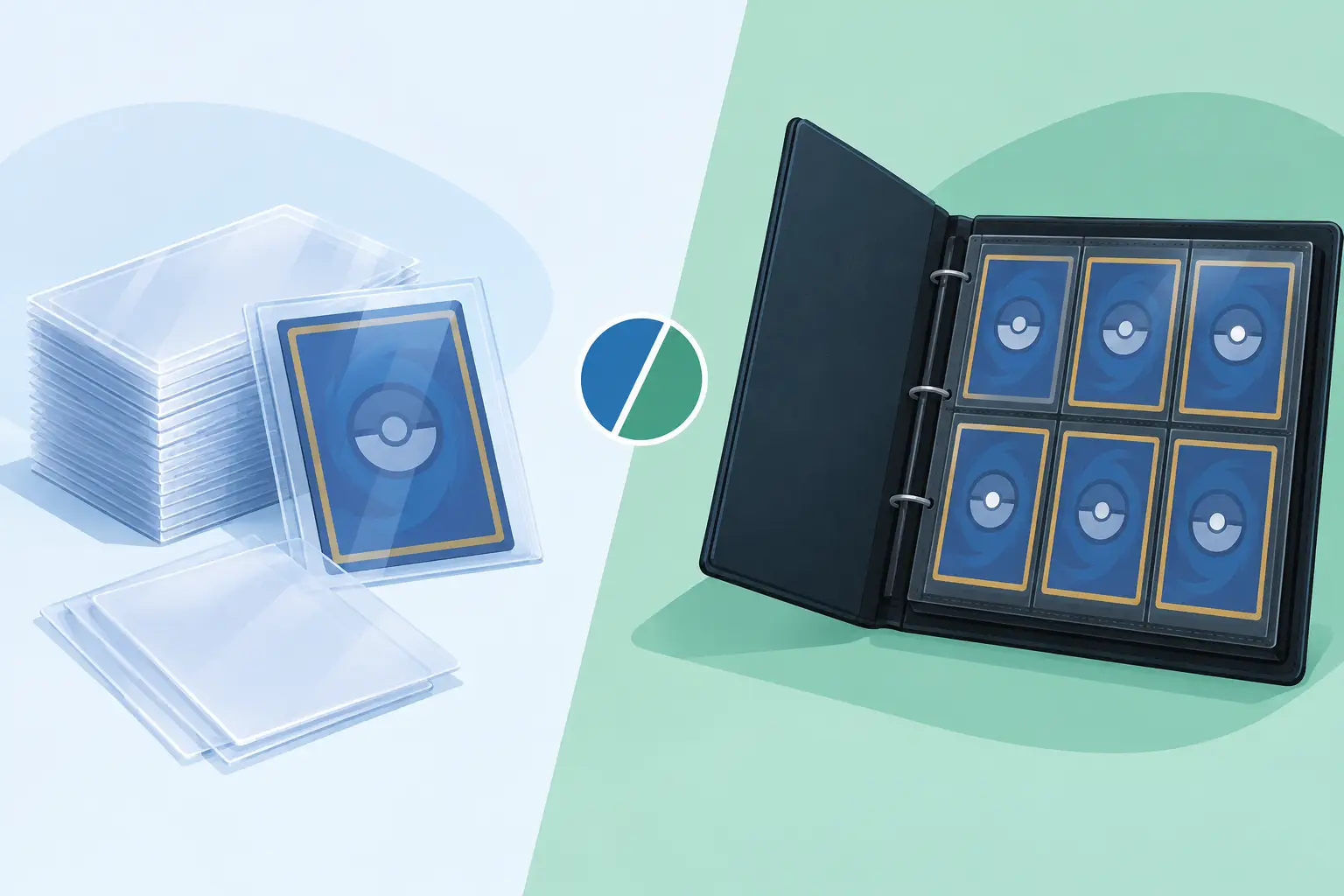
That shiny foil pull looks considerably less magical once it has acquired a thumbprint, a bent corner and the faint aura of a crisp that escaped the snack bowl. The card sleeves versus binders debate is not really about choosing one superior bit of plastic. It is about deciding what your cards need to do: survive game night, look glorious on a shelf, travel to events, or lurk safely in a collection like tiny cardboard treasure.
For most collectors and players, the honest answer is both. Sleeves and binders protect cards in different ways, and treating them as rivals can lead to a collection that is either inconvenient to play with or oddly vulnerable to dust, pressure and overenthusiastic rummaging. Bramble has opinions, naturally. Your precious cardboard deserves better than being loose in a drawer beside three mystery batteries and a receipt from 2022.
Card sleeves versus binders: the real difference
Card sleeves are individual protective covers, usually made from polypropylene or similar clear plastic. You put one card in each sleeve, then use it in a deck box, storage box, playmat bag or binder. Their chief talent is protecting a card while it is handled repeatedly.
Binders hold multiple cards in fixed pockets across pages. They are built for organising, viewing and storing collections. A good binder makes it easy to admire your favourite character cards, complete a set, or prove to visitors that yes, you did pull that card and no, they may not touch it with sticky hands.
The key difference is movement. Sleeves are designed around active handling. Binders are designed around tidy, visible storage. A card can be sleeved and then placed in a binder pocket, which is often the sensible route for valuable or sentimental cards.
Choose sleeves if your cards are played, shuffled or traded
If you build decks for Magic: The Gathering, Pokémon, Yu-Gi-Oh!, Lorcana, Flesh and Blood, or any other game where cards are regularly shuffled, sleeves are not optional decoration. They are the practical baseline.
Repeated shuffling marks card edges quickly. Even careful hands create tiny scuffs over time, while tables collect grit, drinks appear from nowhere, and one player will inevitably shuffle as though they are trying to start a campfire. Sleeves take that wear instead of the card.
They also make a deck feel consistent. Tournament play often requires opaque-backed sleeves so cards cannot be identified from tiny differences in wear or printing. Even for casual games, matching sleeves stop your best cards becoming suspiciously recognisable from across the table. Nobody needs accusations of marking cards during a friendly Friday night campaign break.
Single sleeves, inner sleeves and double-sleeving
For ordinary casual decks, a single quality sleeve is usually enough. Look for a snug fit, clear fronts for readable text and sturdy seams. Matte backs can make shuffling easier and reduce glare under aggressive overhead lighting.
Inner sleeves are thinner, close-fitting sleeves that go directly around the card before it goes into a standard outer sleeve. Double-sleeving gives better protection against dust and minor spills, particularly around the top edge. It is popular for expensive decks, commander decks full of favourites, and cards that would make you stare silently into the middle distance if damaged.
There is a trade-off: double-sleeved decks are thicker. A 100-card deck can become a surprisingly hefty goblin brick, so make sure your deck box has room. Inner sleeves also need a little patience to use neatly. If cards bend or sleeves wrinkle, stop and reseat them rather than forcing the issue.
What sleeves do badly
Sleeves are rubbish at displaying a collection. A stack of sleeved cards in a deck box is secure and compact, but it is not particularly browseable. If you own a gorgeous run of fantasy art, a full set of holo rares, or cards you simply enjoy looking at, riffling through a stack is not the experience.
Sleeves can also split, cloud, collect grime or develop sticky corners with heavy use. That is normal. Replace damaged sleeves promptly, especially if you play competitively. The sleeve is meant to take the hit. Let it fulfil its noble, plastic destiny.
Choose binders if you collect sets and want to display them
Binders shine when organisation matters as much as protection. They turn loose cards into a collection with a shape, whether you are arranging a full set by number, grouping cards by faction, or keeping every dragon, witch and spectacularly dramatic villain in one place.
They are especially good for trading cards you do not play. A binder makes duplicate checks easy, helps you spot missing cards, and gives you a safer way to show someone your collection without passing individual cards around the room. For gift-givers, it also makes a collection feel intentional rather than like an accidental pile of shiny rectangles.
Side-loading pockets beat gravity
For most collections, choose a side-loading binder. Cards slide in from the side rather than the top, which makes them less likely to fall out when the binder is carried or held upside down by someone with questionable manners.
Fixed-page binders are usually safer than ring binders for valuable cards. Rings can pinch pages, create pressure points and dent cards near the binding if the binder is overfilled or shut carelessly. This is not a myth invented by dramatic collectors. Ring damage is a genuinely miserable way to discover that storage choices have consequences.
Look for acid-free, PVC-free materials where possible. PVC can interact poorly with cards over long periods, while archival-safe materials are made with long-term storage in mind. A zip-up binder adds another useful layer against dust and accidental spills, though it should still be stored flat or upright without crushing it beneath heavier things.
What binders do badly
A binder is not an ideal home for a deck you use every week. Pulling cards in and out repeatedly is slow, puts wear on pockets, and makes it far too easy to misplace a card during deck changes. Keep active decks sleeved in a deck box instead.
Binders are also bulkier than card boxes. A binder full of double-sleeved cards can strain pockets and make pages bow. Do not cram cards into pockets that are too small, and do not stack binders with enough weight to turn the bottom one into a sad plastic pancake.
The best setup for different kinds of collector
A casual player with one or two decks can keep things simple: sleeve each deck, use a properly sized deck box, and store spare cards in a small binder or card storage box. You do not need museum-level preservation for every common card. Save the deluxe protection for things you play, love or would struggle to replace.
A set collector should usually prioritise a high-quality side-loading binder. Sleeve standout cards before placing them in binder pockets, especially foils, limited prints, signed cards or anything with a value that makes your eyebrows rise. Keep duplicates in labelled storage boxes so the binder stays clean and easy to browse.
A trader benefits from a separate trade binder. It keeps cards available without exposing your personal collection, and it stops the awkward moment when someone asks whether a card is for trade while you are emotionally attached to it. A clear system is kinder to everyone involved.
For a valuable collection, consider a layered approach: inner sleeve, outer sleeve, side-loading binder, then storage in a cool, dry place away from direct sunlight. Avoid lofts, damp garages and windowsills. Cards dislike heat, humidity and ultraviolet light almost as much as vampires do.
Protection is not just about plastic
Even the finest sleeves and binders cannot fix careless storage. Keep cards away from food, drinks, radiators and direct sun. Wash and dry your hands before handling special cards, particularly after eating. If a card gets wet, do not use a hairdryer or press it beneath every hardback in the house. Separate it carefully, let it air dry in a clean space, and accept that rescue is not always possible.
When travelling with cards, use a rigid deck box or a zip binder inside a bag. Loose cards in a backpack are practically issuing an invitation to bent corners. If you are taking a prized collection to a game night, bring only what you need. The rest can remain safely at home, plotting revenge on dust.
So, which should you buy?
Buy sleeves first if you play with the cards. Buy a binder first if your main joy is collecting, sorting and admiring them. Buy both if you have active decks and a growing collection, which is how this usually goes once the cardboard goblin has your scent.
Do not let perfectionism stop you from protecting what you already own. Start with a decent pack of sleeves for the deck on your table, then give your favourite pulls a proper binder home. Future you, discovering a pristine card months later, will be unbearably pleased with present you. I will not be taking questions.