
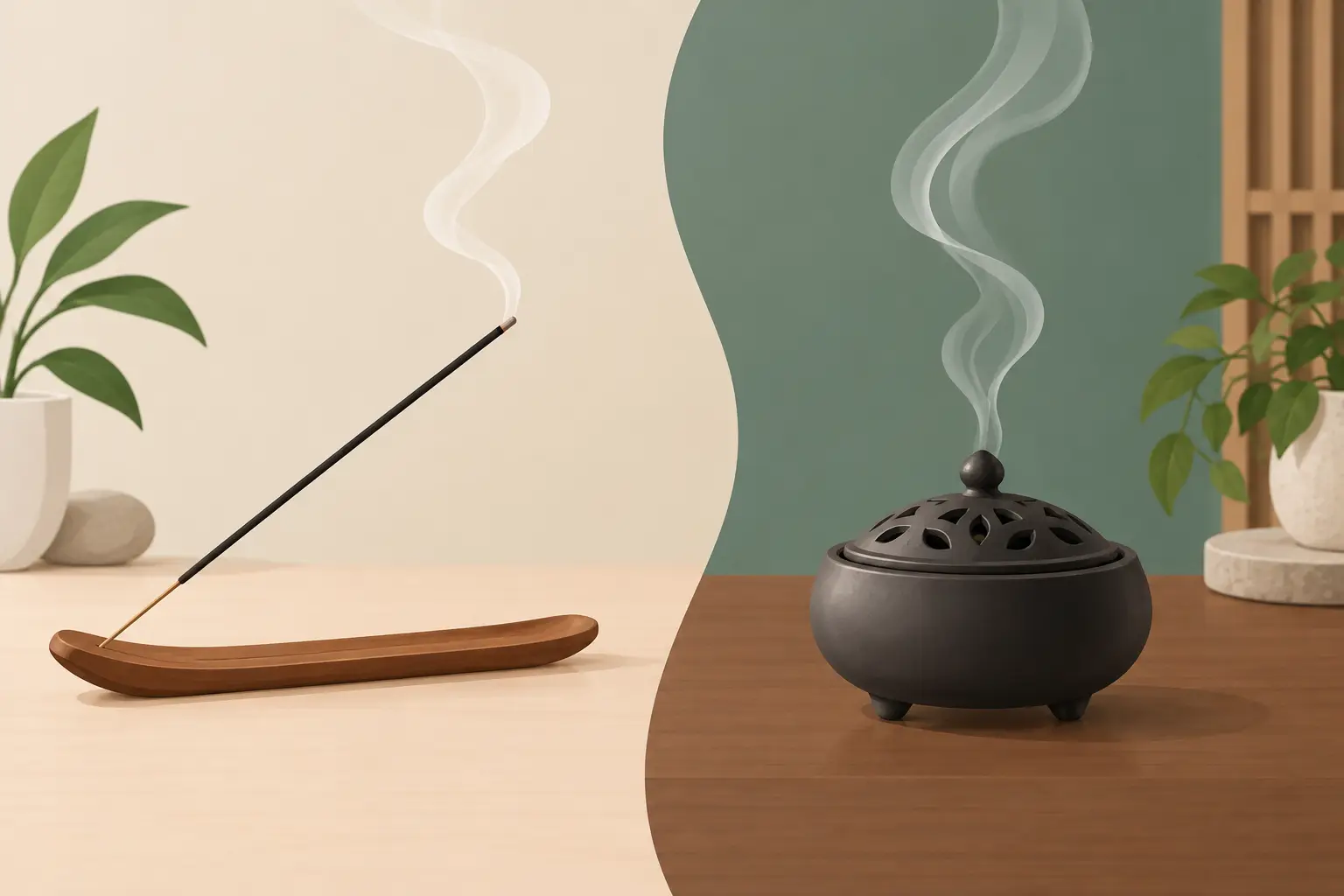
A stick of incense balanced in a mug full of old rice is a rite of passage. It is also how ash ends up on your altar cloth, bookshelf or the one black jumper that attracts every speck of dust in the flat. When choosing incense holders vs burners, the difference is less about decorative labels and more about what you are burning, how much heat it creates and where you want the ash to land.
For a quiet evening ritual, a gothic bedroom atmosphere or simply making your home smell less like damp coats and existential dread, the right incense accessory makes the experience safer and much less fiddly. Bramble insists that “fiddly” is the enemy of a good spooky ambience. I will not be taking questions.
Incense holders vs burners: the actual difference
An incense holder is usually designed to support incense and catch its ash. Think of a wooden ash catcher for a single stick, a small ceramic dish with a hole, or a carved hand, moon or dragon that holds your incense at an angle. Its job is straightforward: keep the stick stable while it smoulders and give the falling ash somewhere sensible to go.
An incense burner is built to manage more heat, more smoke, or both. It may be a lidded box for cones, a ceramic backflow burner, or a heatproof bowl intended for charcoal and loose resin. Many burners also function as holders, which is why product names can get a bit chaotic. The useful distinction is this: holders support incense; burners contain the burning process.
That means a holder is often perfect for standard incense sticks, while a burner is usually the wiser choice for cones, backflow cones, resin, herbs and charcoal discs. Neither is automatically superior. They serve different magical missions.
Choose by incense type, not just by vibes
The black cat holder may be calling your name from across the internet. Fair. But first, check what it is actually meant to hold.
Incense sticks
A simple stick holder or ash catcher is the natural choice for bamboo-core incense sticks. The stick sits in a small hole and burns down gradually, while a long tray catches the ash. Look for a tray longer than the incense itself, especially if the stick rests at an angle. Ash has a talent for falling just beyond the bit you assumed was wide enough.
Ceramic and metal holders can be a little easier to wipe clean than carved wood, but wood ash catchers are lightweight, traditional and available in plenty of witchy, celestial and fantasy designs. If you burn incense frequently, choosing something with a raised edge can save your furniture from a constant coating of grey confetti.
Incense cones
Regular incense cones need a heat-resistant surface. A small ceramic burner, metal dish or lidded incense box is generally better than a narrow stick holder, because the cone burns at its base and leaves behind a warm, crumbly residue.
A burner with a lid can soften the visual impact of the glowing cone and direct smoke through cut-out stars, moons or gothic windows. It is a particularly good option if you want fragrance without leaving a smouldering cone fully exposed on a coffee table. Still, the burner itself can become hot, so treat it like the tiny volcanic object it is.
Backflow cones
Backflow incense requires a proper backflow burner. These cones have a hollow channel that sends smoke downwards, creating the famous waterfall effect over steps, skulls, rocks or whatever bit of fantasy architecture has captured your heart.
A standard cone holder will not create this effect. The cone must sit directly over the burner’s hole, and it must be a backflow cone rather than an ordinary one. Even then, the smoke can leave a light oily residue because of how the cone burns. Place the burner on a washable, heatproof surface and clean it after use. Gorgeous? Absolutely. Low-maintenance? Not remotely.
Resin, herbs and charcoal
If you are burning frankincense, myrrh, loose blends or dried herbs, use a dedicated heatproof burner or censer with charcoal. A charcoal disc gets seriously hot and stays hot longer than many people expect. It needs a deep ceramic or metal vessel, ideally filled with sand, ash or another non-flammable base that cushions the charcoal and spreads the heat.
This is the category where a decorative holder is not enough. Never put charcoal directly into a wooden tray, a thin glass bowl or a resin ornament. A proper burner may look dramatic, but its practical job is to prevent the sort of household incident that ruins a perfectly good ritual.
How to choose the right holder or burner
Start with the incense you use most. If your collection is mainly stick incense, a holder with a generous ash-catching area is probably all you need. If you like switching between cones and sticks, choose a ceramic burner with space for both. For dedicated backflow sessions or loose ritual incense, buy the specific burner the format requires rather than trying to improvise.
Then consider where it will live. A tall, ornate burner makes a splendid altar centrepiece, but it may be a poor fit for a crowded bedside table or a home shared with curious cats. A low, wide holder is stable and practical in smaller spaces. A lidded burner can be useful around drafts, although no lid makes burning incense safe to leave unattended.
Material matters too. Ceramic, stone and metal tend to cope well with heat and are easy to clean, though metal can become extremely hot. Wood works beautifully for stick incense when the ash is contained, but should not be used for hot charcoal or direct cone burning unless the design specifically includes a heatproof insert. Glass can crack with sudden heat, so save it for display rather than combustion wizardry.
Finally, choose something you will actually enjoy seeing. Incense is functional, but it is also theatre. A moon-phase dish, a dragon guarding your smoke trail, a gothic arch or a little mushroom shrine can turn an everyday scent ritual into part of your room’s personality. This is one of those rare cases where practical and delightfully strange can coexist without compromise.
A few safety rules worth obeying
Incense is gentler than a bonfire, but it is still burning material. Keep the holder or burner on a flat, heat-resistant surface, away from curtains, papers, dried flowers and piles of character sheets. Put it somewhere children and pets cannot reach, and do not leave it burning when you leave the room.
Ventilation matters. Crack a window where possible, particularly with charcoal, resin or lots of cones. If smoke irritates your eyes, chest or throat, extinguish the incense and give the room some air. People with asthma, allergies or scent sensitivities may prefer a shorter burn or no incense at all. Atmospheric does not need to mean overwhelming.
When you think the incense is finished, check for glowing embers before emptying ash or moving the burner. Charcoal should cool completely in its vessel. Do not rush it into the bin because you are heading to bed. The goblin council is firmly against surprise bin fires.
When one item can do both jobs
Some designs genuinely bridge the gap. A wide ceramic dish with a stick hole can catch ash from sticks and provide a safe base for a cone. An incense box may hold sticks inside while also accommodating cones on a metal insert. These are handy starter pieces and brilliant gifts for someone building their first witchy shelf, meditation nook or gothic sanctuary.
The trade-off is specialisation. A multi-use burner will not create a backflow waterfall, and a shallow dish cannot safely replace a charcoal censer. If you regularly use several incense types, it is often better to have two or three purpose-built pieces than one overworked accessory trying to be everything to everyone.
For most people, the best choice is wonderfully unglamorous: buy for the incense you burn, make sure the ash and heat are properly contained, then pick the most gloriously odd design your space can handle. Your ritual corner deserves better than a mug of rice.