
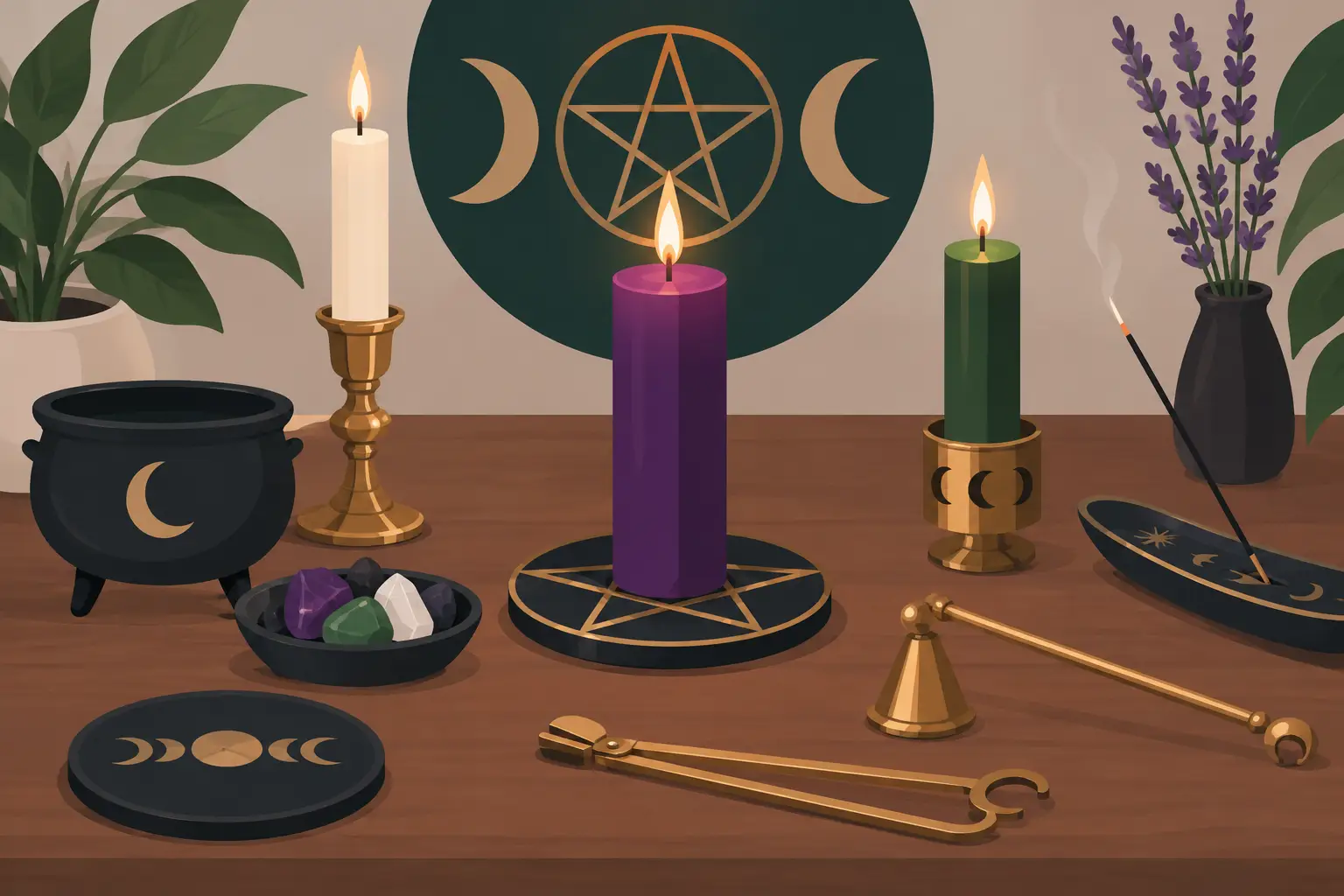
A candle in a heatproof dish is perfectly capable of doing its job. But the best Wiccan candle accessories make a ritual space safer, less fiddly and much more yours. They are not magical shortcuts, nor must-have proof of a ‘proper’ practice. They are useful little supporting characters: the goblins behind the curtain making sure your candle does not drip wax over your favourite altar cloth or scorch the furniture.
Whether you are building a first altar in a bedroom corner or refining a well-loved working space, choose accessories that suit the candles you actually burn and the way you practise. A black iron holder may look suitably dramatic, for instance, but it is no help if you mostly use tea lights. Practicality first. Gorgeously witchy practicality second. Bramble has spoken. I will not be taking questions.
Start with fire safety, not fancy trinkets
Candle magic asks for attention. That is part of its appeal. A flame gives a spell, meditation or seasonal observance a clear beginning and end, but it also needs the same sensible care as any open flame.
Your foundation should be a stable, non-flammable surface with plenty of clear space above it. Keep candles away from curtains, paper decorations, dried flowers, loose sleeves and the sort of cat who believes every altar is a personal obstacle course. Never leave a burning candle unattended, and do not try to move it while the wax is liquid.
A heatproof altar tray or plate is one of the least glamorous purchases and one of the cleverest. It catches drips, protects a tabletop and creates a defined place for candle work. Choose ceramic, stone, metal or thick glass designed to tolerate heat. If your practice includes oils, herbs or dressed candles, go for a tray with a slight lip. Wax has a talent for escaping exactly when you thought you had been careful.
The best Wiccan candle accessories for everyday ritual
There is no universal kit. Wiccan traditions, solitary practices and personal preferences differ, and a huge ceremonial arrangement is not automatically more meaningful than a single white candle in a safe holder. Still, a few accessories earn their place because they solve real problems.
Candle holders that fit the candle
A candle holder should be chosen by size before style. Taper candles need a snug, upright socket. Pillar candles need a broad, level base. Tea lights are happiest in dedicated cups or lanterns, while chime candles need a small holder that will not tip as the candle gets lighter.
For a flexible altar, a simple holder that accepts standard chime candles is a strong starting point. Chime candles are affordable, quick to burn and available in colours commonly used for intention work. If the base is a touch loose, secure the candle with a small drip of wax rather than forcing it in and cracking the holder.
Metal holders suit gothic and rustic spaces beautifully, but they conduct heat. Ceramic and stone generally stay more forgiving to handle, although they can still become hot. Glass looks lovely with tea lights, yet very thin glass can be a poor choice for a high, hot flame. The aesthetic matters, naturally. We are goblins, not accountants. But a holder that matches your candle is always more enchanting than one that creates a minor emergency.
A candle snuffer for a calmer finish
Blowing out a candle is not forbidden, despite what certain corners of the internet may insist. Many practitioners simply prefer a snuffer because it puts out the flame without scattering ash, blowing wax about or filling the room with a sudden puff of smoke.
A long-handled metal snuffer is especially useful around deep jar candles and arrangements with several flames. Lower the bell gently over the wick until the flame goes out, then lift it away once the smoke settles. Wipe soot from the inside occasionally so it remains tidy.
If you associate extinguishing a candle with closing a spell or releasing an intention, the snuffer can become a pleasing ritual cue. If that does not resonate, it is still a very good tiny hat for putting out fire. Both are valid.
Wick trimmers and simple wick care
A wick trimmer is not essential for every candle, but it is brilliant if you favour larger jar candles, pillars or expensive scented blends. Trim the wick to roughly 5mm before lighting, once the candle is cool. A shorter wick tends to burn more cleanly, reduces mushrooming at the tip and helps prevent a tall, sooty flame.
Do not trim a burning or still-warm candle. Also, avoid cutting the wick so short that it disappears into the wax. That turns a peaceful evening of candle magic into a tedious rescue mission involving foil, spoons and questionable language.
A wick dipper is another optional tool. It lets you bend a wick into the melted wax to extinguish it, then straighten it again. Some people like the minimal smoke; others find a snuffer simpler. Pick the tool you will actually use, rather than collecting every shiny implement that crosses your path.
A tray, mat or altar cloth that can handle wax
Altar cloths are excellent for changing the mood of a space. Black velvet, celestial prints, pentacles, forest greens and autumnal patterns all have their moment. Just do not put a burning candle directly on fabric, even if it is the exact shade of midnight enchantment you have been hunting for.
Use a heatproof plate or tray on top of the cloth. A small stone or ceramic tile beneath a holder offers another layer of protection, particularly on wooden furniture. If you regularly dress candles with herbs, place the entire working on a tray. Loose botanicals can catch fire, and some herbs create more smoke than anyone expects from something marketed as ‘delicate meadow magic’.
Candle dressing tools, used with restraint
Anointing or dressing a candle with oil, herbs, glitter-free powders or carved symbols can make an intention feel tactile and focused. A dedicated small dish, spoon and cloth keep the process contained. So does a very modest hand with the ingredients.
If you use oil, apply only a thin layer and keep it away from the wick. Excess oil can flare. Herbs should be used sparingly and never piled around a live flame. It is often safer to place them in a separate offering dish beside the candle, or to use a symbolic pinch on the unlit wax and remove any loose pieces before lighting.
A pin or small carving tool is handy for inscribing names, words or sigils. Keep it blunt enough to be safe and separate from anything you use for food. You do not need a ceremonial athame for this job, particularly if you are new to the craft. A clean, dedicated tool with personal meaning is more than enough.
Choosing accessories by candle type
The easiest way to avoid buying lovely-but-useless altar gear is to build around your preferred candles.
If you burn tea lights, focus on cups, lanterns and a heatproof tray. They are ideal for small spaces and short rituals, although the flimsy aluminium cups should still sit on a proper surface. If you use chime candles, add a stable holder, a snuffer and a wax-catching plate. They are excellent for colour magic but can burn down quickly, so stay nearby.
Pillar candles benefit from a wide dish and wick trimmer. They can produce substantial pools of wax and should never be placed where they might lean. Jar candles are convenient and often less messy, but their containers become hot and should be checked for cracks. Keep the wax free from matches, herb fragments and crystal chips.
Be cautious with ornate novelty candles. A sculpted moon, skull or dragon may be your new obsession, but irregular shapes can melt unpredictably. Burn them on a deep tray, away from other objects, and consider whether they are better displayed than lit. Not every beautiful thing must be set on fire. A controversial opinion, perhaps.
Make it personal without turning it into clutter
Candle accessories work best when they help you return to your intention. A holder from a meaningful place, a thrifted dish, a moon-phase tray or a colour that suits your seasonal altar can all make the space feel grounded. You can also keep a small notebook nearby for recording candle colours, dates, observations and reflections. Over time, that record can be more useful than any rigid correspondence chart.
Try not to confuse a crowded altar with a powerful one. Crystals, tarot cards, deity figures, dried flowers and incense can be wonderful companions, but each item needs room to exist safely. A clear space around a flame is not boring. It is good magical housekeeping.
If you are buying a gift, start with the recipient’s style and confidence level. A candle snuffer and handsome holder are welcoming choices for a newcomer. A detailed tray, carving tool or distinctive altar cloth may suit someone who has already established their own practice. Planet Goblin’s sort of shopper knows the joy of finding an object that feels like it was waiting in a secret cupboard just for them.
Let the ritual stay yours
The right accessories should remove distractions, not create rules you feel obliged to obey. Begin with a stable holder, a heatproof base and a safe way to extinguish the flame. Add tools when they support your habits, your space and your sense of ritual.
Then let the candle do what candles do best: make a small pocket of light, give your hands something intentional to do, and turn an ordinary evening into a moment that belongs entirely to you.