
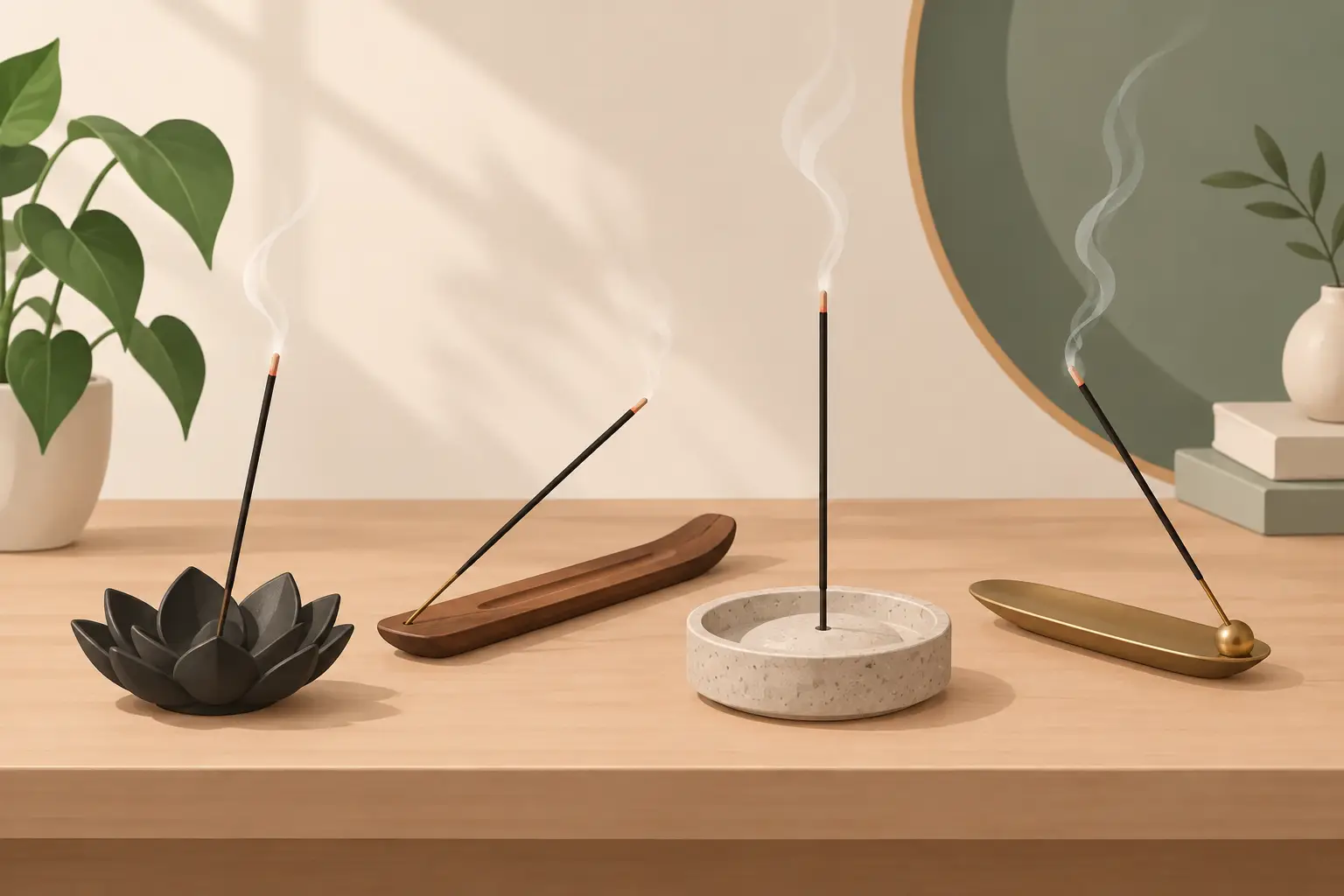
A pretty incense holder is not much use if it sends ash over your altar cloth, lets a cone scorch your shelf, or turns your evening wind-down into a frantic search for the smoke alarm. If you are searching “how to choose incense holder”, begin with the incense itself. The right holder is less about matching every moon phase in your décor and more about giving your chosen incense a stable, heat-safe place to do its thing.
There is, however, no reason it cannot look gloriously witchy while doing it. Whether your home leans dark academia, cosy cottage witch, fantasy tavern or full goblin hoard, a good holder should be safe, practical and suitably full of character.
How to choose an incense holder by incense type
The first rule of incense holder shopping is brutally simple: sticks, cones and backflow cones need different things. Buying based on looks alone is how you end up balancing a stick in a decorative skull that was clearly designed for a tealight. Charming? Perhaps. Sensible? Bramble has concerns.
For incense sticks: catch the ash
Standard incense sticks need a holder with a hole or channel that keeps the stick at a slight angle, plus a long enough surface to catch the falling ash. This is where classic wooden ash catchers earn their keep. They are simple, affordable and made for the job, especially if you burn one stick at a time.
Check the length of the holder against your favourite sticks. If the ash catcher is too short, ash will tumble on to the table at the far end, which rather defeats the name. A dish, tray or wider ceramic holder is often a better choice for thicker sticks, handmade incense, or anyone who values a bit more margin for error.
Some upright holders use a small bowl, plate or censer-like base. They can look excellent on an altar or mantelpiece, but make sure the bowl is broad enough to catch ash in all directions. Incense does not respect your carefully curated aesthetic boundaries.
For incense cones: choose a heat-safe dish
Regular incense cones burn at the base, so they need a non-flammable, heat-resistant holder with a shallow dish or raised platform. Ceramic, stone, metal and properly made resin designs can all work, provided the cone sits securely and the holder is intended for burning incense.
Avoid placing a cone directly on painted wood, fabric, paper or a decorative trinket dish of unknown material. The cone may look harmless, but its base gets hot enough to mark a surface or leave stubborn resin behind. A holder with a removable metal insert is particularly handy for easy cleaning.
For backflow cones: form follows smoke
Backflow incense burners are the dramatic ones: the smoke pours down through channels and pools below like a miniature cursed waterfall. They are brilliant for a ritual atmosphere, a gothic display shelf, or simply staring at while pretending your to-do list does not exist.
They only work with backflow cones, which have a hole through the centre. Ordinary cones will burn, but they will not create the flowing-smoke effect. Backflow burners also produce oily residue more readily than stick holders, so choose one with accessible channels and a stable base that you can wipe clean. Intricate dragons and castles are magnificent, but tiny awkward crevices may test your commitment to household chores.
Think about where the holder will live
An incense holder does not exist in a mystical void. It lives somewhere in your home, usually near books, curtains, crystals, dice, pets, a pile of unopened post and at least one object that absolutely should not be near a flame.
Choose a flat, stable, heat-resistant surface away from draughts. Open windows can blow ash sideways, while a breezy windowsill can make a stick burn unevenly. Keep your holder clear of curtains, dried flowers, altar cloths, shelves above it and anything else flammable. If your chosen spot is wooden, add a ceramic tile, stone coaster or metal tray beneath the holder for extra protection.
Room size matters too. In a tiny bedroom, an intensely scented incense may linger longer than you want. A smaller holder will not make less smoke, but it can encourage you to burn one stick or cone at a time rather than building a fog machine worthy of a necromancer’s lair. Ventilate the space, and never leave burning incense unattended.
If you share your home with children, pets or a particularly enthusiastic familiar, prioritise a weighty, low-sided holder that cannot be easily knocked over. Cats, in particular, remain unimpressed by your carefully arranged spiritual supplies and will investigate accordingly.
Pick a material that suits your habits
Material affects cleaning, durability and the overall mood of the piece. It is worth choosing with your real routines in mind, not just the version of yourself who has time to polish every crescent moon ornament on a Sunday.
Wooden ash catchers are lightweight, traditional and excellent for stick incense, but they need regular emptying and should be kept dry. Ceramic holders come in endless colours and shapes, cope well with heat, and are generally easy to clean. They are a strong all-round choice for cones or short sticks, though they can chip if dropped.
Metal burners can feel satisfyingly ritualistic and last for years, particularly heavier brass or iron pieces. They can become hot during use, so let them cool before moving them. Stone holders are weighty and naturally suited to an altar-like setting, but porous stone may absorb oils or residue if neglected.
Resin gives makers plenty of freedom for skulls, ravens, dragons, hands and other deliciously odd designs. Just make sure the product is explicitly designed as an incense holder, rather than using a purely decorative resin ornament as one. Decorative does not automatically mean heat-safe. A little practicality now prevents a very cursed-looking scorch mark later.
Match the holder to your ritual, not just your room
For daily incense burning, ease wins. A simple ash catcher or wide ceramic dish that takes seconds to empty will get used far more often than a complicated statement burner that requires archaeological excavation after every cone.
For a dedicated altar, you may want a holder that supports the atmosphere of your practice: a pentacle dish, moon phase design, woodland creature or a dark, textured piece with enough visual weight to feel intentional. There is no universal Wiccan, pagan or spiritual aesthetic requirement here. Your practice can be solemn, colourful, chaotic, minimalist or decorated with a suspicious number of mushrooms.
For gifting, choose something forgiving. A wide stick-and-cone holder is often safer than a highly specific backflow burner unless you know the recipient already uses backflow cones. A dragon, celestial motif, raven or subtle gothic design can bridge the gap between useful and wonderfully personal without demanding that someone rebuild their entire living room around it.
Check these details before you commit
Before adding an incense holder to your hoard, inspect the practical bits. The incense hole should hold a stick firmly rather than wobbling. The ash-catching area should be wide enough for the way the stick angles. Cone holders should have a defined, stable place for the cone to sit, and backflow burners should have a clear central opening where the cone goes.
Weight is another useful clue. A light holder may be ideal for travelling or small spaces, but a heavier base is better if it will live near pets, crowded desks or busy altar setups. Look at the underside too: felt pads or a smooth, flat base help protect furniture, although they are not a substitute for a heatproof surface.
Finally, consider cleaning before you fall hopelessly in love with a design. Incense ash is easy enough, but cone residue and backflow oils can settle into textured surfaces. If you know you will not scrub delicate smoke channels every few days, pick a simpler design. This is not a failure of devotion. It is merely knowing your own goblin limits.
Give your incense a proper stage
The best incense holder is one you will use safely and enjoy seeing every day. Start with the incense format, make sure the holder catches ash or supports the cone properly, then choose the design that makes your space feel more like yours. A plain tray can work perfectly, but if a moonlit raven or tiny dragon makes the ritual feel a little more magical, that is a perfectly valid reason to bring it home.