
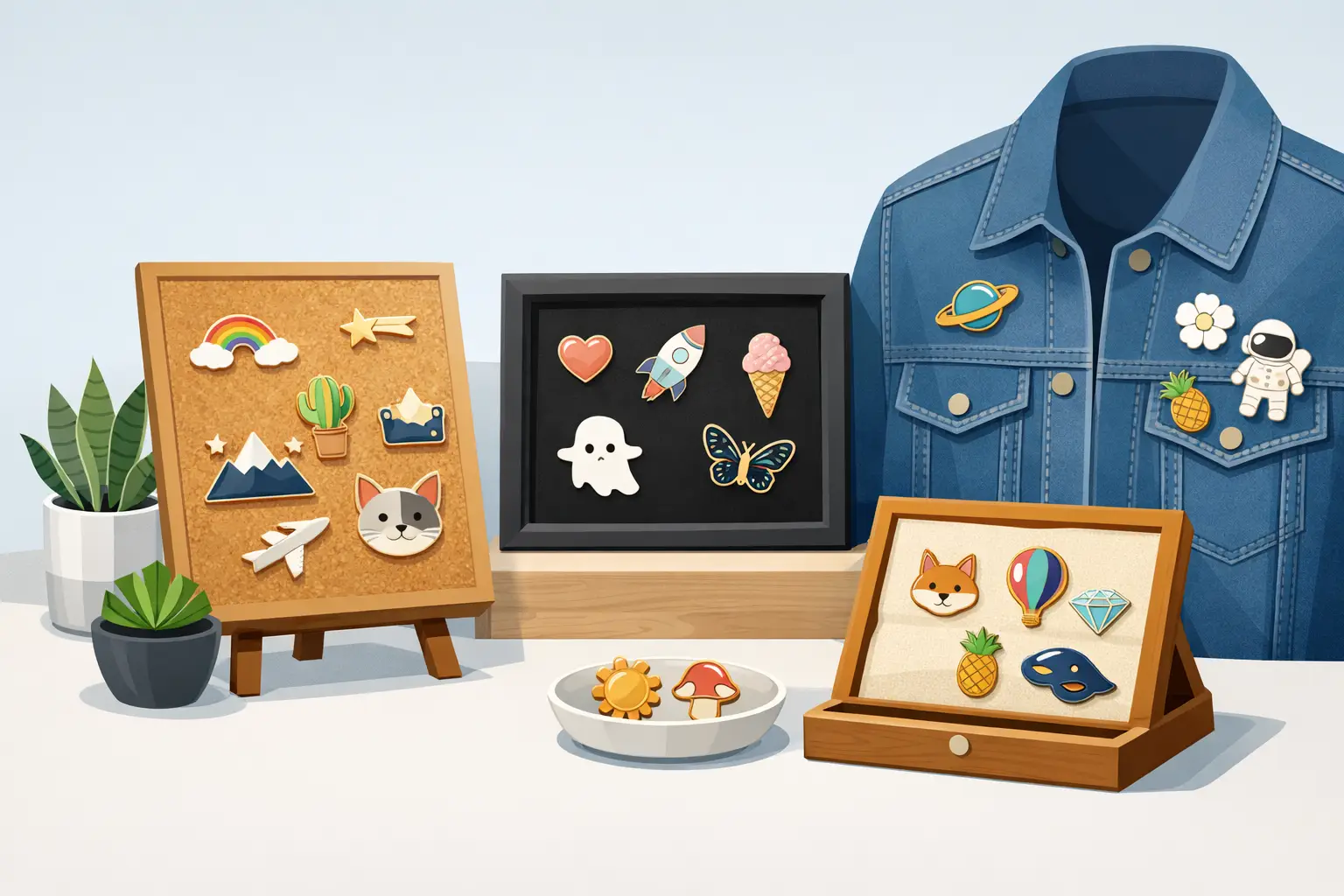
A pin collection deserves better than a drawer full of loose metal backs, tangled chains and one mysterious glitter bat that vanished in 2022. To display enamel pins properly, think less like a tidy minimalist and more like the curator of a very small, very opinionated museum. Your pins are tiny declarations of allegiance: to your favourite anime, your D&D character class, your coven, your comfort film, or simply the fact that mushrooms are superior décor.
The right display does two jobs. It lets you actually see the treasures you paid good money for, and it keeps them secure, clean and ready to rearrange when your latest obsession arrives. Whether you own six pins or six hundred, there is a display method that will suit your wall, wardrobe and particular brand of delightful chaos.
Choose a display enamel pins will actually suit
Before buying a board or attacking a jacket with thirty pin posts, decide what you want from the display. Do you want a rotating collection that changes with the seasons? A permanent wall of hard-won convention finds? Something you can carry into the outside world, where strangers may compliment your frog wizard? The answer changes everything.
A pin board is best for a collection you want to grow and rearrange. A banner gives a more deliberate, textile-heavy look that works beautifully in gothic bedrooms, gaming corners and witchy reading nooks. Jackets, bags and hats are for pins you want to wear, but they come with more risk: fabric shifts, backs loosen and rain has no respect for your rare limited edition.
Also consider pin size and weight. A tiny enamel pumpkin is happy almost anywhere. A large, layered pin with dangly charms, glitter, stained-glass effects or a chunky metal frame needs more support. If your display bends under its weight, that is not an edgy aesthetic. It is a warning.
Pin boards for collectors who like a changing wall
Felt-covered cork boards are the classic choice for good reason. They are affordable, easy to customise and forgiving when your layout changes at midnight because the colour story suddenly feels wrong. Dark green, black, burgundy and purple felt make bright enamel colours stand out, while a neutral cream or grey board suits a lighter cottagecore collection.
Look for a board with enough depth for pin posts and backs. Thin noticeboards can leave the backs protruding against the wall, which may scratch paint or prevent the board sitting flat. A deeper frame, shadow-box style board or a cork tile mounted on a backing panel solves the problem neatly.
For a more polished look, use a framed pin board. It turns your collection into wall art rather than something that looks like it escaped from a student bedroom – though, frankly, that has its charms too. Arrange pins by fandom, colour, shape or theme. A board of celestial moths, potion bottles, black cats and moon phases feels intentional even if your personal organisation system is mostly vibes.
Banners and fabric displays for maximum atmosphere
Canvas pin banners are ideal when you want a softer, more decorative display. Hang one above a desk, beside your bookshelf or in the sacred zone where your dice, tarot decks and unfinished craft projects gather dust. Their narrow shape also works well in smaller rooms where a large framed board would dominate the wall.
Choose sturdy canvas, denim or heavy cotton. Thin fabric can sag once loaded with pins, especially if you collect large designs. A banner with a wooden dowel or strong hanging loops holds its shape better. If you are making your own, fold and stitch a channel at the top for a dowel, then add a backing layer if the fabric feels flimsy.
Banners are especially good for themed collections. You could reserve one for spooky season, one for tabletop pins, and one for bands, films and shows that have emotionally ruined you in a fun way. Rotating displays keeps everything visible without forcing one banner to carry the weight of your entire personality.
How to display enamel pins on clothes and bags
Wearing pins is joyful, but it is not the safest display method for irreplaceable favourites. Coats get caught on door handles. Tote bags are thrown under café tables. Backpacks endure the sort of treatment normally reserved for adventurers in a dungeon. If a pin would make you mourn for three business days, consider displaying it at home instead.
For everyday pins, denim jackets, waistcoats, canvas tote bags and sturdy backpacks are reliable choices. Avoid very thin knits and delicate fabrics, as the pin weight can pull holes in the material. Place pins away from high-friction spots such as bag straps, jacket cuffs and the bottom corners of totes.
The back matters as much as the front. Standard butterfly clasps are fine for lightweight pins, but locking pin backs are worth using on anything precious or heavy. They grip more firmly and reduce the chance of finding an empty post where your favourite pin used to be. Rubber backs are gentler against skin and fabric, though they can loosen over time.
Try not to overcrowd wearable items. A packed denim jacket can look brilliant, but pins pressed together may scratch, spin or catch on one another. Leave a little breathing room around dangly designs and sharp-edged metal shapes. Fashion is pain, apparently, but it need not be enamel-pin pain.
Make your arrangement look collected, not cluttered
There is no moral requirement to colour-coordinate your pins. A chaotic board full of fandoms, cryptids and questionable little creatures can be perfect. Still, a few simple choices stop a collection from looking accidental.
Start with larger pins or visually loud centrepieces, then build around them. Give character faces and detailed designs enough space to be seen. If you have duplicates, pair them deliberately rather than scattering them. Repeating shapes, such as moons, hearts or potion bottles, can create a satisfying rhythm across the board.
Colour is the easiest way to make wildly different pins feel connected. Try a dark background for neon, pastel or glittery designs. Alternatively, build small clusters: autumnal oranges and browns in one corner, cool celestial blues elsewhere, then a suspiciously pink patch for magical-girl chaos. Theme-based sections work just as well, but do not trap yourself in a layout you cannot change. Collections evolve. Your board should be allowed to evolve with them.
If you are displaying pins in a shadow box, add depth without covering the pins themselves. A printed background, a strip of velvet ribbon, dried-looking faux foliage or tiny fantasy-themed props can make the piece feel like a miniature scene. Keep it restrained. The pins are the stars; the tiny plastic skull is merely stage crew.
Protect pins from tarnish, scratches and sunlight
Enamel pins are tough enough for normal handling, but they are not indestructible. Humidity can tarnish metal plating, direct sunlight may fade printed details, and pins rubbing together can mark polished surfaces. This is particularly irritating when you have spent ages hunting down a discontinued design.
Keep your main display away from steamy bathrooms, damp external walls and windows that receive strong afternoon sun. A closed shadow box offers more protection than an open board, although it is less convenient if you enjoy regular rearranging. For valuable pins, store spare backing cards and original packaging where possible. It helps with identification, resale or gifting later, even if you never plan to part with them.
When cleaning a pin, use a soft dry microfibre cloth. Do not soak it, scrub it with household cleaner or use abrasive metal polish near coloured enamel. If dust has collected around the post or clasp, a soft brush is usually enough. Tiny treasure, tiny maintenance. Bramble would call this responsible adulthood and immediately demand a reward snack.
Give your collection room to become stranger
The best pin display is not necessarily the neatest one. It is the one that makes you pause when you walk past it: a little wall of gigs attended, characters loved, games survived and oddities acquired because they made your brain light up like a cursed arcade machine.
Start with the display you have space for now, leave gaps for future finds, and let the collection tell its own gloriously peculiar story. A good pin board is never truly finished. That is not poor planning. That is simply how new obsessions breed.