
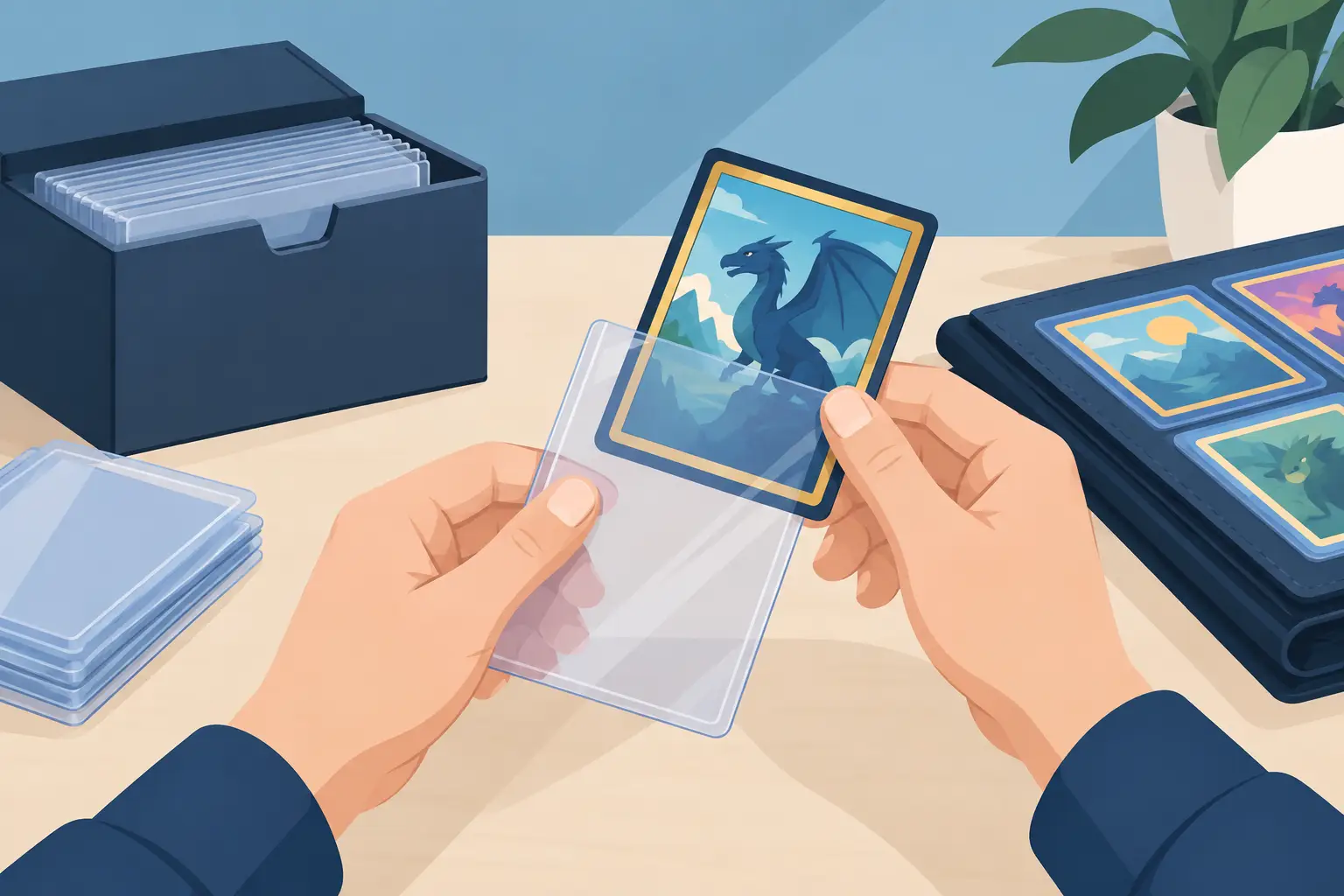
A single shiny card can survive a dragon battle, a chaotic game night and years in a binder, then be defeated by one careless thumb on a corner. Learning how to protect collectable cards is less about treating every common card like royal treasure and more about knowing what deserves protection, what kind, and when you are merely feeding your anxiety goblin.
Whether you collect trading cards, tarot and oracle decks, licensed playing cards, anime cards or a beloved handful of holo pulls, the biggest enemies are remarkably unglamorous: friction, pressure, moisture, sunlight and grubby hands. Fortunately, most damage is preventable without turning your collection into a museum no one is allowed to enjoy.
How to protect collectable cards from daily damage
Start with clean, dry hands. You do not need white cotton gloves for a casual sorting session – in fact, gloves can make delicate cards harder to grip – but hand cream, food residue and moisture transfer surprisingly easily. Wash and dry your hands before handling higher-value cards, especially foils with dark borders that show fingerprints like they are keeping receipts.
Hold a card by its edges, using a gentle grip. Avoid pressing on the face, bending it to inspect the shine, or dragging one card across another. That last habit causes surface scuffs, particularly on glossy, foil and black-backed cards. If you are opening packs, use scissors carefully on outer packaging rather than wrestling it open near the cards. One overexcited rip can become a very expensive origin story.
For cards you play with regularly, sleeves are the first line of defence. Choose sleeves that fit the card size properly. A sleeve that is too loose lets dust and grit inside; one that is too tight can catch corners as you insert the card. For standard trading cards, use standard-sized sleeves. For tarot, oracle and playing-card decks, measure the cards before buying, because deck sizes are wonderfully inconsistent. Apparently standard dimensions were too peaceful.
Inner sleeves offer another layer for prized cards, particularly if they will live in a binder or rigid holder. Put the card into the inner sleeve first, then place it in an outer sleeve. This helps reduce exposure at the top edge, though it is not compulsory for every card in your collection. Save double-sleeving for cards with real financial or sentimental value, and for decks that see frequent use.
Choose archival-safe materials
Not all plastic protection is friendly plastic protection. Avoid sleeves, pages and storage products made with PVC, which can release chemicals over time and leave surfaces cloudy or sticky. Look for archival-safe, acid-free and PVC-free materials from established card-storage brands.
This is especially worth checking with older bargain binders, mystery storage bundles and vintage display pages. Cheap storage can be useful for low-value duplicates, but it is a false economy for a rare card, signed card or irreplaceable first-edition deck. The protective gear should never become the villain of the piece.
Binders, boxes and rigid holders: pick the right lair
The best storage option depends on whether you want to browse, play, trade, display or preserve. A neat binder is excellent for a set you enjoy looking through. A sturdy card box is better for bulk storage. Rigid holders make sense for individual cards that need maximum protection.
For binder collections, choose a zip binder with side-loading pockets where possible. Side-loading pockets make it harder for cards to slip out, while a zip keeps dust away and stops the cover catching on the pages. Fixed-page binders are generally safer than ring binders because rings can dent cards or create awkward pressure points when the binder is overfilled.
Do not pack pockets too tightly. One sleeved card per pocket is the sensible default unless the pocket is explicitly designed for more. Overstuffed pages bend, warp and put pressure on corners. If you need to squeeze in another card, the binder is full. This is not a moral failing. It is an excuse for another binder.
Top loaders and semi-rigid holders are useful for single cards. A top loader is a hard plastic sleeve that shields against bends and knocks, while a semi-rigid holder has a little more flexibility and is often preferred when preparing cards for grading. In either case, sleeve the card before placing it inside. Never force a card into a holder, and do not shake it out again like you are trying to summon loose change.
Store bulk cards upright in purpose-made card boxes with dividers. Cards stored flat in tall, heavy piles can warp under their own weight, and loose stacks invite bent corners whenever someone goes hunting for one specific card. Label boxes by set, colour, deck or fandom so future-you does not have to excavate through 800 cards for a single goblin wizard.
Keep cards away from light, heat and damp
A card can look immaculate in storage and still fade or curl if its environment is wrong. Sunlight is brutal on inks and foil finishes, so keep binders, decks and displays out of direct sun. A bright windowsill may look lovely for a photo, but it is not a permanent home for a rare holo.
Heat and humidity are equally troublesome. Damp can cause cards to wave, stick together or develop mould, while very dry conditions can make some older cards brittle. Aim for a stable room temperature and avoid lofts, garages, sheds and chilly external walls. In much of the UK, the cupboard beside a radiator or a box in a damp spare room is a trap waiting to happen.
If your home tends to be humid, use a sealed storage box with silica gel packets nearby. Do not place loose packets directly against cards, and replace or recharge them as directed. A small digital humidity monitor can be worthwhile for a serious collection, but you do not need to transform your bedroom into a laboratory. Consistency matters more than chasing a perfect number.
Keep cards away from drinks, candles, incense burners and open windows during rain. Yes, that includes your witchy reading table. A single spilled mug is less romantic than a prophecy and much harder to reverse.
Display collectable cards without sacrificing them
Displaying cards is part of the joy. A card hidden forever in a dark box is protected, certainly, but it may also be having a very boring afterlife. The trick is to display selectively and intelligently.
Use UV-protective display cases or frames for cards that will be on show, and keep the display away from direct sunlight. Make sure the card is sleeved or mounted without adhesive touching it. Tape, glue dots, Blu Tack and sticky photo corners are all forbidden. I will not be taking questions.
For 3D displays, ensure cards are not bowed against a tight slot or pressed under uneven clips. If you make a themed shelf with figures, dice, candles or books, leave enough space that nothing can fall onto the cards. A dramatic skull ornament looks excellent right up until it topples onto your favourite pull.
Rotate displayed cards every few months if the room gets natural light. This spreads any minor exposure rather than leaving one card to absorb all the consequences of being the chosen one.
Protect cards when trading, posting or travelling
Cards often take their worst damage while moving between homes, tables and events. For a single valuable card, use a sleeve, then a rigid holder, then a team bag or resealable outer bag to keep dust and moisture out. Sandwich the protected card between clean pieces of card before placing it in a padded envelope or small parcel box.
Avoid loose cards in envelopes, no matter how tempting it is to call it “carefully packed”. Postal sorting machinery has no respect for your favourite character card. For higher-value sales or trades, use tracking and take clear photographs before packing so there is a record of condition.
When travelling to a game night, use a deck box that fits your sleeved deck without crushing it. A loose deck in a backpack will collect crumbs, bend against books and acquire mysteries from the bottom of the bag. Those mysteries are never good.
When grading or restoration makes sense
Grading can protect and authenticate a particularly valuable card, but it is not automatically the right choice. A graded slab makes a card harder to handle and display in some formats, costs money, and may not add enough value to justify the fee. It is most useful when a card is scarce, sought after, likely to be sold, or vulnerable to disputes over condition.
Do not attempt DIY restoration on a card you may later sell or grade. Pressing out creases, trimming edges, recolouring whitening or using cleaning fluids can permanently damage the card and alter its value. For ordinary cards, a soft air blower or clean microfibre cloth used with extreme care may remove loose dust. For anything rare, leave it alone unless a specialist has advised otherwise.
The best collection is not necessarily the one sealed behind plastic forever. It is the one you can enjoy with confidence because each card has a sensible home, a little breathing room and far fewer opportunities to meet a cup of tea.