
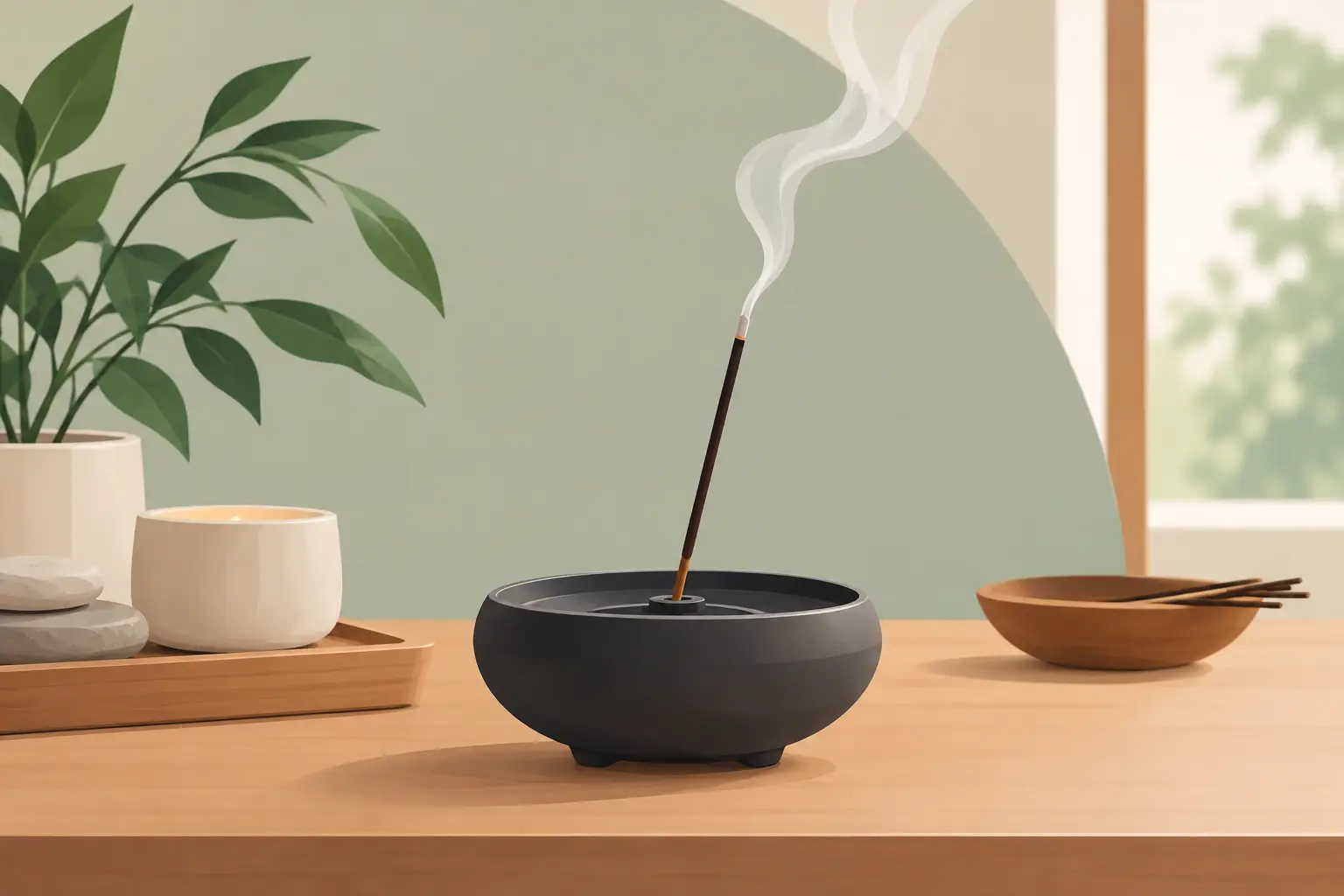
A beautiful incense burner should make your room feel like a moonlit apothecary, a wizard’s study or a very well-dressed crypt – not like you have accidentally summoned the fire brigade. Learning how to use incense burners is mostly about matching the incense to the burner, giving the ash somewhere sensible to land, and treating the glowing end with the respect it deserves.
Whether you are setting the mood for a tarot reading, building a quiet altar ritual, or simply making your gaming den smell less like a party of adventurers after a long dungeon crawl, the rules are pleasantly straightforward. Bramble’s first decree: the skull-shaped holder may be dramatic, but it is still a fire-safety item. Questionable manners are fine. Questionable placement is not.
Start by matching incense to the burner
Not every burner suits every kind of incense. The right pairing keeps your space tidy, helps the fragrance burn as intended and stops hot ash from wandering off on an unscheduled quest across your furniture.
Incense sticks need a holder with a small hole that grips the bare bamboo or wooden end, plus a tray, dish or long channel to catch ash. Place the stick at a slight upward angle, with the burning tip pointing over the ash-catching area. If it is angled out over the edge, it is not being mysterious. It is being badly positioned.
Incense cones need a heatproof dish, cone burner or covered burner with enough space around the cone. Standard cones burn from the point down and leave a small ash pile behind. Backflow cones are their own beast: they have a hollow tunnel through the middle and only create that lovely waterfall-smoke effect in a burner designed for backflow incense. A regular cone in a backflow burner may smell nice, but it will not produce the theatrical fog you were promised.
Resin incense, such as frankincense, myrrh or blends used in spiritual practice, needs a charcoal-safe burner or censer. You cannot pop resin directly into a stick holder and hope for the best. It requires self-lighting charcoal discs, a layer of sand or ash to buffer the heat, and much more attentive handling. We will get to that shortly.
How to use incense burners with sticks and cones
Set your burner on a stable, heat-resistant surface first. A ceramic tile, stone tray or metal dish is a sensible extra layer of protection, especially if your favourite table is wood, painted, covered in fabric or otherwise flammable in a deeply inconvenient way.
Keep it well away from curtains, books, dried flowers, hanging decorations and the loose sleeve of that excellent gothic cardigan. Choose a spot where it cannot be knocked by pets, children, elbows, dice rolls or a cat determined to investigate the tiny scented dragon cave.
For a stick, light the coated tip with a match or lighter until there is a visible flame. Let it burn for around 10 to 15 seconds, then gently blow it out. The tip should glow red and release a thin stream of smoke. If there is still a roaring flame, it needs another gentle puff. If it goes out immediately, relight it and allow a few more seconds before extinguishing the flame.
For a cone, light the pointed tip in the same way. Once it has caught, blow out the flame and place the cone upright in the centre of its burner. Never hold a cone while it smoulders, however committed you are to the aesthetic. The base gets hot.
Give the room some airflow. Incense should fragrance a space, not turn it into a Victorian séance with poor ventilation. A cracked window or open internal door is often enough. You can also burn a stick for five or ten minutes, then extinguish it rather than letting the whole thing burn. There is no rule saying you must use every last centimetre in one go.
Using resin incense and charcoal safely
Resin delivers a deeper, richer scent than most sticks and cones, but it asks more of you. Use a proper heatproof censer or burner, ideally one with a handle or base that remains safe to touch. Add a layer of sand, ash or non-combustible pebbles before introducing charcoal. This distributes heat and protects the burner from thermal shock.
Hold a charcoal disc with metal tongs and light its edge over a flame. It may spark a little as it catches, which is normal and not an invitation to panic. Put it in the prepared burner, then wait until the disc is fully lit and has turned grey around the edges. This usually takes several minutes.
Place a small pinch of resin on top using a spoon or tongs. Start small. Resin is potent, and adding a mountain of it will produce smoke dense enough to obscure the plot of your favourite fantasy series. Add more only when the fragrance fades.
A charcoal disc stays extremely hot long after the smoke stops. Leave the burner somewhere secure until everything is completely cold, which can take a couple of hours. Do not pour water over hot charcoal in a ceramic burner, as sudden temperature changes can crack it. Patience: not always a goblin virtue, but useful here.
Give smoke, pets and sensitive noses proper consideration
Natural does not automatically mean harmless to every household. Incense smoke can irritate people with asthma, allergies or other respiratory sensitivities. It can also be troublesome for birds, whose respiratory systems are particularly delicate, and may bother cats and dogs. If anyone in the home reacts badly, skip incense or use a non-burning alternative such as a room spray, wax melt or fragrance diffuser that suits the household.
Avoid burning incense in a small closed bedroom, around babies, or directly beneath a smoke alarm. Do not try to outwit the alarm by covering it up or removing batteries. Move the burner to a better-ventilated room instead, or save the scent session for another time.
The same goes for ritual use. Incense can be a meaningful part of meditation, spellwork, seasonal observance or simple decompression, but it is never compulsory. Your practice is no less yours if smoke is not practical where you live.
Common incense burner mistakes, politely judged
Most mishaps come from treating the burner as decoration rather than functional kit. Ash needs room to fall inside the tray, so check the stick’s direction before lighting it. Burners also need cleaning: once fully cool, tip old ash into the bin and wipe the surface with a dry cloth. Resin residue may need gentle scraping with a wooden tool, but avoid harsh cleaners on painted or delicate designs.
Do not leave burning incense unattended, even for a quick dash to answer the door. Extinguish it before sleeping, going out or moving to another room. If a stick or cone falls, use tongs or a metal spoon to place it in a heatproof dish and let it cool. Never grab a burning piece with your fingers. This advice is not thrilling, but neither are burnt fingertips.
Be wary of cheap burners with very shallow dishes, unstable legs or holes that do not hold sticks securely. A gorgeous burner that cannot catch ash is a tiny sculpture with ambitions beyond its station. Choose something sturdy enough for regular use, then let it earn its place among your altar pieces, oddities and treasured clutter.
Let the scent serve the moment
The best incense burner is the one you will actually enjoy using safely. A simple wooden ash catcher may suit a first flat; a gothic ceramic cone burner can turn an evening reading into an occasion; a lidded metal censer may make more sense for regular resin rituals. It depends on your space, your fragrance preference and how much cleanup you are prepared to tolerate.
Try one scent at a time and notice what it does to the room. Earthy sandalwood can feel grounding, bright citrus can cut through a grey afternoon, and deep resin notes can make a tabletop session feel wonderfully overproduced. Keep your burner clean, your surface clear and a little fresh air nearby. Then light the tip, watch the first curl of smoke rise, and let your chosen corner of the mortal realm feel properly yours.