
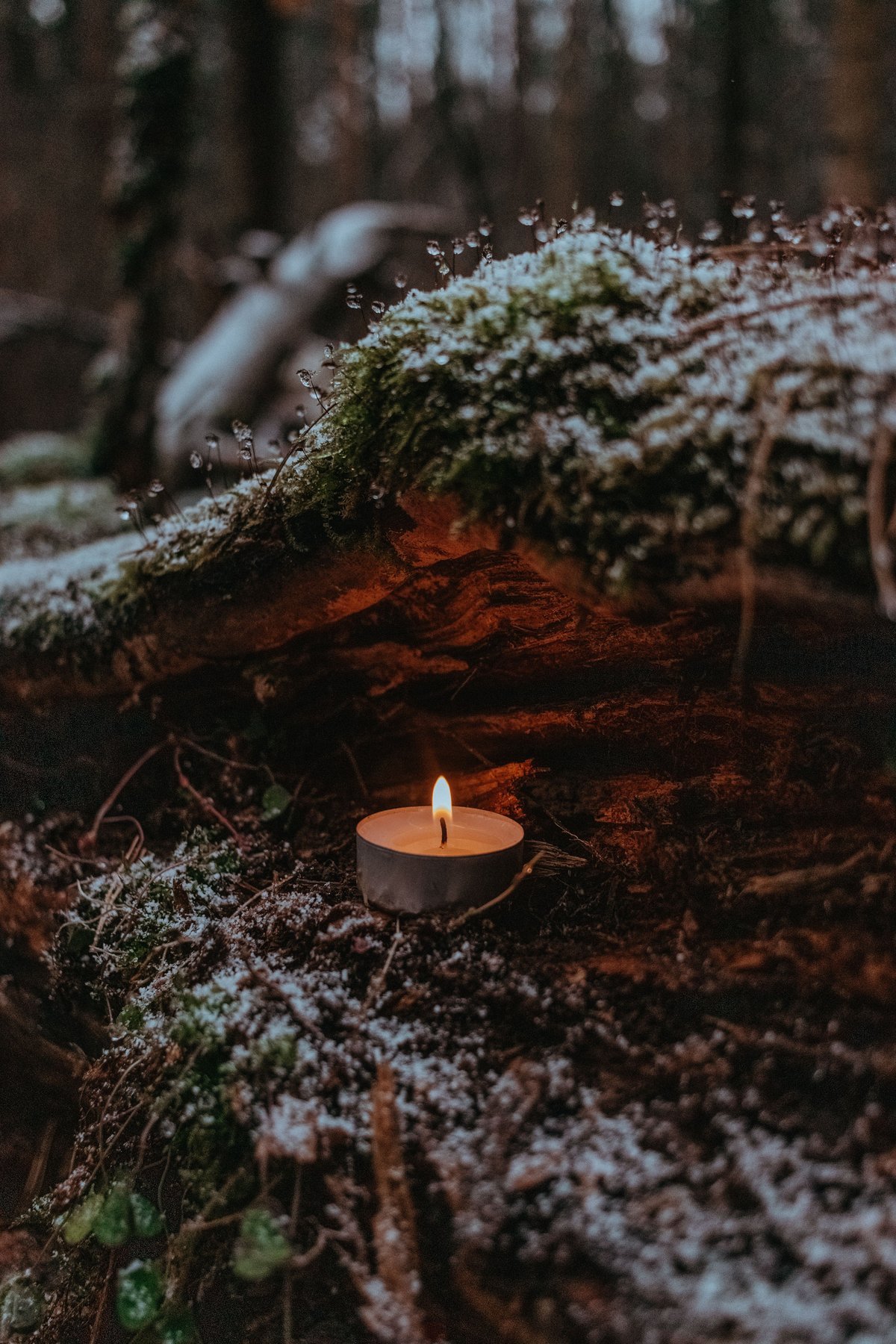
Imbolc: The Sabbat of First Light
(From a Goblin Who Is Not Ready to Be Cheerful About Spring Yet)
Bramble here. Imbolc falls on the 1st or 2nd of February, sitting exactly halfway between the Winter Solstice and the Spring Equinox. It’s the first genuine stirring of the year — not spring itself, not yet, but the unmistakable first sign that spring is coming. Everyone gets very excited about this. I remain cautiously unconvinced. It is still, factually, February.
“Everyone gets very excited about the first sign of spring. I remain cautiously unconvinced. It is still, factually, February.” — Bramble
What Even Is Imbolc?
Imbolc is one of the four “cross-quarter” sabbats — the ones that fall between the solstices and equinoxes rather than on them — alongside Beltane, Lammas, and Samhain. Its name is generally believed to derive from an Old Irish term connected to ewe’s milk, tying the festival directly to the lambing season and the very earliest agricultural stirrings of the year.
Traditionally, Imbolc is closely associated with the goddess Brigid (later Christianised as Saint Brigid), a figure connected to healing, poetry, smithcraft, and hearth fire. This dual identity — half ancient Pagan goddess, half later Christian saint — makes Imbolc one of the clearer examples on the Wheel of a festival that survived by adapting rather than disappearing entirely.
What makes Imbolc feel distinct from the sabbats around it is its quality of quiet anticipation. Yule marked the turning point in the dark. Imbolc is the first proof that the turning point actually meant something — daylight is now noticeably, measurably longer than it was at the solstice, even if winter’s grip hasn’t loosened yet.
What It Represents
- First light — the earliest visible proof that the sun is genuinely returning
- Purification and renewal — a traditional time for cleansing, both literal (spring cleaning) and symbolic
- Brigid — hearth, healing, poetry, and the forge
- New beginnings — the quiet, early-stage energy of something starting, long before it’s visible above ground
“Imbolc is the first proof the turning point at Yule actually meant something. Receipts. Finally.” — Bramble
How People Mark It
Imbolc rituals tend to be quieter and more domestic than the bigger harvest sabbats — this is a festival of small, meaningful gestures rather than big feasts:
- Lighting candles — heavily associated with Brigid’s connection to flame and the returning light
- Making a Brigid’s cross — a traditional woven straw or reed cross, hung for protection and blessing
- Spring cleaning — genuinely traditional here, not just a modern habit; clearing out the old to make room for the new
- Blessing seeds — for those who garden, this is the traditional point to bless seeds ahead of spring planting
- Quiet reflection on what you want to nurture as the year slowly brightens
Building an Imbolc Altar
Keep this one gentle and quiet — Imbolc doesn’t call for the abundance of Mabon or the drama of Samhain.
- White or pale candles — representing the returning, still-fragile light
- Early seasonal touches — snowdrops if you can find them, or anything pale and delicate
- A small dish of milk — a traditional nod to the sabbat’s lambing-season origins
- Something connected to Brigid — a small flame, a woven cross, or simply her name spoken with intention
- Seeds, even just a packet, to bless and set aside for spring planting
“Imbolc doesn’t call for abundance or drama. It calls for one candle and the patience to wait for spring properly.” — Bramble
Colours & Correspondences
- Colours: white, pale yellow, soft green, silver
- Crystals: clear quartz, amethyst, moonstone — clarity and gentle renewal stones
- Herbs: snowdrop, rosemary, angelica
- Symbols: Brigid’s cross, candles, ewes and lambs, the hearth flame
Common Mistakes People Make With Imbolc
- Expecting spring to have actually arrived. Imbolc marks the first stirring, not the arrival — the ground is often still cold, and that’s exactly right for where the sabbat sits on the wheel.
- Overlooking Brigid entirely. She’s genuinely central to this sabbat’s identity — skipping any acknowledgment of her domain (hearth, healing, poetry, smithcraft) misses a lot of what makes Imbolc distinct.
- Treating it as a “minor” sabbat not worth the effort. It’s quieter than the harvest sabbats, certainly, but that quietness is the point — small, meaningful gestures are entirely appropriate here.
- Skipping the cleaning. The “spring cleaning” association isn’t incidental — clearing physical and symbolic clutter is a genuinely traditional part of marking this sabbat properly.
Frequently Asked Questions
Is Imbolc the same as Groundhog Day?
They share the same date and a similar “predicting spring” quality, though Groundhog Day is a distinct, much more recent American tradition. Both likely draw on the same deep cultural instinct to look for early signs of the seasons turning.
Who is Brigid?
A goddess in Irish mythology associated with healing, poetry, and smithcraft, later syncretised with the Christian Saint Brigid of Kildare. She’s the central figure most closely tied to Imbolc specifically.
Do I need to be religious to celebrate Imbolc?
No — many people mark it simply as a seasonal, reflective moment: a candle lit, a small cleaning ritual, a quiet acknowledgment that the year is turning, regardless of specific spiritual belief.
Bramble’s Final Verdict
Imbolc doesn’t ask for much — a candle, a bit of tidying, a small acknowledgment that the light is coming back even if you can’t feel it yet. It’s a sabbat built entirely on patience and quiet trust, which, frankly, is more emotional labour than I signed up for, but here we are. The wheel keeps turning whether I trust it or not.
“Imbolc is built on patience and quiet trust. Frankly, more emotional labour than I signed up for.” — Bramble
— Bramble