
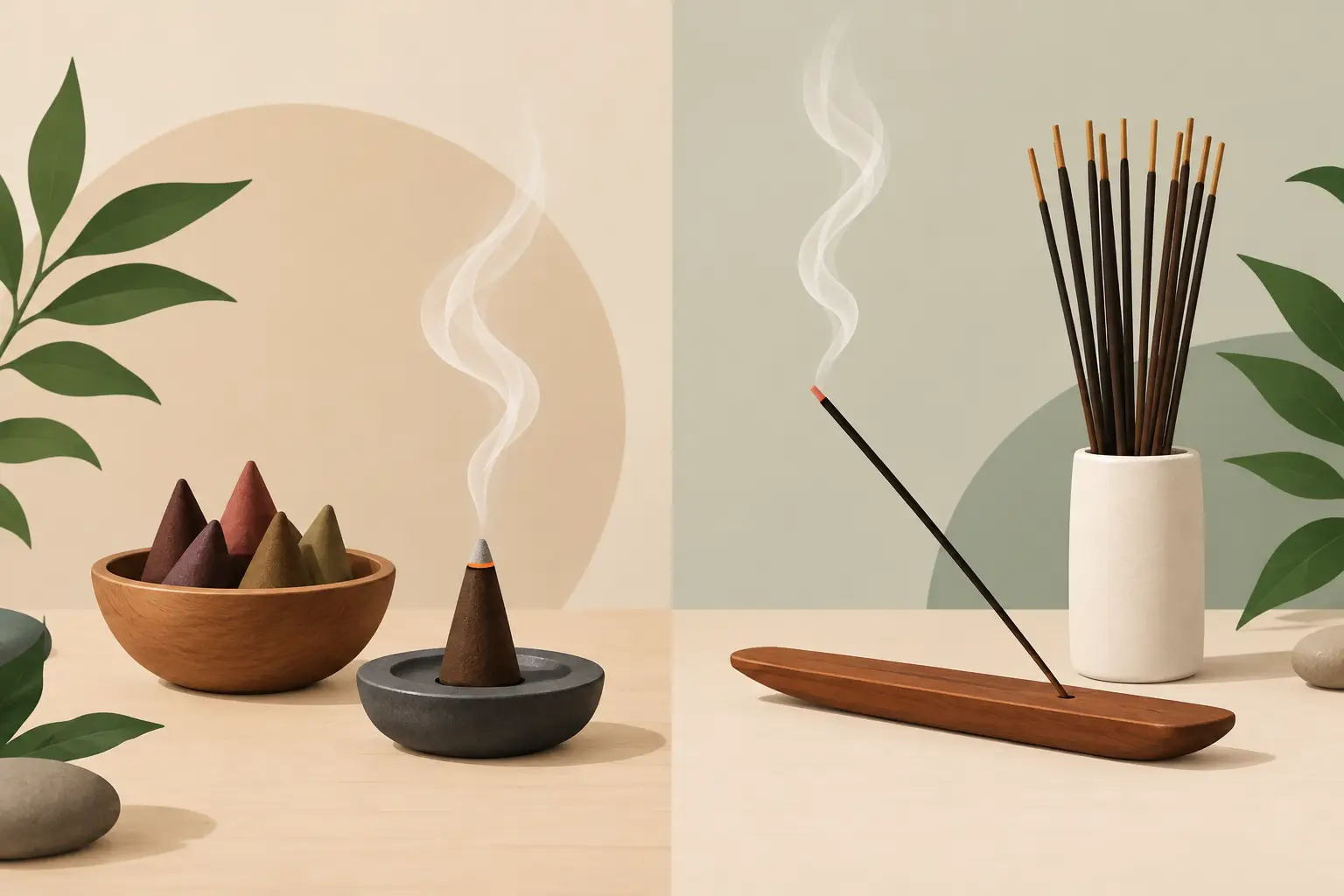
A stick of incense makes a room feel lived in: slow-burning, familiar and quietly atmospheric. A cone, meanwhile, is a small fragrant menace with a stronger opening act. When choosing incense cones vs sticks, the better option depends less on which looks witchier on your shelf and more on your space, your scent tolerance and how you actually plan to use it.
For a lingering background fragrance while you read tarot, paint miniatures or pretend your candle-lit flat is a forest cottage, sticks are usually the easy choice. For a short, punchy ritual moment or a dramatic smoke display, cones earn their place. Neither is objectively superior. They simply cause different kinds of delightful nonsense.
Incense cones vs sticks: the essential difference
Both forms release fragrance by burning aromatic materials such as resins, woods, herbs, oils and binders. The shape changes how quickly they burn, how the smoke moves and how intensely the scent lands in a room.
Incense sticks are slim, usually built around a bamboo core or made as solid extruded sticks without one. Light the tip, allow the flame to catch for a few seconds, then gently blow it out. The ember travels down the length at an unhurried pace, releasing scent gradually. Depending on their size, sticks commonly burn for around 20 to 60 minutes.
Cones are compact, self-contained pyramids of incense material. Because more fragrant material is packed into a small space, they tend to produce a fuller, faster wave of scent. A standard cone may burn for 15 to 30 minutes, though that fragrance can remain noticeable after the cone has finished.
That is the practical distinction: sticks are a slow soundtrack; cones are more of a dramatic entrance. Your nose gets a vote, and it may have opinions.
Choose incense sticks for a gentler, longer burn
Sticks suit everyday scenting, especially in a medium or larger room with decent airflow. Their burn is generally steadier and less intense than a cone’s, so they are a friendly starting point for anyone new to incense or prone to finding fragrance overwhelming.
They also work beautifully for longer practices. If you are journalling through a new moon intention, settling into meditation, laying out a tabletop campaign or having a bath with the door safely ajar, a stick gives the moment time to unfold. You do not need to keep interrupting your activity to light another one.
The ash is the main practical consideration. A burning stick sheds a long trail as it burns, so use a proper incense holder designed to catch the whole length. A tiny dish may look charming until the ash lands on your altar cloth, windowsill or suspiciously expensive rulebook. Choose a holder with a long channel, or place the stick in a stable burner over a heatproof surface.
Scent-wise, sticks often make individual notes easier to live with. Sandalwood, lavender, patchouli, frankincense and floral blends can drift around a space rather than taking it hostage. That said, quality matters. A heavily perfumed stick can still become the olfactory equivalent of an unskippable cutscene.
Best for sticks
Use sticks when you want a longer session, a more measured fragrance level or an easy all-purpose option for regular use. They are also a solid gift choice when you do not know the recipient’s exact incense habits, provided you add a suitable holder.
Choose incense cones for concentrated atmosphere
Cones are brilliant when you want scent with immediate presence. Light one before a short cleansing ritual, while preparing an altar, during a focused spellworking or simply because the weather has demanded gothic behaviour. Their smoke is often thicker, and the fragrance can feel richer from the first few minutes.
They need a different kind of holder. A heatproof dish, ceramic burner or dedicated cone holder with raised edges works well, as cones burn down into a small pile of ash. Keep the surface clear around it, since the base can remain hot after the ember fades.
Cones are especially handy in smaller spaces when used sparingly. That wording matters. A cone can scent a small room quickly, but a window that opens and a bit of breathing room are wise companions. If your bedroom is compact or your flat has an enthusiastic smoke alarm, try a half cone only if the product is designed to be broken safely, or opt for a lighter fragrance and burn it for a shorter time before extinguishing it carefully in sand.
Their shorter burn makes cones feel purposeful. You light one, set an intention, sit with it, and let the ritual have a clear beginning and end. No rule says a ritual must be long to count. Sometimes 15 intentional minutes beats an hour of checking your mobile phone and wondering why you lit anything in the first place.
A note on backflow cones
Backflow cones are not ordinary cones in a fancy hat. They have a hole through the centre, designed to work with a backflow burner. As the cone burns, the smoke is cooled and drawn downward through the burner, creating that eerie waterfall effect beloved by dragons, skulls and anyone with excellent taste in shelf décor.
They can look spectacular, but the experience is more about visual drama than subtle fragrance. The smoke may be denser, and backflow burners need regular cleaning because residue builds up. Use only backflow cones in a backflow burner, and expect the scent to cling a little more than it would with a standard stick.
Smoke, scent and the size of your lair
Room size is where many incense choices go wrong. The most beautiful black cherry, dragon’s blood or nag champa blend can become too much in a closed box room. Start with one item, not three, and give it ten minutes before deciding whether you need more. You almost certainly do not need more. Bramble has been overruled on this point.
Sticks are often easier in shared homes because the scent builds gradually. Cones suit rooms where you can ventilate afterwards, or occasions when you want a bolder burst of fragrance. If you live with housemates, children, pets or a partner who thinks patchouli is a personal attack, choose lighter scents and burn incense in a separate, well-ventilated area.
No incense should be left burning unattended. Keep it away from curtains, books, dried flowers, fabric, open windows with dramatic gusts and anything else that could catch fire. Use a stable, heatproof holder, fully extinguish the ember before leaving the room, and avoid burning incense near people with respiratory sensitivities. Birds are particularly sensitive to airborne fumes, so it is best not to burn incense around them at all.
What suits ritual work best?
There is no secret pagan rulebook declaring that cones are for cleansing and sticks are for relaxation. Both can support ritual if they help you create a deliberate shift in mood and attention. The fragrance, your associations with it and the way you use it matter more than the format.
For a longer ritual, sticks are practical. A stick of frankincense or sandalwood can accompany meditation, divination or seasonal altar work without demanding much attention. For a quick reset before pulling cards, writing intentions or cleansing a new deck, a cone is satisfyingly direct.
Some practitioners prefer cones for smoke cleansing because of the fuller plume, while others choose sticks for more controlled movement around a room. If you plan to waft smoke around objects, use a fireproof bowl beneath the incense and move slowly. Smoke is not required for spiritual practice, either. A candle, bell, water, breath or a spoken intention can do the job when fragrance is not suitable.
The better gift: cone, stick or both?
If you are buying for a witchy friend, a gothic fragrance fiend or the tabletop player whose room already resembles a potion shop, think about what they own. Sticks are more forgiving if they already have a long incense holder. Cones make a better pairing with an eye-catching ceramic burner, cauldron dish or backflow piece.
A small mixed selection can be the most generous choice. It lets the recipient work out whether they prefer a long, mellow burn or a concentrated cloud of atmosphere. Add scents that match their vibe: earthy woods for a forest witch, resins for the occult academic, soft florals for the moon-gazer, or something properly dark and spicy for the person who owns six skulls and calls them all décor.
The best incense is the one you will actually enjoy using safely. Choose sticks for slow ambience, cones for a faster fragrance hit, and backflow cones when you want your smoke to perform a tiny haunted waterfall. Let your space, your senses and your questionable little altar decide.