A wonky knock-off logo on a supposedly magical backpack is a fast way to ruin a birthday. A proper licensed merchandise guide exists for a reason: fandoms are personal, collectors are observant, and the difference between official merch and a suspiciously cheap imitation is rarely just the price tag.
Whether you are treating yourself to a character bag, buying a band tee for your favourite music goblin, or hunting for a gift for the Doctor Who fan who already owns three sonic screwdrivers, licensed products offer something valuable: the real connection to the story, artist, game or world they love. Here is how to shop with confidence, without sucking all the fun out of it.
What licensed merchandise actually means
Licensed merchandise is made with permission from the owner of a film, television programme, game, band, comic, anime or other intellectual property. The brand that manufactures the item has an agreement to use official names, artwork, characters, symbols and designs.
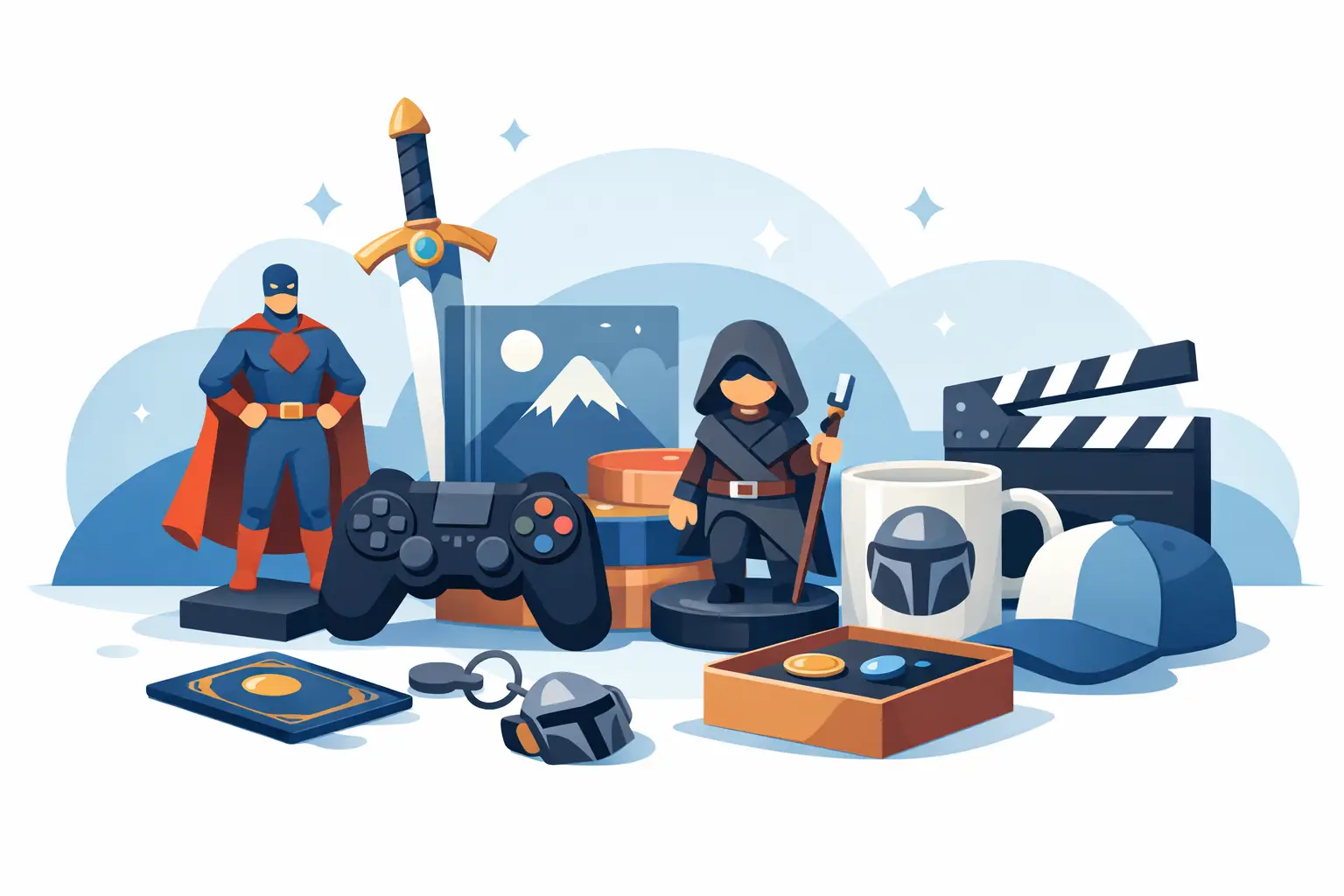
That can mean a Loungefly bag decorated with a carefully approved character print, an officially produced band hoodie, a set of branded playing cards, or a collectable made for a specific release. The licence holder may have rules about colours, logos, packaging and even how a character is posed. Yes, somewhere there may be a person whose job involves approving exactly how grumpy a tiny goblin looks. Respectfully, that is excellent work.
Official does not automatically mean rare, handmade or expensive. It means the design has been authorised. Some licensed products are affordable everyday bits: mugs, socks, keyrings and notebooks. Others are limited-run collectables with the sort of price that makes your bank account put on a tiny funeral hat.
Why official merch matters to fans
For many people, merch is not merely a logo printed on an object. It is a quiet signal across a crowded room. A pin on a jacket can identify a fellow tabletop player. A bag can announce that its owner is entirely normal about a fictional villain, which is to say not normal at all. A band shirt holds memories of a gig, a first album, a friendship or an era when eyeliner was non-negotiable.
Licensed products tend to reflect the source material more accurately because the artwork and branding are approved. That matters when someone knows every costume change, every character crest and every obscure rule in a game system. Giving a serious fan an item with an incorrect symbol or mangled quote is risky business.
There is also a practical quality question. Licensing alone is not a magical quality spell – some official items are still more decorative than durable – but established licensees generally have clearer product information, recognisable packaging and better accountability. A reputable retailer should describe what an item is made from, its dimensions and any relevant care instructions rather than offering a blurry photo and vibes.
A licensed merchandise guide to spotting the real thing
The easiest starting point is where you buy. A specialist retailer that names brands, uses its own product photography where appropriate, provides proper contact details and has clear delivery and returns information is a better bet than a marketplace listing that calls everything “inspired” while avoiding the actual franchise name.
Look closely at the product description. Official items often identify the manufacturer or licence brand, such as Loungefly, and may include copyright wording on packaging or labels. Product images should show coherent artwork, readable logos and consistent finishes. One stock image is not proof of skulduggery, but vague copy, bizarre spelling and a price far below every other seller should make your internal familiar hiss.
Pay attention to the language used. “Licensed”, “officially licensed” and “official merchandise” are specific claims. “Fan art”, “inspired by” and “compatible with” are different things entirely. None is automatically bad. Independent fan-made work can be wonderful, especially when you want something unusual. It simply should not be sold as official if it is not.
For collectables, packaging can matter almost as much as the object. Collectors may care about box condition, edition details, seals and whether an item is intended for display rather than play. If it is a gift, do not assume a boxed figurine is just packaging waiting for the bin. Some boxes are part of the habitat.
Choose the type of merch, not just the fandom
Knowing somebody loves a franchise gets you through the door. Knowing how they enjoy it gets you the good gift.
A wearable item works well for a fan who likes to make their interests visible: bags, jewellery, hats, tees and accessories have a daily-use factor. Check sizing before committing to apparel, and consider whether they favour bold graphics or subtle references. A giant neon character face is a declaration. A small embroidered emblem is a secret handshake.
Homeware and desk accessories suit fans who prefer their obsessions displayed in their lair. Think mugs, storage, wall décor, stationery and playing cards. These are especially good for people with difficult clothing sizes or a cupboard already groaning under the weight of novelty jumpers.
Collectables are a stronger choice for someone who has a particular character, era or edition they actively talk about. Be specific. “They like anime” is a continent, not a destination. Find out which series, who their favourite character is, and whether they collect figures, pins, cards or something else. A carefully chosen smaller item often lands better than an expensive but random one.
For tabletop players, official game merchandise can be a lovely extra, but their actual play habits matter. A gorgeous set of branded dice may be perfect for one player and irrelevant to another who swears loyalty to a particular dice set from 2014. Accessories such as dice trays, towers and storage can be brilliant, though they may be independently designed rather than licensed. That distinction is useful, not disappointing: official fandom merch and clever own-brand gaming gear can happily share the same dungeon shelf.
Gifts: avoid the obvious traps
The first trap is assuming bigger equals better. A massive statue can be spectacular, but only if the recipient has room for it and wants to display it. A well-made pin, keyring or card deck can feel more considered because it fits their life rather than demanding a new display cabinet.
The second is chasing a character just because they are the face of the franchise. Fans often adore side characters, villains, creatures and deeply odd background details. If they have mentioned a favourite more than once, believe them. The heart wants what it wants, including a sentient plant, a minor wizard with six minutes of screen time, or a death metal mascot.
The third is treating “official” as a substitute for taste. Licensing confirms legitimacy; it does not decide whether someone wants a glittery purse, a black-and-gold mug, or a backpack shaped like a dragon. Browse by aesthetic as well as fandom. Gothic, witchy, cosy, maximalist, retro and delightfully unhinged are all valid specifications.
Check the practical bits before checkout
A good product can still become a bad purchase if it arrives late, does not fit or cannot be returned. For gifts, check dispatch timing and leave room for the post to be theatrical. Review return terms, particularly for clothing, personalised items and collectables where packaging condition may affect eligibility.
Read dimensions instead of trusting photographs. Mini bags can be genuinely mini. A pocket-sized figure might be ideal for a desk but underwhelming if you imagined a centrepiece. Likewise, check materials for anyone with allergies, young children or a tendency to use a mug as though it has been forged for battle.
If you are buying for a collector, resist the urge to remove labels or dispose of packaging before gifting. Let them decide. You are presenting treasure, not conducting an unboxing ritual on their behalf.
The joy is in getting specific
The best licensed merchandise feels like somebody noticed. Not merely that a person likes fantasy, but that they prefer dragons to unicorns, dice to miniatures, villains to heroes, and black accessories to anything pretending beige is a personality.
Planet Goblin is built for precisely this sort of useful obsession: official fandom finds sitting alongside odd little gaming treasures, witchy gifts and 3D-printed accessories with questionable manners. Start with what makes the recipient light up, check that the item is properly licensed when official status matters, then choose the version they will actually use, wear or proudly display. That is how a gift becomes part of their lore.