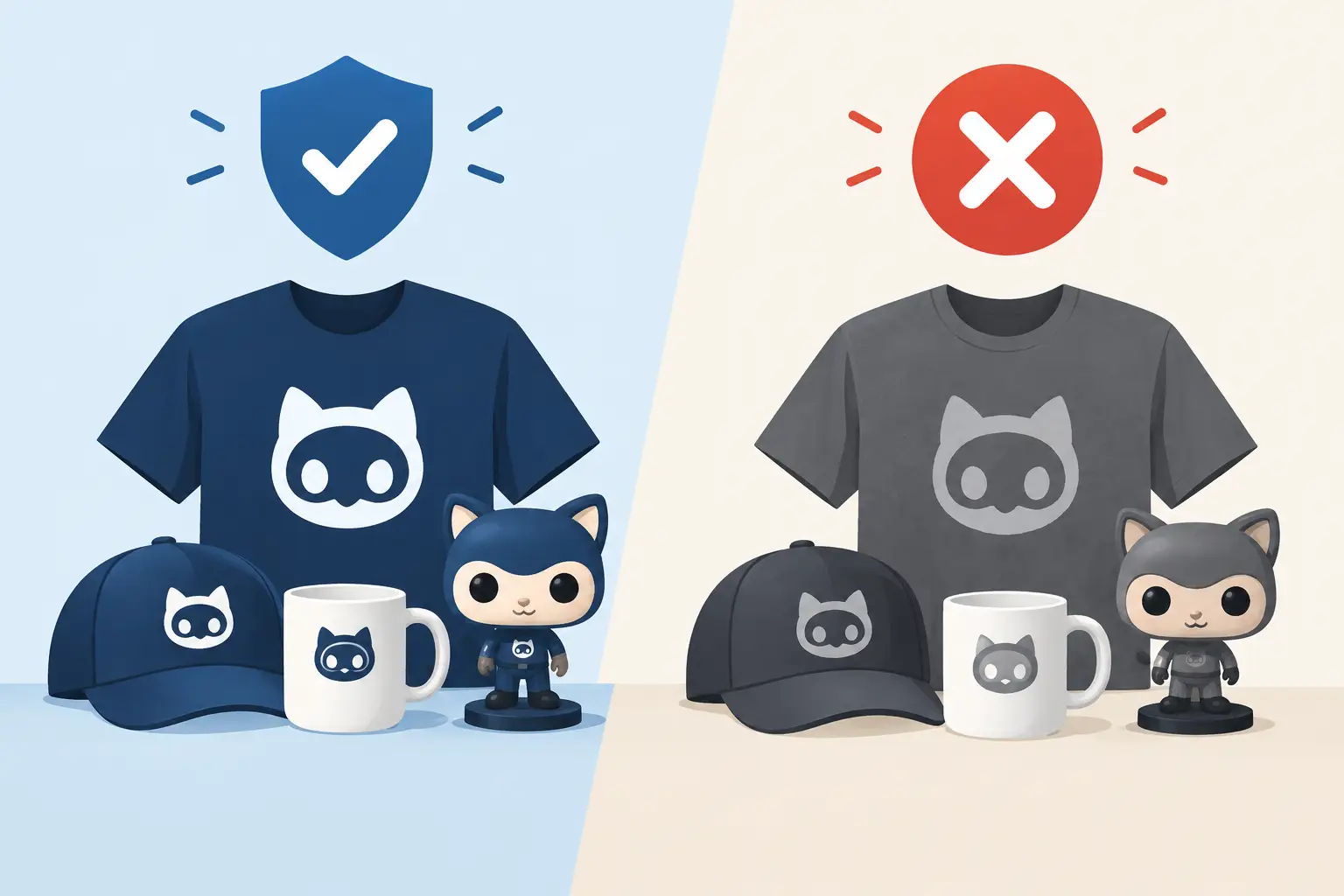
That suspiciously cheap character bag has appeared in your feed again. It has the logo, the colours, the little details that make your fandom brain sit up straight – and a price that seems almost offensively low. Before adding it to basket, it is worth understanding licensed versus unofficial merchandise. The difference is not always visible in a listing photo, but it can affect quality, safety, collectability and whether the thing arriving through your letterbox bears any resemblance to the thing you actually ordered.
This is not a lecture from the Department of Fun Prevention. Fandom should be joyful, odd and occasionally involve a dragon perched on your shelf. But knowing what you are buying makes it easier to spend on the things you will genuinely love, rather than feeding the cupboard of disappointing impulse purchases.
What “officially licensed” actually means
Officially licensed merchandise is made with permission from the person or company that owns the intellectual property. That might be a film studio, game publisher, music label, author, artist or television production company. The manufacturer has an agreement allowing it to use particular characters, logos, artwork or names on an agreed range of products.
That agreement usually comes with rules. The licence holder may approve designs, colours, packaging, materials and which characters can be used. It does not mean every official product is magically perfect, nor that every unofficial item is dreadful. It means there is a traceable chain between the fandom you love and the product carrying its name.
For collectors, that provenance matters. A properly licensed Loungefly bag, a Doctor Who accessory or a band T-shirt is part of an authorised release, often with recognisable branding, product information and a manufacturer behind it. If something arrives faulty, there is a clearer route for the retailer and supplier to put it right. Less glamorous than a cursed amulet, admittedly, but useful.
Why licensed merch costs more
The price of official merchandise includes more than the physical object. A portion goes towards the rights to use the property. There is also product development, approved artwork, quality checks, compliant labelling, packaging, shipping and the boring-but-vital machinery of returns and customer support.
That does not mean the highest price is automatically the best value. A licensed keyring can still be a flimsy little gremlin, while a well-made independent fantasy pin may feel wonderfully substantial. The point is that a £6 “official” looking backpack that is normally sold for £60 deserves a raised eyebrow. Businesses are not generally donating their profits to the ancient gods of bargain hunting.
For gift buying, the extra certainty can be worth it. If your mate has been waiting years for the exact version of a character, buying an authorised item lowers the odds of giving them a wonky imitation with an unsettling face and a zip that gives up before Boxing Day.
Unofficial is not one single thing
Here is where the conversation gets less tidy. “Unofficial” can describe several very different kinds of product, and treating them all as identical is lazy.
At one end are counterfeit or knock-off goods. These copy official designs, logos and packaging closely enough to be mistaken for genuine products. They may use stolen product photographs, false claims of authenticity or prices designed to get a quick sale. Quality can range from merely disappointing to genuinely unsafe, particularly with electrical products, cosmetics, toys and items intended for children.
Then there is unlicensed merchandise that uses protected characters, logos or artwork without permission but does not necessarily pretend to be official. Think character prints, copied enamel pins or familiar fandom symbols on mass-produced clothing. It can look tempting, especially where official options are scarce, but the creator or seller may not have the right to use that property.
Finally, there is original fan-made work. This is the most interesting corner of the unofficial world. An independent artist may create a witchy print inspired by a genre, a dice maker may craft a colourway that feels very much like a beloved fantasy world, or a maker may produce an original creature that scratches the same mythical itch. When it avoids copying protected logos, character likenesses and official artwork, it can be a brilliant way to support small creators and find something nobody else owns.
The useful question is not simply “official or unofficial?” It is: what exactly is being sold, who made it, and how honestly is it being presented?
Licensed versus unofficial merchandise: the practical differences
Design and detail
Official suppliers often receive character references, approved artwork and brand guidelines. That can result in accurate costumes, colours and tiny lore details that devoted fans notice immediately. If you care whether a prop is screen-accurate or whether a symbol is the right version from the right era, licensing tends to matter more.
Unofficial goods can be wildly inconsistent. Some are near copies with missing details; others intentionally reinterpret a fandom through an artist’s own style. A chibi-inspired original print is a different proposition from a supposed replica that has mysteriously changed the character’s eye colour, weapon and number of fingers.
Quality and safety
A licence does not guarantee immortality. Bags wear out, mugs chip and T-shirts shrink if treated like they have no mortal limits. Yet licensed suppliers are usually easier to identify and hold accountable, and established retailers can provide clear returns information.
Be particularly careful with anything that touches skin, plugs into the mains, contains batteries or is for young children. Unclear materials, missing warnings and no named manufacturer are not cute signs of rebel craft. They are reasons to step away from the checkout.
Collectability
Official releases are generally easier to catalogue, authenticate and resell, although resale value is never guaranteed. Limited runs, convention exclusives and discontinued lines may become sought-after, but collecting purely as an investment is a quick route to owning a lot of boxes and feeling mildly haunted by them.
Unofficial items may be collectible within an artist’s community, especially handmade pieces with small runs. Their value is usually tied more to the maker’s reputation and the work itself than to a major franchise. Buy it because it delights you, not because a stranger on social media promised it will fund your future castle.
Where your money goes
With licensed merchandise, licensing fees support the rights holder alongside the manufacturer and retailer. Whether that feels meaningful depends on the property and your own values. With original independent work, more of the purchase may directly support a small artist or maker.
Counterfeits sit in a less charming category. They can undercut legitimate creators and businesses while offering little transparency about working conditions, materials or production. A bargain is less satisfying when its whole origin story is a fog machine.
How to spot a dodgy listing before it spots your wallet
No single sign proves a product is counterfeit, but a cluster of them should set off the internal alarm bell. Watch for prices far below every reputable seller, vague descriptions, cropped photos that hide labels, strange spellings, copied product text and sellers who cannot say who made the item.
Official-looking logos on their own prove very little. Counterfeiters are rather fond of logos. Look for a named brand or manufacturer, consistent product photographs, proper dimensions and materials, and a retailer that explains its delivery and return process. Reviews can help too, although dozens of suspiciously identical five-star comments are hardly an oracle.
Be cautious with marketplace listings that use phrases such as “inspired”, “style”, “compatible” or “same as official” while displaying exact character art. Sometimes those terms are an honest description of an original accessory. Sometimes they are verbal smoke bombs. Read the listing rather than trusting the first image.
At Planet Goblin, official products are selected for people who want fandom goods with a clear provenance, while the shop’s own 3D-printed range focuses on original goblin-built things such as dice towers, display pieces and delightfully unnecessary dragon fidgets. Different sorts of treasure, clearly labelled.
When unofficial can be the better choice
If you want an original piece that echoes your interests without copying a franchise, independent makers can offer more personality than a standard catalogue release. This is especially true for broad aesthetics: gothic homeware, celestial jewellery, cottagecore witchiness, dragons, dice and fantasy creatures do not belong to one company. There is room for artists to make strange, beautiful things in those spaces.
It may also be the better choice when you want customisation. A handmade dice tray in your chosen colours, an original art print for your altar space or a personalised gaming accessory can feel far more personal than a mass-produced item. Just be clear-eyed about what you are getting. “Fan-made” is not a synonym for licensed, and “handmade” is not a magic shield against poor workmanship.
Ask whether the seller shows their process, credits their art and communicates clearly. A real small maker will not always have glossy packaging or instant dispatch, but they should be able to tell you what the item is, what it is made from and when it will arrive.
Choose the treasure you will be pleased to own
There is no moral test at the checkout. Official merchandise is often the right call for faithful designs, confidence, gifting and collecting. Original independent work is often the right call for individuality and supporting creative people. The trouble begins when a seller tries to blur those categories and hopes your enthusiasm will do the rest.
Trust your nerd instincts, read beyond the shiny photo and buy the version that earns a place in your hoard. Your shelves deserve better than a mystery parcel with questionable manners.