
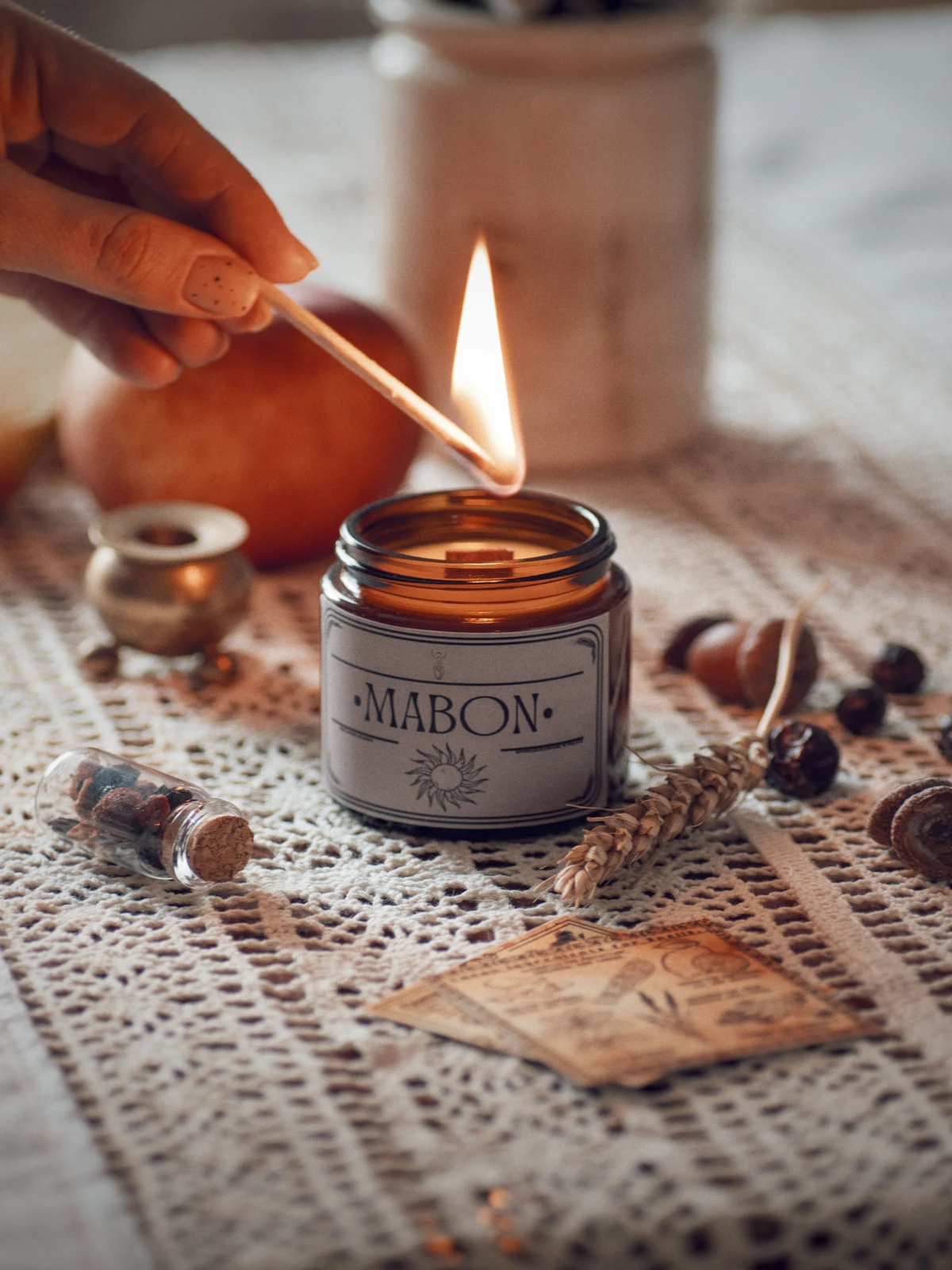
Mabon: The Autumn Equinox Sabbat
(From a Goblin Who Considers Balance a Personal Insult)
Bramble here. Mabon falls at the Autumn Equinox, around the 21st or 22nd of September, and it’s the second of the three harvest sabbats — the big one, if we’re honest, the one that actually feels like a proper celebration rather than a cautious first cut. Day and night sit in perfect balance for one afternoon, and then the dark starts winning. I have complicated feelings about balance. I prefer things tipped slightly in my favour.
“Day and night sit in perfect balance for one afternoon, and then the dark starts winning. I have complicated feelings about balance.” — Bramble
What Even Is Mabon?
Mabon is the modern Pagan name for the Autumn Equinox, borrowed — somewhat controversially among purists — from Mabon ap Modron, a figure from Welsh mythology whose story involves imprisonment and eventual rescue. The name was popularised in the 1970s by American Wiccan Aidan Kelly, which means it’s genuinely one of the “youngest” sabbat names on the wheel, even though the equinox itself has been marked by cultures worldwide for millennia under other names entirely.
What actually makes Mabon significant isn’t the name, though — it’s the astronomical moment itself. Twice a year, day and night briefly achieve near-perfect balance before tipping one way or the other. At Mabon, that tip is toward darkness, marking the genuine turning point where autumn properly asserts itself and the year visibly starts winding down.
This is the middle harvest, sitting between Lammas’s first cautious cut and Samhain’s final reckoning. If Lammas is “did the work pay off,” Mabon is the actual answer: yes, mostly, here’s the proof, gathered and stored before the cold arrives.
What It Represents
- Balance — the equinox itself, day and night in genuine equilibrium, however briefly
- The main harvest — apples, grapes, the bulk of the year’s abundance finally gathered in
- Gratitude — a proper thanksgiving sabbat, arguably the Pagan calendar’s real answer to the concept
- Reflection before descent — the last comfortable pause before the wheel turns properly toward winter
“If Lammas asks ‘did the work pay off,’ Mabon is the actual answer. Yes. Mostly. Here’s the proof.” — Bramble
How People Mark It
Mabon rituals lean into abundance and gratitude far more openly than Lammas’s quieter, more cautious energy — this is the sabbat where it’s genuinely fine to go a bit overboard:
- Harvest feasts — apples, root vegetables, bread, mead or cider, shared with people you actually like
- Gratitude rituals — naming specific things you’re thankful for, out loud, not just thinking it vaguely
- Balance rituals — reflecting on where your own life feels balanced or badly tipped, and what needs adjusting before winter
- Preserving and storing — a genuinely practical nod to the old “prepare for scarcity” instinct, even if that just means stocking your own pantry
- Decorating with autumn colours — the sabbat where your altar (and honestly your whole house) is allowed to go full orange-and-gold
Building a Mabon Altar
This is one of the more visually generous sabbats to decorate for — lean into it.
- Apples — cut one crossways to reveal the natural pentagram in the core, a small but genuinely satisfying piece of altar theatre
- Autumn leaves, acorns, and pinecones — free, seasonal, and does most of the visual work for you
- A small cornucopia or basket of seasonal produce, representing abundance
- Wine, mead, or cider in a proper goblet — this is the one sabbat where a drinkware centrepiece feels entirely appropriate rather than decorative
- Candles in deep orange, brown, or burgundy to mark the balance tipping toward darker months
“Cut an apple crossways. There’s a pentagram hiding in the core. It’s the closest nature gets to showing off.” — Bramble
Colours & Correspondences
- Colours: deep orange, burgundy, brown, gold, dark red
- Crystals: amber, smoky quartz, carnelian, tiger’s eye — grounding, abundance-focused stones
- Herbs: sage, rosemary, marigold, oak leaves
- Symbols: the cornucopia, apples, grapevines, scales (for balance), acorns
Common Mistakes People Make With Mabon
- Confusing it with Samhain. Mabon is about balance and gratitude; Samhain, six weeks later, is about endings and ancestors. Different energy entirely — don’t front-load the “veil is thin” stuff here.
- Skipping the gratitude practice. It’s easy to focus purely on the aesthetic (and Mabon does look good) while skipping the actual reflective work the sabbat is built around.
- Overloading the altar. Generous decoration is fine, but a Mabon altar can tip into clutter fast if every gourd within reach makes the cut. Curate a little.
- Ignoring the balance theme entirely. This is genuinely the one sabbat built specifically around equilibrium — worth actually sitting with that idea, not just decorating around it.
Frequently Asked Questions
Is Mabon a widely recognised name, or just Pagan?
It’s a modern Pagan-specific name, coined in the 1970s. The astronomical event itself — the Autumn Equinox — is recognised and celebrated across countless cultures under entirely different names and traditions.
What’s the difference between Mabon and Thanksgiving?
They share thematic DNA (gratitude, harvest, abundance) but Mabon is tied specifically to the equinox date and Wiccan/Pagan tradition, while Thanksgiving is a distinct national holiday with its own separate historical origins.
Do I need a full feast to celebrate properly?
No — even a single seasonal meal eaten with intention, or a short gratitude ritual at your altar, covers the core of what Mabon is about. The feast is traditional, not mandatory.
Bramble’s Final Verdict
Mabon is the sabbat that asks you to actually stop and look at what you’ve built this year, say thank you properly, and accept that the balance is about to tip. It’s generous, it’s a little indulgent, and it’s genuinely one of the most satisfying points on the whole wheel — right before everything gets a lot darker and a lot more serious at Samhain.
“Mabon is generous, a little indulgent, and genuinely one of the most satisfying points on the whole wheel.” — Bramble
— Bramble