
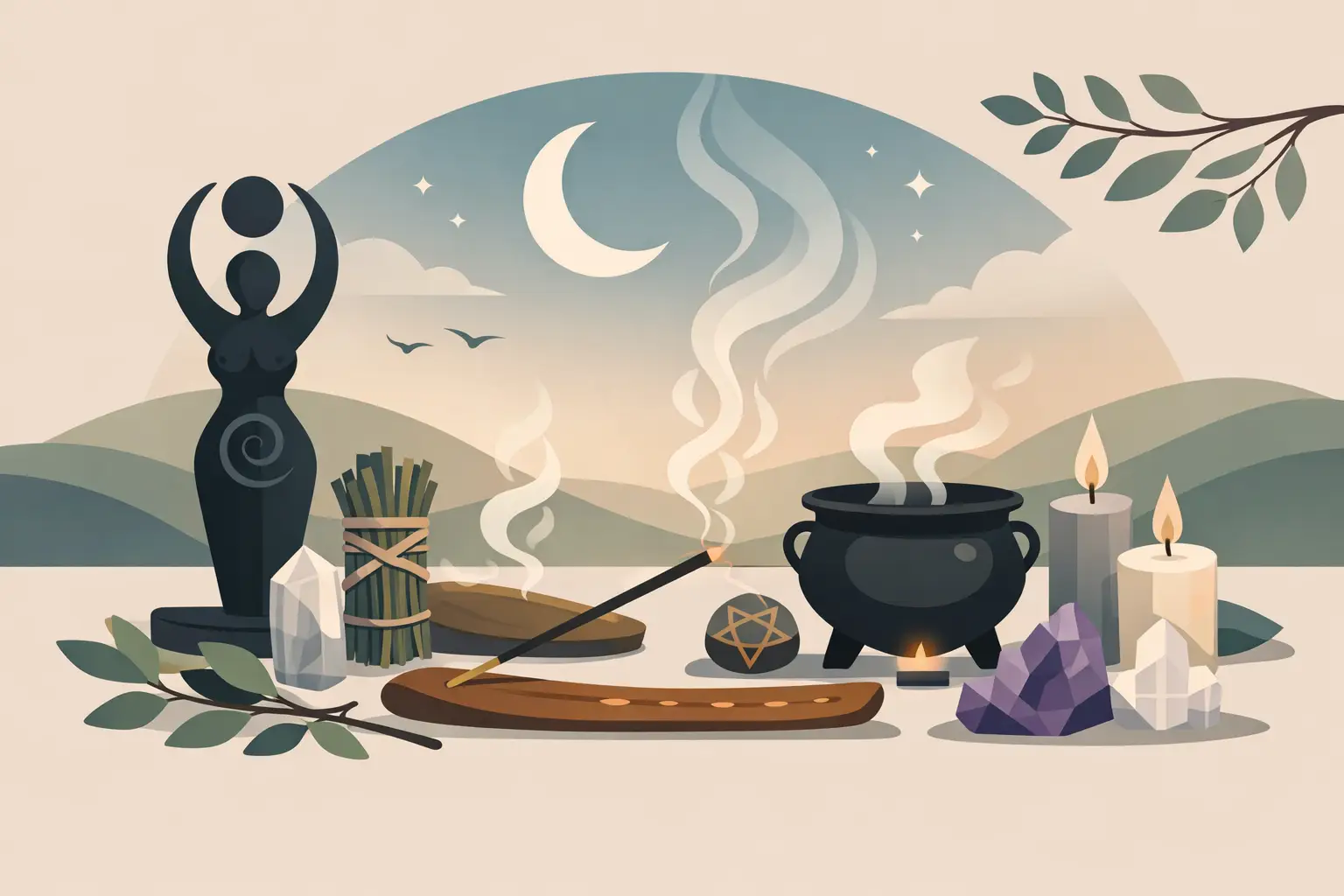
The right incense does not need to turn your home into a fog machine, summon a mysterious Victorian ghost, or cost a dragon’s hoard. This pagan incense guide UK readers can actually use begins with a simpler idea: choose a scent you enjoy, give it a purpose, and burn it safely. The ritual is yours. The atmosphere is yours. The questionable amount of black velvet is also yours.
Incense has a long history across many cultures and faiths, including but far beyond modern pagan practice. For some people it marks the start of meditation, spellwork or seasonal observance. For others, it is a few quiet minutes with a candle, a journal and a room that smells like a mossy forest. Both are valid. You do not need a title, an enormous altar, or a raven familiar with good admin skills to begin.
Pagan incense guide UK: start with purpose
Before choosing a fragrance, ask what you want it to do for the mood of the moment. Incense is not a shortcut to guaranteed magical results. It can, however, become a useful sensory cue. Just as a particular playlist can tell your brain it is time to focus, a familiar scent can help you settle into prayer, reflection, card reading, cleansing or rest.
For grounding and quiet rituals, many people reach for earthy notes such as sandalwood, cedar, patchouli or vetiver. They suit journalling, ancestor work, autumnal observances and those evenings when your thoughts are behaving like goblins in a biscuit tin.
For cleansing or a fresh start, frankincense, rosemary, pine and lavender are popular choices. Frankincense has a resinous, churchy warmth that feels ceremonial without being fussy. Rosemary is sharper and greener, while lavender is usually softer and more familiar. If you are clearing the air after a difficult day, the scent you can happily live with matters more than whether a label makes a grand promise.
For love, self-worth and gentler workings, rose, jasmine, vanilla and ylang-ylang often appear in incense blends. These can be rich, so use a little at first in a small room. For seasonal rites, think in textures rather than rules: floral blends for spring, sun-warmed citrus or herbs for summer, spice and wood for autumn, and pine, orange or resin for winter.
There is no universal correspondence chart handed down on a smoke-stained stone tablet. Traditions differ, and personal associations count. If the smell of oranges reminds you of your gran’s kitchen and makes you feel safe, that is meaningful information.
Sticks, cones, resin or loose blends?
The format changes both the experience and the amount of effort involved. Incense sticks are the easiest starting point. Light the tip, let the flame catch for a few seconds, blow it out, then place the stick in a stable holder. They are tidy, affordable and ideal for a brief daily ritual.
Cones give off a stronger fragrance in a smaller area and usually burn faster. Standard cones work in a heatproof dish or cone holder. Backflow cones are made for special holders where smoke pours downward like tiny enchanted waterfall magic. They look brilliant, but the oils in the smoke can leave residue, so protect your surface and clean the holder regularly.
Resins, such as frankincense, myrrh and benzoin, offer a slower, more traditional-feeling method. They are burned on charcoal discs in a proper heatproof burner, usually with sand or ash beneath the charcoal. The scent is often deeper and less perfumed than a standard stick, but charcoal gets fiercely hot and produces more smoke. It is best for a deliberate ritual rather than a casual Tuesday evening beside the telly.
Loose herbal blends are versatile, especially if you enjoy making your own seasonal combinations. They can be used in a suitable burner over charcoal, though beginners may prefer sticks or cones until they are confident around hot materials. Never assume a dried herb is safe to burn just because it is natural. Natural has never meant harmless. Poison ivy is natural too, and Bramble will not be taking questions.
Choosing incense without falling for nonsense
A lovely label is not proof of quality, and “handmade” does not automatically mean ethically sourced or low-smoke. Read the ingredients where they are available. Incense may contain natural plant material, fragrance oils, binders and colourants. If you are sensitive to perfume, start with a single, gentle scent and burn it for a short time rather than buying an enormous assorted box on blind faith.
Traditional masala-style sticks are often made from a paste of herbs, woods, resins and oils, and can smell complex and earthy. Charcoal-based sticks tend to carry stronger added fragrance and can be more intense. Neither is automatically better. It depends on whether you want temple-like resin, dramatic gothic perfume, or something light enough for a small flat.
Avoid claims that make incense sound like a replacement for medical, mental health or practical support. A calming ritual can be comforting. It cannot fix a broken boiler, settle a legal dispute, or replace speaking to a professional when life gets heavy. Magic and mundane care can share a shelf very peacefully.
Be mindful of cultural context, too. White sage and palo santo are often marketed casually as “cleansing” products, but both have important cultural histories and sourcing concerns. Some practitioners choose alternatives such as rosemary, garden sage, lavender, mugwort where appropriate, juniper, pine or frankincense. Thoughtful practice means knowing that not every spiritual product is ours to treat as generic décor.
Burning pagan incense safely at home
Even a small stick is an open ember. Use a purpose-made holder or a heatproof dish that catches ash, and keep it on a stable surface away from curtains, books, dried flowers and your prized stack of campaign notes. Do not leave incense burning unattended, and do not carry it around the room while it is lit unless you have a secure, suitable censor and know exactly what you are doing.
Ventilation matters, particularly in UK flats, smaller homes and rented spaces with very enthusiastic smoke alarms. Crack a window, use less incense than you think you need, and let the scent linger naturally rather than trying to turn every ritual into a theatrical dungeon entrance. Check your tenancy agreement if your building has restrictions around flames or smoke.
Pets deserve special care. Birds are particularly sensitive to airborne particles and fragrances, while cats, dogs and small animals may find smoke irritating. Keep all incense, ash and essential-oil-heavy products out of reach, burn in a separate well-ventilated room if needed, and skip smoke entirely if anyone in the household has respiratory sensitivities. A bowl of water, a candle-free ritual, music or a scented object that is not heated can still create a boundary between ordinary time and ritual time.
When you are done, make sure the ember is fully out. For sticks and cones, let them finish in a safe holder or carefully extinguish the glowing end in sand. For charcoal, allow it to cool completely before disposal. Never put hot ash straight into a bin. That is how a peaceful full moon ritual becomes a very boring call to the fire service.
Build a practice that smells like you
You do not need a different incense for every moon phase, deity, tarot suit and emotional weather report. Begin with one or two scents and notice what changes. Keep a note of how sandalwood feels during meditation, whether rosemary helps you focus before divination, or if a winter spice blend simply makes you want a blanket and a fantasy film.
A small ritual can be wonderfully practical: tidy the surface, choose your incense, state your intention out loud or in your head, and sit with the smoke for five minutes. You might pull an oracle card, write a single sentence in a journal, or simply breathe. Repetition builds meaning. The fancy holder is optional, though it is undeniably a nice bit of altar drama.
For gifts, a modest incense set with a safe holder is more useful than a random pile of overpowering sticks. Consider the recipient’s space, pets and tastes. The friend who lives for moonlit gothic interiors may adore dark resin and rose. The new pagan who is nervous about ritual may prefer gentle lavender and clear instructions. Planet Goblin exists for precisely this kind of gloriously specific shopping mission.
Let your incense practice be a small act of attention, not another set of rules to get wrong. Pick the scent that helps you arrive in the moment, open a window, keep the flame sensible, and make a little room for whatever kind of magic you mean to tend.