
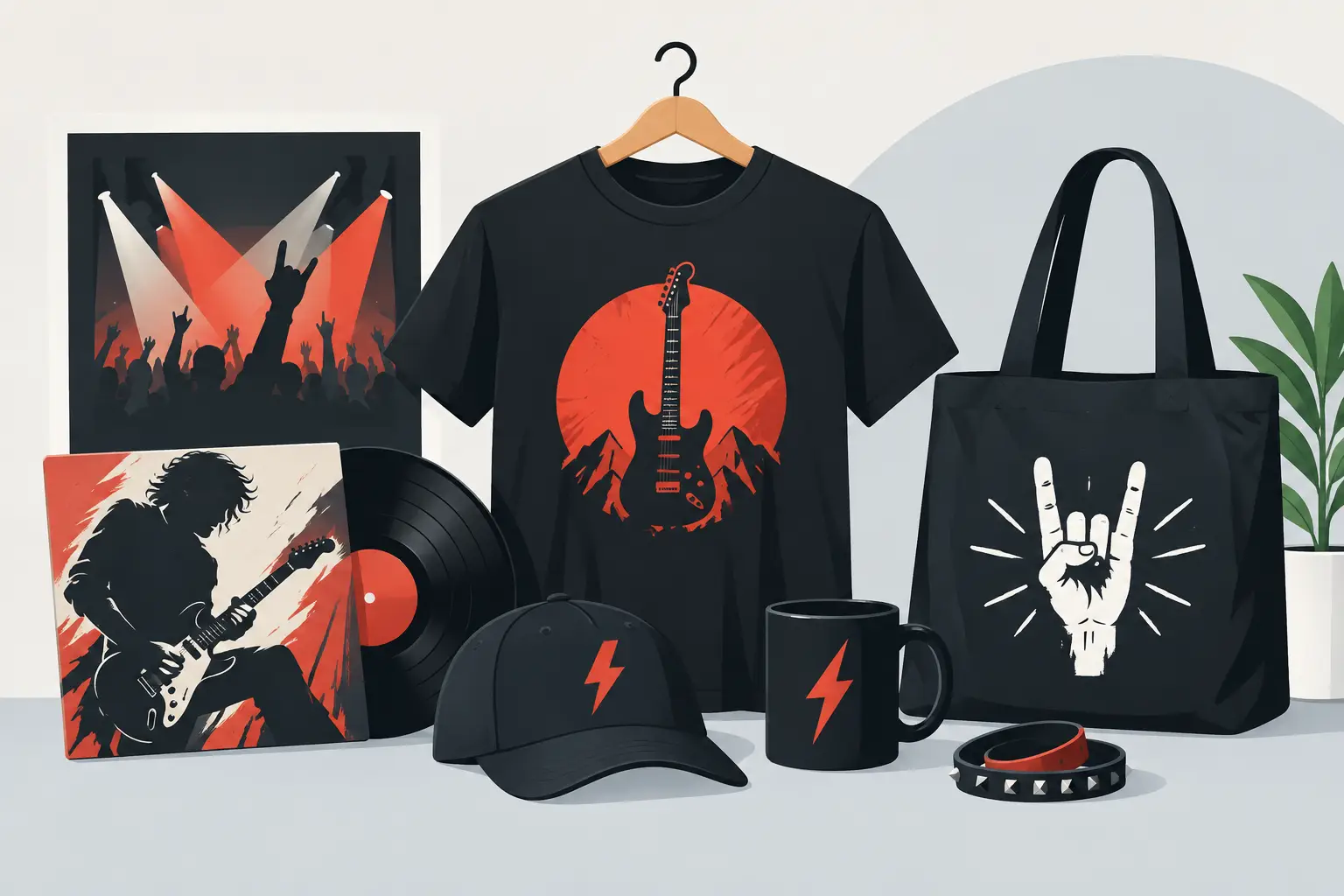
That faded tour tee might look like it survived three encores, a festival downpour and an argument with a washing machine. That is part of the charm. But a good rock merchandise buying guide starts with one blunt truth: not every black T-shirt with a skull on it deserves space in your wardrobe, let alone your gift bag.
Rock merch is fandom, fashion and physical proof that your music taste has better riffs than the office playlist. Whether you are hunting for your own next obsession or buying for someone whose record collection is treated with religious reverence, the best choice depends on the fan, the band and how the item will actually be used.
Start with the fan, not the logo
The quickest route to a disappointing gift is assuming every rock fan wants the loudest possible band logo. Some do, naturally. Others prefer a subtle enamel pin, a playing card deck, a mug for their battle-station brew, or artwork that only fellow devotees will recognise.
Think about how they show their allegiance. The gig regular may genuinely need another tee, especially one they can wear without fear at the barrier. A collector might prefer a numbered-looking display piece, a distinctive accessory or an item tied to a favourite album era. Someone easing into rock or metal may love an accessible, wearable design more than a shirt covered in spiky lettering that their gran cannot decode.
Album eras matter more than non-fans expect. A classic logo can be a safe bet, but an artwork-led design from a beloved record often feels more personal. If you know their favourite song, check whether it belongs to a particular album cycle, tour or visual period. That little bit of goblin-level research can turn a decent present into one they loudly claim is their favourite.
Rock merchandise buying guide: choose the right type
There is no single best kind of rock merch. There is only the item that fits the fan’s life and their tolerance for owning seventeen black garments.
Apparel is brilliant, with one obvious trap
T-shirts, hoodies, socks and caps are popular because they are useful, visible and usually available across a sensible price range. They are also where sizing causes the most grief. Never assume a medium is a universal medium. Check the product measurements, compare them with a favourite item the recipient already owns, and pay attention to whether the fit is unisex, fitted or deliberately oversized.
For a surprise gift, a roomy hoodie is often more forgiving than a fitted tee. If the fan wears band shirts as everyday clothes, choose a design they can style easily. If they save merch for gigs, go bolder: back prints, tour-inspired graphics and dramatic artwork belong under questionable venue lighting.
Fabric and print deserve a glance too. A soft cotton shirt may be more comfortable from day one, while a heavier fabric can feel more substantial. Screen prints are often prized for their solid, long-lasting look; detailed digital prints can suit full-colour artwork. Neither is automatically superior. It depends on the design and how much washing-machine chaos the garment will face.
Accessories make clever gifts
Accessories solve the sizing problem and can feel delightfully specific. Pins, patches, bags, wallets, keyrings, mugs, notebooks and playing cards are ideal for fans who already have a crowded merch drawer or cannot possibly justify another tee. I have heard the objections. I remain unconvinced.
A patch or pin works especially well for someone who customises jackets, bags or battle vests. A licensed bag or wallet can be a daily-use tribute rather than something worn twice a year. Playing cards and homeware sit nicely at the crossover between music obsession and useful gifting, which is precisely where a goblin-run shop likes to lurk.
Collectables need a purpose
Figures, framed-style prints, limited-run items and unusual display pieces can be excellent, but only when they match the recipient’s collecting habits. Ask yourself where it will live. A compact item for a shelf, desk or music corner is easier to enjoy than a large object with nowhere to go.
Collectors may care about packaging condition, official branding and completing a set. Casual fans may care more about whether the piece looks cool in their room. Both are valid. Just do not buy a high-detail collectable for somebody who has repeatedly declared that dusting is a capitalist conspiracy.
Officially licensed or unofficial: know the difference
Officially licensed merch is made with permission from the artist, band, label or rights holder. It commonly carries clear branding on the label, packaging, swing tag or product description. Buying official gear supports the people and organisations behind the music, and it generally gives you a clearer expectation of quality, artwork and sizing.
Unofficial items are not always obvious at first glance. Warning signs include suspiciously low prices, blurry artwork, strange spellings, poor-quality product photos, designs mashed together from unrelated eras, and sellers who cannot provide useful details. If a supposedly premium hoodie costs less than a round of venue drinks, pause before summoning your card details.
That said, official does not mean every item will suit every fan, and unofficial does not automatically tell you how durable an item is. Use common sense. Look closely at photos, descriptions, materials and seller information. For a gift, official licensing is normally the safer lane because it removes one very avoidable source of disappointment.
Check the details before you checkout
A few minutes spent reading the page beats the ritual of returning something after it arrives looking doll-sized, neon purple or suspiciously thin. Before buying, check these four things:
- Measurements and fit: use the size guide, especially for apparel, and note whether dimensions refer to the garment or body size.
- Materials and care: cotton blends, metal finishes and print-care instructions affect comfort, durability and laundry survival.
- Product scale: read dimensions for bags, figures, mugs and collectables. Photos can be gloriously misleading.
- Dispatch, delivery and returns: confirm the timescale, return window and whether an item must remain sealed or unworn to be returned.
For clothing, wash inside out at the temperature stated on the label, avoid blasting printed garments with excessive heat, and skip the tumble dryer when you can. Rock merch should age with character, not crack into a tragic mosaic after three washes.
Budget without buying filler
A bigger budget does not always create a better gift. A well-chosen patch linked to a favourite album can land harder than an expensive generic hoodie. Set a rough spend, then choose something with a reason behind it: a band they saw live, a record they always put on, or an aesthetic they already wear.
If you are unsure, build around one reliable main item rather than several random bits. A tee plus a pin, or a mug plus a card deck, feels considered without becoming a merch avalanche. For a bigger occasion, pair a practical licensed piece with something unusual that suits their wider interests – fantasy, tabletop gaming, goth décor or witchy shelves. Rock fans are rarely only one kind of nerd, and thank goodness for that.
Be wary of novelty for novelty’s sake. A slogan may be funny for ten seconds but never leave the cupboard. The strongest merch carries a visual identity the fan would choose for themselves, even if nobody else gets the reference.
Make gifting less of a gamble
If you can ask discreet questions, do it. Favourite band, favourite album, usual clothing size and whether they wear jewellery or use patches are all more useful than asking what kind of music they like. Rock is a mighty broad crypt.
When a surprise is non-negotiable, choose lower-risk options. Accessories, homeware and collectables avoid fit issues. For apparel, aim for the band they mention without being prompted, not the one you vaguely remember from a festival poster in 2014. Add a gift receipt where available and keep packaging tidy, particularly for collectors.
At Planet Goblin, the sensible move is to shop the crossover rather than forcing the obvious choice. The metalhead who rolls dice on a Friday night may adore a band accessory beside a dragon dice tower. The gothic aunt who worships classic rock may prefer something displayable, practical and gloriously dark. People contain multitudes, plus several tote bags.
The best rock merch does not need to announce itself from three streets away, though it absolutely may if that is the assignment. Choose a piece that respects the fan’s taste, gives it a real job to do or a proud place to live, and let them wear, use or display their noise with intent.