
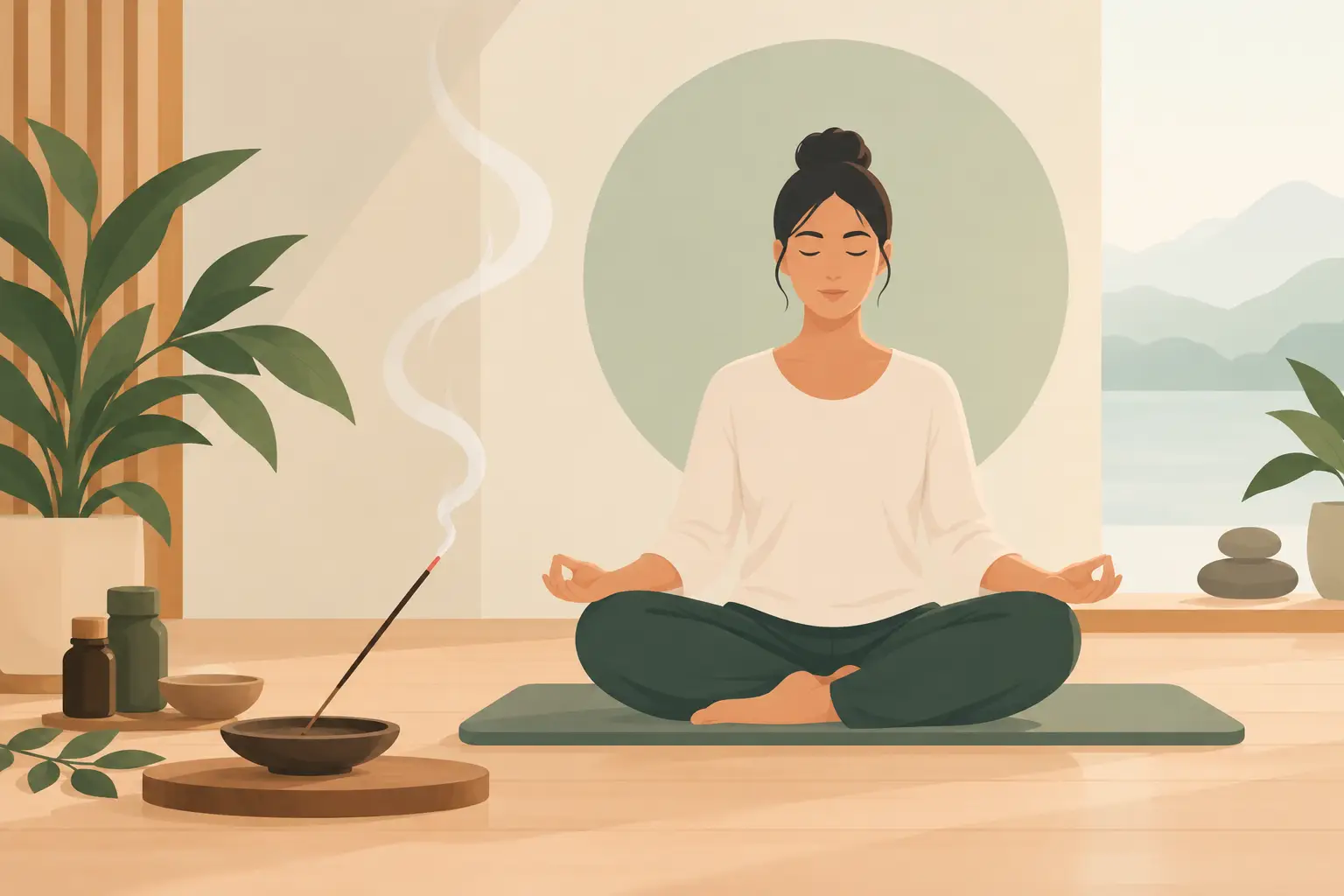
The minute an incense stick smells like a medieval sweet shop has caught fire, it is unlikely to help you meditate. The real answer to what incense suits meditation is not one sacred, universally approved fragrance. It is the scent that feels pleasant, burns gently in your space and gives your brain a familiar cue that it is time to sit down, breathe and stop mentally arguing with the to-do list.
For some people, that is the dry, resinous hush of frankincense. For others, it is a soft lavender blend, a stick of sandalwood or even no incense at all. There are no mystical bonus points for choosing the smokiest option in the cabinet. Bramble has ruled that out. I will not be taking questions.
What incense suits meditation best?
The safest starting point is a mild, uncomplicated scent. Meditation asks for attention, whether you are following your breath, sitting with a mantra, pulling an oracle card beforehand or simply trying to have ten quiet minutes without your thoughts staging a goblin uprising. A fragrance should support that attention rather than become the main event.
Sandalwood, frankincense and lavender are the classic choices because they tend to read as warm, grounding or calming without being aggressively sugary. That said, personal association matters as much as tradition. If lavender reminds you of a headache-inducing bath product, it is not your meditation incense. If cedar makes you think of a damp garden shed, perhaps save it for another ritual.
Start with one scent and use it consistently for a week or two. Over time, the smell becomes part of your meditation cue. Lighting it tells your nervous system, quite politely, that you are stepping away from the noise for a moment. That little piece of ritual can be surprisingly effective.
Choose by the mood you want to create
Incense traditions are vast, and individual blends vary wildly, so treat scent meanings as helpful atmosphere rather than a set of cosmic instructions. Your experience matters more than the label’s grand promises of enlightenment by teatime.
Sandalwood for steady, quiet focus
Sandalwood is often the easiest recommendation for meditation beginners. It has a creamy, woody character that feels warm rather than sharp, making it well suited to breathwork, silent sitting and evening wind-downs. Look for a scent that is genuinely woody rather than a heavily perfumed imitation, which can become cloying in a small room.
It is especially good if you want your practice to feel grounded and a little temple-like, without turning your flat into a fantasy tavern’s incense aisle. Though, frankly, that aisle sounds excellent.
Frankincense for a ritual-minded practice
Frankincense has a bright, resinous aroma with a faint citrusy edge. It is associated with religious and spiritual ceremonies across many cultures, which is why it can lend a deliberate, ceremonial feeling to meditation, prayer or seasonal altar work.
Use it when you want to mark a transition: the start of a new moon practice, a few moments before journalling, or a longer meditation after an exhausting week. Resin-heavy incense can produce more smoke than a delicate floral stick, so begin with a short burn and make sure the room has fresh air.
Lavender for unwinding after a noisy day
Lavender incense suits meditation when your goal is to slow down rather than sharpen focus. Its floral, herbal scent can make an evening practice feel softer, especially if you spend the day staring at screens, answering messages or surviving public transport with your soul only partly intact.
Choose lavender carefully. Some blends are sweet enough to smell like a purple boiled sweet, which may be delightful but not necessarily centring. A lavender-and-wood or lavender-and-herb blend is often more balanced.
Cedar, pine and other woods for grounding
Woody scents such as cedar, pine and juniper can be lovely for people who find floral fragrances distracting. They work particularly well in autumn and winter, or when you want meditation to feel connected to the natural world rather than overly polished.
These scents can be brisk and distinctive. If you are scent-sensitive, try one stick in a larger room before committing to a whole evening of woodland atmosphere. A meditation session should not end with every cushion smelling like a wizard’s damp cloak.
Rose and gentle florals for heart-led reflection
Rose, jasmine and other floral blends can suit reflective meditation, self-compassion practices or rituals centred on relationships and emotional healing. They are less universally easy than sandalwood because floral scents can be powerful and highly personal.
If you are drawn to florals, select a subtle blend and burn it briefly. The aim is a soft background note, not an ambush by a Victorian perfume counter.
Incense to approach with caution
Strong cinnamon, patchouli, synthetic fruit and intensely sweet blends are not inherently bad incense. They simply tend to divide opinion and can dominate a quiet practice. Patchouli might be exactly right for a witchy altar ritual, for example, but less useful if it has you thinking about every goth shop you have ever loved instead of your breathing.
Likewise, white sage fragrance is commonly marketed for cleansing, but it is worth thinking carefully about how spiritual materials are sourced, named and used. Many people prefer to choose incense that reflects their own practice, or opt for locally familiar plants such as rosemary, lavender, pine or mugwort where appropriate. Respectful practice is more interesting than copying a label because it looked mystical in a photograph.
Avoid any incense that makes you cough, gives you a headache or leaves the room feeling stuffy. That is not resistance to enlightenment. It is your body being quite clear.
How to use incense without letting it run the ritual
For meditation, less is usually more. Light the tip, let the flame catch for a few seconds, then gently blow it out so the stick smoulders. Place it in a stable, heatproof holder on a clear surface, well away from curtains, books, pets, sleeves and the dice bag you definitely meant to put away.
You do not need to burn a whole stick. Let it fragrance the room for a few minutes before you begin, then extinguish it safely if the smoke is becoming noticeable. This is often a better approach in smaller UK homes, where a bedroom, box room or cosy lounge can fill with scent quickly.
Open a window a crack when possible and never leave incense unattended. If you have asthma, allergies, migraines, pets, young children or anyone else in the household who is sensitive to smoke, consider a smoke-free ritual instead. A scented candle, a few drops of fragrance on a ceramic warmer, a cup of herbal tea or even a particular playlist can create the same dependable transition into meditation.
Build a scent ritual that is actually yours
The best meditation incense is the one you will use with intention rather than the one that claims to possess ancient secrets in a font made of tiny moons. Pick one gentle scent for calm focus and another for reflective, slower sessions. Keep a small note of how each fragrance makes you feel after ten minutes of sitting.
You may find that sandalwood helps on busy weekdays, while frankincense feels right for a fuller moon ritual or a Sunday reset. You may also find that your favourite meditation aid is a silent room and a blanket. Both answers are perfectly valid.
Let incense be an invitation, not a performance. Light it, settle in, and give yourself permission to be exactly as quiet, witchy, restless or gloriously odd as you are that day.